As of March 2026, respiratory surveillance reports indicate that human metapneumovirus has reached a positivity rate of 4% in several regions, mirroring the current impact of COVID-19. Managing the rise of HMPV in California requires a rigorous understanding of environmental stability and the limitations of traditional cleaning in high-traffic facilities. This guide examines the technical nature of the virus, the operational challenges of current outbreaks, and the advanced disinfection strategies required to maintain mission readiness.
Understanding HMPV in California
Human metapneumovirus, commonly referred to as HMPV, is a sophisticated respiratory pathogen first identified by researchers in 2001. While it often presents with symptoms similar to the common cold, its impact on institutional settings is significantly more severe. In Northern California cities such as Sacramento and Davis, wastewater data has recently shown high concentrations of the virus, indicating widespread community transmission that often precedes a surge in hospital admissions.
The Technical Profile of HMPV
HMPV is an RNA virus belonging to the Pneumovirus genus, the same scientific family as Respiratory Syncytial Virus (RSV). It primarily infects the upper respiratory tract, including the nose and throat, but frequently migrates to the lower respiratory system. Unlike many other common viruses, HMPV has no vaccine and no specific antiviral treatment, making environmental control the primary line of defense for facility managers and healthcare providers.
The virus typically follows a seasonal pattern, beginning its ascent in the winter months and peaking in the spring, often around April or early May. However, 2026 data shows that HMPV is currently “hammering” California cities during a period when COVID-19 activity has remained relatively stable. This “viral competition” suggests that as one pathogen recedes, HMPV is filling the niche, creating a sustained burden on public health infrastructure.
The Stakes: Why Mission Readiness Depends on Disinfection
For professionals managing healthcare facilities, schools, or emergency services, an HMPV outbreak is not merely a clinical issue: it is an operational crisis. The stakes involve three primary pillars: personnel safety, liability management, and mission readiness.
Personnel Safety and Staffing Continuity
When HMPV enters a workplace or healthcare environment, the risk of “office emptying” becomes a reality. Because the virus spreads through droplets and contaminated surfaces, a single infected individual can quickly lead to a cluster of cases. In a professional environment, this results in significant staffing shortages that compromise the ability to provide care or maintain essential services.
Liability and Regulatory Compliance
Facility managers have a duty to provide a safe environment for both employees and the public. With HMPV linked to serious complications such as pneumonia and bronchiolitis, failure to implement a validated disinfection protocol can lead to increased liability. This is especially true in environments serving vulnerable populations, such as seniors over 65 or children under the age of five, where the virus is most likely to cause life-threatening illness.
Sustaining Mission Readiness
In the context of EMS and Fire services, mission readiness is defined by the availability of both personnel and equipment. If an ambulance or station becomes a vector for HMPV transmission, the resulting quarantine or illness can take critical assets offline. Protecting the “Room as a System” ensures that the environment supports the mission rather than hindering it.
The Operational Challenges of HMPV Control
Managing HMPV in California presents unique obstacles that traditional cleaning protocols often fail to address. These challenges are compounded by the biological nature of the virus and the high-tempo reality of modern facility management.
Pathogen Persistence and Surface Stability
HMPV is known to spread through direct contact and contaminated objects such as phones, door handles, keyboards, and toys. Research indicates that respiratory viruses can persist on non-porous surfaces for hours or even days. In high-traffic environments, these surfaces are touched hundreds of times between scheduled cleanings, creating a continuous loop of re-contamination.
The “Triple Threat” of Co-Infection
A significant challenge in 2026 is the prevalence of dual diagnoses. Patients and staff are increasingly testing positive for HMPV alongside Influenza B or RSV. These co-infections significantly increase the severity of the illness, often requiring ICU-level care. From a disinfection standpoint, this means that a protocol must be robust enough to handle a “cocktail” of pathogens simultaneously, rather than targeting a single virus.
Diagnostic Complexity and Identification Gaps
Because HMPV symptoms (fever, cough, congestion, and shortness of breath) overlap almost perfectly with COVID-19 and the flu, it is difficult to identify an HMPV outbreak without specific molecular testing. Many facilities may be experiencing an HMPV surge without realizing it, leading to a delay in escalating disinfection protocols. By the time an outbreak is confirmed through throat or nose swabs, the virus has often already established a foothold in the environment.
The Transition Bridge: Protocol vs. Reality
Standard operating procedures in most California facilities rely heavily on manual wipe-downs. While these are a necessary component of hygiene, the reality of high-tempo operations often makes manual cleaning alone insufficient. Staff burnout, rapid room turnover, and the sheer complexity of modern equipment create gaps where pathogens like HMPV can survive. There is a clear disconnect between the “Protocol on Paper” and the “Reality on the Ground,” where hidden surfaces and human error often leave rooms inadequately protected.
Disinfection Strategies for HMPV in California
To effectively combat the rise of HMPV in San Francisco, Sacramento, and beyond, organizations must move beyond reactive cleaning. A strategic approach involves understanding the hierarchy of disinfection and integrating technology that removes the variable of human error.
Manual Surface Protocols: Strengths and Failures
Manual cleaning remains the first step in any effective infection control plan. Removing organic soil and visible dirt is essential for the efficacy of any subsequent disinfectant application. However, manual protocols have inherent limitations that are magnified during a viral surge.
The Reality of Human Error
Even the most diligent staff can miss high-touch areas. Studies in healthcare environments consistently show that “near-patient” surfaces are frequently overlooked during manual cleaning cycles. In an HMPV context, a missed doorknob or a neglected keyboard becomes a reservoir for the virus, allowing it to spread to the next person who enters the space.
The Hidden Surface Problem
Modern facilities are filled with complex equipment, electronics, and intricate furniture. Manual wipes cannot reach the interior of a keyboard, the underside of a gurney, or the recessed areas of a computer workstation. These “hidden surfaces” provide a sanctuary for HMPV, allowing the virus to persist even after a room has been “cleaned” by traditional standards.
Where AeroClave Fits into a Healthcare Protection Plan
The operational pressure on healthcare and emergency service providers in 2026 is unprecedented. With emergency medical care demand skyrocketing due to the convergence of HMPV, RSV, and flu cases, there is simply no time for prolonged, labor-intensive decontamination processes that take rooms out of service for hours.
In an environment where every minute of downtime impacts patient care, facility managers need a solution that is both fast and absolute. They need a system that ensures 100% coverage without requiring staff to manually scrub every square inch of a facility.
That is where AeroClave fits.
How AeroClave works in a Healthcare or Facility environment
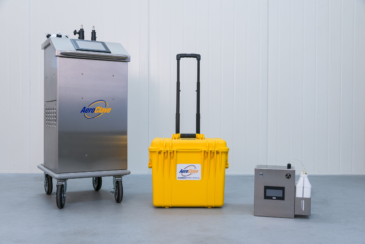
The AeroClave system approaches disinfection by treating the room as a system rather than a collection of isolated surfaces. This method utilizes an automated process to distribute the chosen disinfectant, throughout the entire space. Because HMPV is an RNA virus that thrives in the air and on surfaces, a comprehensive saturation is required to break the chain of infection.
The technology works by aerosolizing the disinfectant into a fine mist that fills the volume of the room. This mist reaches the “hidden surfaces” that manual cleaning often misses, such as the undersides of desks, the back of monitors, and complex medical equipment. By maintaining a specific concentration of the disinfectant for the required contact time, the system ensures that every square inch of the environment is addressed.
The “Preferred Option” for Modern Facilities
Repeatability is the cornerstone of any safety-focused operation. Manual cleaning protocols are inherently variable, as they depend on the physical stamina and attention to detail of individual staff members. This variability creates “disinfection gaps” where pathogens like HMPV can persist and spread.
AeroClave is the preferred option because it provides a consistent result every time. The system removes the “human factor” from the final disinfection step, ensuring that the protocol performed on a Monday morning is identical to the one performed on a Friday night. This level of consistency is vital for meeting regulatory standards and providing a defensible record of safety for the facility.
Why Industry Teams Use AeroClave During Heavy Pathogen Activity
During a surge of HMPV in California, teams require a solution that balances speed with efficacy. The following five factors explain why AeroClave is integrated into high-stakes environments:
- Standardization: Every room receives the same level of care, regardless of which technician is on duty.
- Total Coverage: The mist reaches vents, corners, and intricate equipment that wipes cannot touch.
- Operational Speed: Rooms are returned to service quickly, minimizing downtime during high-patient-volume periods.
- Seamless Integration: The process fits into existing workflows, allowing staff to focus on clinical tasks while the room is decontaminated.
What Success Looks Like: The Four-Step Workflow
Success in managing HMPV in San Francisco or Sacramento requires a disciplined approach to the environment. Following this validated workflow ensures that the facility remains a safe space for staff and patients alike:
- Clean First: Staff must perform a manual cleaning to remove organic soil and visible debris. This step ensures that the disinfectant can make direct contact with the surface.
- AeroClave Workflow: The operator initiates the automated cycle. The system calculates the required dose based on the room volume to ensure the pathogen is neutralized.
- Label Basics: Proper signage and safety indicators are used during the cycle. This prevents unauthorized entry and maintains a safe perimeter for other personnel.
- Repeat: Use in the next room or after any exposure or suspected exposure occurs.
To learn more about how to protect your team from the 2026 respiratory surge, please contact our operational specialists today.
Conclusion: HMPV in California
In conclusion, the rise of HMPV in California represents a significant challenge for healthcare and public facility managers. With positivity rates reaching 4% and the virus “hammering” cities across Northern California, the limitations of manual cleaning have become clear. The lack of a vaccine or specific antiviral treatment for human metapneumovirus makes environmental control the most effective way to protect vulnerable populations and ensure staffing continuity.
By integrating AeroClave into your disinfection protocol, you can eliminate the variability of manual wipes and ensure a consistent, hospital-grade result. Protecting your facility requires moving beyond reactive cleaning and adopting a proactive, system-wide strategy. Contact AeroClave today to see how we can help you maintain a safe and operational environment during this surge.
Sign Up Below To Learn If AeroClave is Right For You
FAQs About HMPV in California
What is HMPV and why is it surging in 2026?
Human metapneumovirus (HMPV) is a respiratory RNA virus that causes symptoms similar to the common cold but can lead to severe pneumonia or bronchiolitis. In 2026, it is surging in regions like Northern California and New Jersey because lower COVID-19 rates have allowed other respiratory viruses to fill the ecological niche.
How long does an HMPV infection last?
For most healthy individuals, the virus lasts between a few days and one week. However, symptoms such as a cough can linger for more than two weeks in severe cases. If symptoms persist beyond fourteen days, the CDC recommends seeking medical consultation.
Is there a vaccine for HMPV?
No. There is currently no vaccine and no specific antiviral treatment available for HMPV. Prevention through handwashing and rigorous surface disinfection remains the primary defense for institutional settings.
How does the AeroClave system differ from a traditional pump sprayer?
Unlike pump sprayers, which rely on a technician to manually target surfaces, AeroClave is an automated system that treats the entire room as a system. It ensures a consistent concentration of disinfectant throughout the air and on every surface, removing human error.
Can I use the AeroClave system while people are in the room?
No. The disinfection cycle should be performed in an unoccupied space. The automated nature of the system allows it to run independently, so staff can attend to other duties while the room is being decontaminated.
Explore More Articles on Health and Safety
- Managing Facility Safety During a Legionnaires Disease Outbreak 2026
- The New Front Line: Managing the Nipah Virus Outbreak 2026
- How to Prevent HAI in Hospitals
- Stop the Spread of Whooping Cough (Pertussis)
- Comparing The Best Automated Disinfection Systems on the Market
- MDRO: What It Means, How It Spreads, and What You Can Do About It
- Stop a Kennel Cough Outbreak Before It Spreads
- Protect Yourself from Subclade K Flu (The Super Flu)
- Measles Outbreak 2026: What to Do, What to Watch For, and How to Stop the Spread
- Locker Room Fungus: How to Stop Athletes Foot and Ringworm
- Candida Auris and Its Impact on Patient Safety
- How Long Will Norovirus Last and Its Impact
- Hantavirus Signs and Symptoms: How to Spot This Rare but Serious Infection Early
- MRSA VRE: Protecting Yourself from Infections
- Florida legionnaires outbreak: What’s Happening in Orange County and What to Do Next
- How Contagious is Hand foot and mouth disease?
- Norovirus vs Food Poisoning: Treatment and Prevention
- Emerging Threat Prep: Why You Should Already Have a Protocol for Avian Flu
- How to Prevent the Spread of RSV
- The Superbug Showdown: How We Tackle MRSA and NDM-1 Klebsiella
- Beyond the “Stomach Bug”: Killing The Foodborne Pathogen Listeria in Your Facility
© 2026 AeroClave