By the year 2026, global health systems have reached a critical intersection where the sheer volume of biological data necessitates the use of advanced computing. In July 2024, researchers confirmed that the global population is projected to peak at approximately 10.3 billion people, which adds 2.1 billion more potential hosts for infectious diseases. To manage this growth, the integration of AI Outbreak Prediction has become the primary line of defense for public health officials and healthcare facility managers. This article explores how predictive intelligence bridges the gap between early warning signs and the necessity of automated disinfection to ensure mission readiness.
Understanding AI Outbreak Prediction
Predicting the trajectory of a pathogen is no longer strictly a mathematical exercise. It involves a sophisticated fusion of deep learning (DL), reinforcement learning (RL), and large language models (LLMs) to analyze diverse data streams. These systems examine everything from genomic sequences to social media trends and flight records to identify hotspots before they become uncontrollable. AI Outbreak Prediction allows health experts to reason through complex scenarios, such as how a new variant of SARS-CoV-2 might interact with local mask mandates or changing vaccination rates. This technical authority provides a roadmap for response, but prediction without a physical countermeasure leaves a facility vulnerable.
The Stakes: Readiness and Liability
In high-stakes environments like hospitals and emergency departments, the stakes of an infectious disease surge involve more than just patient health. Mission readiness depends on the availability of healthy personnel and clean equipment. If a facility receives a 1 to 3 week warning of a hospitalization spike from a tool like PandemicLLM, and fails to harden its environment, the liability risks increase. Managers must ensure that their decontamination protocols can scale as fast as the AI predicts the pathogen will spread. A failure to act on predictive intelligence can result in overwhelmed staff and compromised care environments.
The Challenges of Modern Surveillance
The transition to AI-driven models has revealed significant obstacles in how data is processed and utilized. Traditional reporting methods are often too slow to keep pace with the rapid transmission rates of modern viruses.
Data Fragmentation and the “Connecting Dots” Problem
Many existing surveillance systems suffer from fragmented data sources. A local hospital may see a surge in respiratory cases while social media reflects a rise in “flu-like” symptoms, but without AI, these signals remain isolated. Cross-source data fusion is required to synthesize these disparate inputs into a single, actionable warning. When these dots are not connected, the delay in response can lead to a healthcare system becoming completely overwhelmed.
Behavioral Realism and Misinformation
One of the most significant hurdles in AI Outbreak Prediction is accounting for how people actually behave. Models must simulate how individuals respond to risk, government policy, and online misinformation. If an AI model fails to include behavioral realism, it may overestimate or underestimate the spread of a disease like influenza or RSV. This leads to improper resource allocation and leaves facilities unprepared for the actual volume of patients.
Technical Hurdles in Pathogen Tracking
Pathogens are not static, and the technology used to track them must be equally dynamic. As new variants emerge, the complexity of the tracking environment grows exponentially.
Evolving Pathogen Dynamics
Traditional mechanistic models rely on fixed assumptions that fail when a virus like bird flu or monkeypox changes its behavior. In 2025, studies published in Nature Computational Science highlighted that older models were “terrible” at predicting outcomes when new variants emerged. AI-driven forecasting now uses real-time genomic surveillance data to adapt its predictions as the virus evolves. This allows public health officials to understand the characteristics of a variant, such as increased transmissibility, before it reaches the local community.
Antimicrobial Resistance and Diagnostic Accuracy
The rise of antimicrobial resistance (AMR) adds another layer of difficulty to infection control. AI has improved diagnostic accuracy, with machine learning techniques like MALDI-TOF MS achieving 100% accuracy in detecting methicillin-resistant Staphylococcus aureus (MRSA). Identifying antibiotic susceptibility quickly is crucial for preventing the spread of resistant strains within a facility. Without this speed, a single undetected case of CRKP or MRSA can lead to a facility-wide outbreak that manual cleaning cannot easily contain.
From Prediction to Reality
There is a significant gap between receiving an AI-generated warning and the physical reality of a high-tempo healthcare environment. While an LLM can predict a surge in respiratory cases with high precision, it cannot physically remove a pathogen from a surface. Standard cleaning protocols often rely on manual labor that is subject to human error and staffing shortages. In a reality where equipment turnover is fast and patient volume is high, manual wiping alone is insufficient. The intelligence provided by AI Outbreak Prediction demands a response system that is just as automated and reliable as the software that generated the alert.
Disinfection Strategies for AI-Informed Environments
To effectively utilize the 1 to 3 week lead time provided by modern forecasting, facilities must move away from reactive, manual-only cleaning. The focus must shift to high-level disinfection (HLD) strategies that can be deployed rapidly and consistently across large areas.
The Limitations of Manual Intervention
Manual cleaning remains the baseline for most facilities, but it has documented weaknesses that AI-driven surveillance can expose.
Manual Surface Protocols and Human Error
The effectiveness of manual wiping is entirely dependent on the person performing the task. In high-stress situations, such as a predicted surge in COVID-19 or RSV, staff burnout leads to missed surfaces. Research indicates that manual protocols often fail to address hidden surfaces or complex equipment geometry. This creates a “black box” where a room might look clean but still harbors infectious pathogens in areas that were overlooked during a quick turnover.
Inconsistent Coverage in High-Traffic Zones
High-traffic areas like emergency departments require constant decontamination, yet manual cleaning is often interrupted by the need for rapid room turnover. This inconsistency creates gaps in the “ring of protection” around a facility. If the AI Outbreak Prediction indicates a high prevalence of a highly transmissible pathogen, any missed surface becomes a vector for cross-contamination.
Where AeroClave Fits into a Healthcare Protection Plan
The operational pressure of modern medicine does not allow for long periods of downtime for decontamination. In an emergency department, every minute a room is out of service is a minute that a patient is not receiving care. Managers are constantly balancing the need for speed with the requirement for total pathogen eradication. This pressure is compounded when AI tools predict an incoming wave of infectious disease that will stretch resources to their breaking point.
That is where AeroClave fits.
AeroClave provides the consistency that manual cleaning lacks. While a human operator might miss the underside of a gurney or the back of a monitor, an automated system treats the entire room as a single environment. This removes the variability of human performance from the safety equation.
How AeroClave works in a healthcare environment
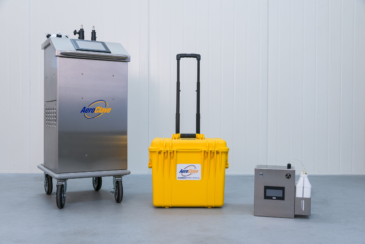
The AeroClave system utilizes a process known as fogging to ensure total coverage. By treating the room as a system rather than a collection of individual surfaces, the technology reaches everywhere that air can travel. This includes high-touch areas, porous surfaces, and the “shadow areas” that manual wipes cannot reach. The use of EPA–registered disinfectants, ensures that the process is effective against a broad spectrum of pathogens including SARS-CoV-2 and MRSA while remaining safe for sensitive electronic equipment.
The Preferred Option for Repeatability and Documentation
One of the primary reasons healthcare teams choose AeroClave is the ability for the RDS 6110 to document the disinfection process. AI models and public health policies, such as those standardized under HL7 FHIR, require high levels of data integrity. AeroClave provides a repeatable, workflow that proves a room has been treated according to protocol. This documentation is at times essential for regulatory compliance and for building trust with both staff and the public during an active outbreak.
Why Healthcare Teams Use AeroClave During Heavy Pathogen Activity
In the context of AI Outbreak Prediction, timing is everything. When predictive models like PandemicLLM forecast a hospitalization spike, facilities must harden their infrastructure immediately. Healthcare teams rely on AeroClave during these periods of high tempo for several operational reasons:
- Standardization: It removes the variable of human performance, ensuring every room meets the same high-level disinfection standard.
- Total Coverage: The aerosolized delivery reaches into ventilation grilles, behind fixed monitors, and under gurneys where pathogens like RSV or influenza can persist.
- Operational Speed: Rapid cycle times allow rooms to be returned to service quickly without compromising safety during high patient inflow.
- Equipment Safety: The process is compatible with sensitive electronics, such as ventilators and diagnostic tablets, which are essential during a respiratory outbreak.
What Success Looks Like: The 4-Step Workflow
Success in an AI-informed environment means moving from data to decontamination in a structured, verifiable manner. This workflow ensures that the physical response is as precise as the digital prediction.
- Clean First: Perform a standard physical cleaning to remove bulk soil and organic matter from surfaces to ensure maximum disinfectant contact.
- AeroClave Workflow: Deploy the AeroClave system using the appropriate room size setting. The automated process distributes the disinfectant as a fine mist to treat the entire space as a system.
- Label Basics: Ensure all treated areas are marked and that the disinfectant has reached its required contact time according to the EPA-registered label for the specific target pathogen.
- Repeat: Use in the next room or after any exposure or suspected exposure occurs.
The reality of modern healthcare is that pathogens move faster than manual cleaning can track, but not faster than an automated system can respond. To learn more about hardening your facility against predicted surges, please reach out via our contact form.
Conclusion: AI Outbreak Prediction
In conclusion, AI Outbreak Prediction has fundamentally changed how public health and healthcare facilities prepare for infectious disease threats. By leveraging deep learning and real-time genomic data, we can now anticipate surges weeks before they arrive at the hospital doors. However, these digital warnings are only effective if they are matched by a physical response that is equally precise. Automated disinfection systems like AeroClave bridge the gap between surveillance and safety, providing a repeatable solution that manual methods simply cannot match. As we move further into a 2026 landscape defined by rapid population growth and emerging variants, the integration of predictive intelligence and automated decontamination will be the hallmark of a resilient healthcare system.
To see how AeroClave can integrate with your facility’s safety protocol, contact us today.
Sign Up Below To Learn If AeroClave is Right For You
FAQs About AI Outbreak Prediction
How does AI Outbreak Prediction improve facility safety?
By analyzing diverse data streams including social media, flight records, and genomic surveillance AI provides a 1-to-3-week warning of incoming pathogen surges. This allows facility managers to increase the frequency of high-level disinfection protocols before an outbreak reaches peak levels.
Can AI predict the emergence of new virus variants?
Yes, tools like PandemicLLM use genomic surveillance data to understand the characteristics and prevalence of new variants. This information helps officials predict how a variant might affect hospitalization trends and transmission patterns in specific demographics.
Is AeroClave safe for use around sensitive medical electronics?
Absolutely. AeroClave is designed to be compatible with the high-tech environments of modern healthcare. The aerosolized disinfectant Vital Oxide surface safe, making it safe for monitors, diagnostic equipment, and ventilators.
How does AeroClave assist with regulatory compliance?
Every AeroClave RDS 6110 cycle generates a digital report. This documentation provides proof of disinfection, which is critical for meeting public health data standards (like HL7 FHIR) and passing healthcare facility audits.
What is the difference between AI modeling and traditional epidemiology?
Traditional epidemiology often relies on math-only mechanistic models that can fail when conditions are unstable. Modern AI modeling uses large language models and reinforcement learning to “reason” with data, accounting for human behavior, policy changes, and real-time environmental shifts.
Explore More Articles on Health and Safety
- Managing Facility Safety During a Legionnaires Disease Outbreak 2026
- The New Front Line: Managing the Nipah Virus Outbreak 2026
- How to Prevent HAI in Hospitals
- Stop the Spread of Whooping Cough (Pertussis)
- Comparing The Best Automated Disinfection Systems on the Market
- MDRO: What It Means, How It Spreads, and What You Can Do About It
- Stop a Kennel Cough Outbreak Before It Spreads
- Protect Yourself from Subclade K Flu (The Super Flu)
- Measles Outbreak 2026: What to Do, What to Watch For, and How to Stop the Spread
- Locker Room Fungus: How to Stop Athletes Foot and Ringworm
- Candida Auris and Its Impact on Patient Safety
- How Long Will Norovirus Last and Its Impact
- Hantavirus Signs and Symptoms: How to Spot This Rare but Serious Infection Early
- MRSA VRE: Protecting Yourself from Infections
- Florida legionnaires outbreak: What’s Happening in Orange County and What to Do Next
- How Contagious is Hand foot and mouth disease?
- Norovirus vs Food Poisoning: Treatment and Prevention
- Emerging Threat Prep: Why You Should Already Have a Protocol for Avian Flu
- How to Prevent the Spread of RSV
- The Superbug Showdown: How We Tackle MRSA and NDM-1 Klebsiella
- Beyond the “Stomach Bug”: Killing The Foodborne Pathogen Listeria in Your Facility
© 2026 AeroClave