By January 31, 2026, global health authorities identified 2,881 cases of chikungunya virus disease across 11 different countries. This rapid onset of activity early in the year highlights the urgent need for a comprehensive understanding of chikungunya treatment and localized prevention. The current resurgence of this virus in the Intertropical Zone requires healthcare facilities and emergency services to reassess their readiness for both travel-associated and locally acquired cases. This article examines the clinical realities of the virus, the operational challenges of containment, and the technical strategies required to protect high-stakes environments.
Understanding Chikungunya Virus Disease
Chikungunya is a viral infection primarily transmitted to humans through the bite of infected mosquitoes. The name itself is derived from the Makonde language, meaning “contorted” or “to become bent over.” This refers to the stooped posture of patients suffering from the hallmark joint pain associated with the disease. While often compared to dengue or Zika, chikungunya presents a unique set of clinical and operational hurdles for modern medical systems.
The Virological Profile
Chikungunya is classified as an alphavirus belonging to the Togaviridae family. It consists of a positive-sense, single-stranded RNA genome protected by a lipid envelope. These viral particles are remarkably small, measuring only 60 to 70 nanometers in diameter. Their spherical structure is designed for efficiency in transmission and replication within the host.
Genomic Structure and Classification
The virus circulates in several distinct genotypes, including the West African, Asian, and the East, Central, and South African (ECSA) lineages. In 2026, genomic analysis in the Americas has specifically confirmed the circulation of the ECSA genotype. Research continues to monitor for mutations, such as the A226V mutation, which could potentially increase transmissibility in specific mosquito species. Understanding these genotypes is critical for developing accurate diagnostic tools and long-term vaccination strategies.
Laboratory Identification and Viremia
The virus is detected through highly sensitive laboratory tools, such as quantitative RT-PCR tests. These tests can identify the number of viral particles in a patient’s blood using as little as 100 microliters of serum. High levels of viremia, or virus in the blood, are typically present during the first week of illness. This window of time is the most critical for both patient diagnosis and the prevention of secondary transmission.
Transmission Dynamics and Vector Activity
The spread of chikungunya is dictated by the presence and activity of mosquito vectors. Unlike some other infectious diseases, chikungunya is not spread directly from person to person through coughing or sneezing. Instead, it relies on a biological cycle involving a human host and a mosquito vector.
Primary Vectors: Aedes aegypti and Aedes albopictus
Two specific species are responsible for the majority of transmission: Aedes aegypti and Aedes albopictus. Aedes aegypti, often called the yellow fever mosquito, is a frequent vector in tropical climates. Aedes albopictus, known as the Asian tiger mosquito, has a wider geographic range and can survive in more temperate environments. Both species are known to feed primarily during the daytime, which changes the requirements for personal and facility-level protection.
The Infection Cycle and Local Transmission
The cycle begins when a mosquito feeds on a person who is in the viremic phase of the infection. The virus then replicates within the mosquito over several days. When that mosquito bites another human, the virus is transmitted, and symptoms typically appear within 3 to 7 days. Local transmission occurs when mosquitoes in a specific area become infected and begin spreading the virus to the resident population, even those who have not traveled.
The Stakes of Chikungunya in the United States
The presence of chikungunya us represents a significant concern for public health officials and facility managers. While many cases are travel-associated, the threat of local transmission is persistent and documented. In 2025, a locally acquired case was reported in a U.S. state, reinforcing the fact that the environment is suitable for the virus to take hold.
Clinical Impact and Morbidity
The clinical burden of chikungunya is measured not just in acute illness, but in long-term disability. While the mortality rate is low, the morbidity rate is exceptionally high. For a healthcare facility, managing a surge in chikungunya cases means preparing for a high volume of patients who require intensive symptom management.
Acute vs. Chronic Symptomatology
Acute symptoms include sudden high fever, headache, nausea, and a characteristic rash. However, the most defining symptom is severe joint pain, often occurring in the hands and feet. For approximately 40% to 60% of patients, this joint pain does not resolve within the first two weeks. Instead, it transitions into chronic chikungunya arthritis, which can cause debilitating pain for months or even years.
Vulnerable Populations and Complications
Specific groups face a much higher risk of severe complications or hospitalization. This includes newborns infected around the time of birth, adults over the age of 65, and individuals with underlying conditions like diabetes or heart disease. Complications can extend beyond the joints to involve the eyes, heart, and nervous system. In 2025, cases of Guillain-Barre syndrome were associated with chikungunya outbreaks, illustrating the potential for neurological impact.
Operational Risks for Healthcare Facilities
The operational impact of a chikungunya outbreak extends to facility safety, personnel readiness, and regulatory compliance. Facilities must manage the risk of the virus being introduced into their environment by patients or staff returning from high-risk areas.
Mission Readiness and Personnel Safety
A sudden increase in cases can strain staffing levels, especially if personnel are affected by the virus themselves. Because the joint pain associated with the infection is often disabling, affected workers may be unable to perform physical tasks for extended periods. Maintaining mission readiness requires a strategy that includes both personal protection for staff and high-level disinfection of the physical environment.
Liability and Regulatory Compliance
Chikungunya is a nationally notifiable condition in the United States. This means state and local health departments must report cases to the CDC using standardized case definitions. Failure to maintain accurate records or to implement required safety protocols can lead to significant liability. Facilities must demonstrate that they have taken every reasonable step to prevent the spread of vector-borne diseases within their walls.
The Challenges of Modern Infection Control
Managing an environment against vector-borne threats like chikungunya involves overcoming several industry-specific obstacles. Standard cleaning protocols are often insufficient when dealing with the high-tempo reality of modern healthcare and emergency services.
Staffing and Time Constraints
Healthcare facilities and EMS providers operate under constant pressure. Rapid room turnover is necessary to meet patient demand, but this often leaves little time for deep cleaning. When staff are overworked or burnout is high, the meticulous nature of manual disinfection can suffer. This creates a gap where pathogens or environmental risks can persist.
Pathogen Persistence and Vector Access
The physical structure of a facility can also present challenges. Mosquitoes can enter through open bays, damaged screens, or during the transport of patients. Furthermore, if a patient with high viremia is present in a facility, any mosquito that bites them becomes a potential source of infection for others in the building. Traditional cleaning methods focus on surfaces but often ignore the air and the “Room as a System” concept necessary for complete protection.
The Gap Between Protocol and Reality
Most facilities have written protocols for disinfection, but the reality of daily operations often prevents these protocols from being executed perfectly. Manual wipe-downs are subject to human error and the “missed surface” phenomenon. In a high-tempo environment, a more consistent and documented approach is required to ensure that every square inch of a space is treated according to safety standards.
Disinfection Strategies for the 2026 Landscape
As we move through 2026, the strategy for managing viral threats must evolve. It is no longer enough to rely solely on manual cleaning. A multi-layered approach that includes vector management, personal protection, and advanced disinfection technology is essential.
Manual Surface Protocols
Manual cleaning remains the first line of defense in any facility. It is necessary for the removal of organic load and visible soil. However, it has clear limitations that must be addressed by facility managers.
Strengths of Manual Cleaning
The primary strength of manual cleaning is its ability to physically remove dirt and debris. This process is essential because the presence of organic matter can sometimes interfere with the efficacy of chemical disinfectants. Manual cleaning also allows staff to inspect equipment for physical damage or wear and tear.
The Reality of Human Error and Hidden Surfaces
The most significant limitation of manual cleaning is its lack of repeatability. No two technicians will clean a room in exactly the same way every time. Furthermore, complex medical equipment and high-traffic areas contain countless “hidden” surfaces that are difficult or impossible to reach with a cloth or wipe. These gaps in coverage represent a failure point in the infection control chain.
High-Level Disinfection (HLD) Requirements
When managing a virus like chikungunya, the requirements for high-level disinfection extend beyond basic surface hygiene. Because the virus is vector-borne, the environment must be treated as a biological system. This means addressing not just the surfaces where pathogens may land, but also the entry points and breeding grounds that support the lifecycle of the Aedes mosquito.
Contextualizing the Pathogen Load
The viral load in a patient’s blood, or viremia, is exceptionally high during the first week of infection. If an Aedes aegypti or Aedes albopictus mosquito bites a patient within a clinical setting, that mosquito becomes a mobile vector for the disease. High-level disinfection protocols must therefore focus on rapid neutralization of any potential viral reservoirs. This is especially true in regions like Florida and Texas, where local transmission has been previously documented.
Where AeroClave Fits into a Healthcare Protection Plan
In the high-stakes world of emergency medicine and clinical care, the margin for error is non-existent. Staff are often dealing with “back-to-back” patient arrivals, leaving very little time for the deep, structural cleaning required to halt a viral outbreak. When a facility is managing a patient with suspected chikungunya treatment needs, the priority shifts to stabilizing the patient and preventing the virus from entering the local ecosystem.
The reality of these operations is that manual cleaning is often rushed. A technician may miss the underside of a gurney or the crevices of a monitoring station. These small oversights can lead to a failure in the infection control chain, putting both personnel and subsequent patients at risk.
That is where AeroClave fits.
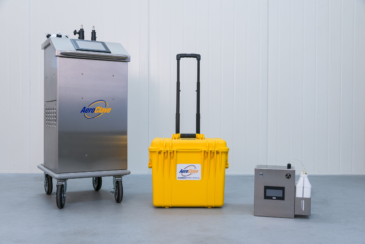
The AeroClave system provides a layer of protection that manual cleaning simply cannot match. By automating the delivery of disinfectant, the system removes the variability of human performance. It ensures that every surface, regardless of its complexity or location, receives the exact dosage required for effective decontamination.
How AeroClave Works in a Healthcare Environment
AeroClave approaches disinfection by treating the “Room as a System.” Instead of focusing on individual touchpoints, the system fills the entire space with a fine mist of Vital Oxide. This mist reaches areas that are physically inaccessible to manual wiping, such as ventilation grilles, ceiling corners, and the internal components of specialized medical equipment.
Vital Oxide is an EPA-registered disinfectant that is powerful enough to kill a wide range of pathogens but gentle enough to be used on sensitive electronics. When deployed through an AeroClave unit, it creates a comprehensive shield. This is particularly important for chikungunya us prevention, where the goal is to eliminate any viral presence that could be picked up by local mosquito populations.
The Preferred Option for Modern Facilities
Repeatability and documentation are the cornerstones of modern regulatory compliance. The AeroClave RDS 6110 provides a digital record of every disinfection cycle, proving that the space was treated according to protocol. This level of documentation is essential for hospitals and EMS agencies that must report to state health departments or the CDC. It transforms “hope-based” cleaning into a verified, technical process.
Why Healthcare Teams use AeroClave During Heavy Viral Activity
- Standardization: Every room is treated with the same high level of precision, regardless of which staff member is on duty.
- Total Coverage: The automated mist reaches every “hidden” surface, including those behind equipment or in high-traffic ventilation zones.
- Operational Speed: Rooms can be fully decontaminated and returned to service faster than with manual cleaning alone.
- Compliance Support: Automated data logging provides a clear audit trail for health inspectors and safety officers.
- Personnel Safety: Automated systems reduce the time staff must spend in potentially contaminated zones, lowering their direct exposure risk.
What Success Looks Like: The 4-Step Workflow
- Clean First: Perform a standard manual wipe-down to remove organic soil and debris from all visible surfaces.
- AeroClave Workflow: Deploy the AeroClave unit to saturate the room with Vital Oxide, treating the air and all surfaces simultaneously.
- Label Basics: Ensure all treated equipment is properly tagged or labeled to indicate that a high-level disinfection cycle has been completed.
- Repeat: Use in the next room or after any exposure or suspected exposure occurs.
To learn more about how to integrate these protocols into your high-tempo environment, visit our operational support page and complete the contact form.
Conclusion: Chikungunya Treatment
In conclusion, managing the resurgence of chikungunya in 2026 requires more than just clinical awareness. It demands an operational commitment to high-level disinfection and vector control. By understanding the risks of chronic joint pain and the dynamics of mosquito transmission, facilities can better protect their staff and patients. Implementing automated systems like AeroClave ensures that your environment remains a safe zone, free from the threats of travel-associated or locally acquired viruses.
Sign Up Below To Learn If AeroClave is Right For You
FAQs About Chikungunya Treatment
How is chikungunya diagnosed in a clinical setting?
Healthcare providers typically use blood tests to look for the virus or similar diseases like dengue and Zika. A quantitative RT-PCR test is often used because it is very sensitive and can detect the virus within 2 to 4 hours.
Are there vaccines available for chikungunya in the United States?
Yes, there are two primary vaccines approved by the FDA. Ixchiq is approved for adults aged 18 and older, while VIMKUNYA is approved for individuals aged 12 and older. Both vaccines require only a single dose for protection.
What is the most common long-term complication of the virus?
The most frequent long-term issue is chronic chikungunya arthritis. This condition causes severe and disabling joint pain that can persist for months or even years in up to 60% of infected patients.
Can the AeroClave system be used on sensitive medical electronics?
Yes, the AeroClave system is designed to be compatible with a wide range of sensitive equipment. The misting process is non-corrosive, making it safe for monitors, diagnostic tools, and other essential medical electronics.
How does AeroClave help with regulatory compliance?
AeroClave provides automated documentation for every disinfection cycle. This includes data on the time, date, and duration of the treatment, which is vital for maintaining records for organizations like the CDC or state health departments.
Explore More Articles on Health and Safety
- Managing Facility Safety During a Legionnaires Disease Outbreak 2026
- The New Front Line: Managing the Nipah Virus Outbreak 2026
- How to Prevent HAI in Hospitals
- Stop the Spread of Whooping Cough (Pertussis)
- Comparing The Best Automated Disinfection Systems on the Market
- MDRO: What It Means, How It Spreads, and What You Can Do About It
- Stop a Kennel Cough Outbreak Before It Spreads
- Protect Yourself from Subclade K Flu (The Super Flu)
- Measles Outbreak 2026: What to Do, What to Watch For, and How to Stop the Spread
- Locker Room Fungus: How to Stop Athletes Foot and Ringworm
- Candida Auris and Its Impact on Patient Safety
- How Long Will Norovirus Last and Its Impact
- Hantavirus Signs and Symptoms: How to Spot This Rare but Serious Infection Early
- MRSA VRE: Protecting Yourself from Infections
- Florida legionnaires outbreak: What’s Happening in Orange County and What to Do Next
- How Contagious is Hand foot and mouth disease?
- Norovirus vs Food Poisoning: Treatment and Prevention
- Emerging Threat Prep: Why You Should Already Have a Protocol for Avian Flu
- How to Prevent the Spread of RSV
- The Superbug Showdown: How We Tackle MRSA and NDM-1 Klebsiella
- Beyond the “Stomach Bug”: Killing The Foodborne Pathogen Listeria in Your Facility
© 2026 AeroClave