Recent projections for 2026 indicate that the economic burden of healthcare-associated infections will continue to escalate, forcing facilities to prioritize advanced safety protocols. (CMS) Medical equipment sterilization serves as the primary barrier between successful clinical outcomes and the transmission of life-threatening pathogens. High-level sterilization ensures that invasive instruments are free of all microbial life before they contact sterile patient tissue. This article examines the technical requirements, regulatory stakes, and operational challenges of maintaining sterile integrity in modern healthcare environments.
Understanding Medical Equipment Sterilization
Sterilization is a validated process designed to render a product free of all forms of viable microorganisms. In a healthcare setting, the level of microbial inactivation required depends entirely on the intended use of the medical device. This logic follows the Spaulding classification system, which remains the international standard for infection control planning.
The Spaulding Classification System
The Spaulding system categorizes medical devices into three distinct groups based on the risk of infection. This framework allows sterile processing departments to allocate resources effectively while ensuring patient safety. It identifies which items require total sterilization and which can safely undergo high-level disinfection.
Critical Device Requirements
Critical items are those that enter normally sterile tissue or the vascular system. This category includes surgical instruments, cardiac catheters, and implanted medical devices. Because any microbial contamination in these areas could result in systemic infection, these items must be completely sterile. Steam sterilization is the preferred method for these tools due to its reliability and large margin of safety.
Semicritical Device Requirements
Semicritical items come into contact with mucous membranes or non-intact skin but do not ordinarily penetrate sterile tissue. Examples include respiratory therapy equipment and flexible endoscopes. These devices must be free of all microorganisms, although small numbers of bacterial spores may be permitted. High-level disinfection (HLD) is the minimum requirement for these items, typically achieved through chemical immersion.
Regulatory and Technical Standards for Safety
Meeting the standard of care requires adherence to strict guidelines set by the FDA and international organizations. These standards provide a roadmap for developing, validating, and controlling the sterilization process. Conformity to these rules streamlines regulatory review and ensures that equipment remains functional after repeated processing.
FDA Validation Protocols
Before any sterile medical device enters the market, the FDA reviews the manufacturer’s validation activities. This review determines if the chosen sterilization method can effectively achieve a sterility assurance level of 10 to the minus 6. This means there is less than a one-in-one-million chance of a single viable microorganism remaining on the product. Manufacturers must prove that the process does not damage the polymers, metals, or glass components of the device.
ISO 22441:2022 Compliance
The FDA recently recognized ISO 22441:2022 as a vital standard for low-temperature vaporized hydrogen peroxide sterilization. This recognition moved vaporized hydrogen peroxide from a Category B to an Established Category A sterilization process. This shift reduces the regulatory burden on manufacturers and encourages the adoption of safer, more efficient technologies. Adhering to these ISO standards helps ensure that chemical residuals on devices remain within safe limits for patients and staff.
The Stakes of Sterile Integrity in Modern Healthcare
Healthcare professionals often call the sterile processing department the heart of the hospital because it sustains all surgical and procedural activity. When sterilization protocols fail, the consequences reach far beyond the walls of the processing lab. Stakeholders measure the impact in patient lives, facility reputation, and massive financial liability.
Clinical Safety Outcomes and Patient Mortality
The primary mission of sterilization is the prevention of surgical site infections (SSIs). In 2023, there was a 3% increase in the standardized infection ratio related to specific operative procedures. These infections are not merely complications: they are primary drivers of patient mortality and morbidity in the hospital environment.
Mortality Risks of Surgical Site Infections
SSIs represent approximately 20% of all associated infections in hospitalized patients. Beyond their prevalence, these infections are exceptionally dangerous, as they increase the probability of death by two to eleven times. In fact, statistically, three out of every four infection-associated deaths are attributed to SSIs. Given these stakes, the effectiveness of the sterile processing team is not just a technicality; it is a direct factor in patient survival rates.
Pathogen Transmission Pathways
Contaminated medical equipment can serve as a vector for various pathogens, including carbapenem-resistant Enterobacteriaceae (CRE) and MRSA. Failure to properly disinfect complex devices like duodenoscopes has led to numerous outbreaks. These incidents often occur even when traditional guidelines are followed, highlighting the minimal margin of safety in current protocols. Proper sterilization eliminates these pathways by destroying the exopolysaccharides that allow biofilms to cement cells to device surfaces.
Economic and Regulatory Impact
Infections and procedural delays create a heavy financial burden on healthcare systems. Beyond the direct cost of care, facilities face the risk of reimbursement penalties and the loss of accreditation. Maintaining operational excellence in sterilization is an essential strategy for long-term fiscal health.
Admission Costs and Extended Stays
SSIs are the most expensive form of healthcare-associated infection. On average, an SSI increases a patient’s hospital stay by 9.7 days. This extension results in costs exceeding $20,000 per admission. Nationally, these preventable infections cost the healthcare system an estimated $3.3 billion every year.
Revenue Loss from Operational Delays
Operational efficiency depends on the constant availability of safe, clean instruments. However, errors in the sterilization process frequently cause significant delays in surgical scheduling. For instance, one study noted that surgical instrument errors caused an average delay of 10.16 minutes per procedure. Ultimately, these cumulative delays result in massive billable minute losses, ranging from $6.75 to $9.42 billion across the industry.
Modern Challenges in Equipment Reprocessing
Despite the advancement of sterilization technology, industry professionals face significant obstacles. These challenges range from the physical design of modern medical tools to the regulatory shifts that govern chemical use. Successfully navigating these hurdles requires a combination of technical expertise and advanced automated solutions.
Geometric and Technical Obstacles
Modern surgical tools are increasingly complex, featuring intricate designs that are difficult to clean manually. These devices often contain long, narrow lumens and hidden crevices that harbor organic debris. If cleaning is not meticulous, the subsequent sterilization process may be rendered ineffective.
The Risk of Biofilm Formation
Biofilms are multilayered bacterial communities that develop in wet environments. If medical equipment is not dried completely after cleaning, biofilms can form within internal channels. These structures protect microorganisms from chemical agents, increasing their resistance by up to 1,000 times. Prompt reprocessing and forced-air drying are essential to prevent this accumulation.
Elevator Channel Crevices
Duodenoscopes used in specialized procedures present a unique challenge due to the elevator channel. This component has crevices that are nearly impossible to access with a standard cleaning brush. Studies have shown that these internal channels can contain up to 10 to the 10th power of enteric microorganisms. This complexity is a major reason why MDR pathogens often act as indicators of ineffective reprocessing in these devices.
Regulatory and Environmental Shifts
The healthcare industry is currently transitioning away from traditional sterilization methods that pose environmental risks. This transition creates operational pressure as facilities must adopt new technologies while maintaining high throughput.
Transitioning from Ethylene Oxide
Ethylene oxide (EtO) has historically been used to sterilize approximately 50% of all sterile medical devices in the United States. However, long-term exposure to EtO has been linked to cancer, leading to new EPA requirements for emission reductions. The FDA is currently working with manufacturers to identify new sterilization methods that do not rely on this chemical. This transition requires facilities to implement alternative sites and modalities to prevent supply chain disruptions.
Workforce Training and Certification
The sterile processing field is becoming increasingly regulated; specifically, multiple states are now pursuing legislation for mandatory technician certification. This shift is critical because poorly trained staff not only jeopardize patient safety but also risk a facility’s accreditation.
Consequently, technicians must understand the “why” behind every step, ranging from monitoring minimum effective concentrations to establishing a strict dirty-to-clean workflow. To ensure these standards are met, annual competency testing has now become a standard requirement for maintaining a high level of operational readiness.
Disinfection Strategies for Medical Equipment Sterilization
Modern facilities must employ a multi-barrier strategy to address the persistence of healthcare-associated pathogens. While sterilization is required for critical items, the broader clinical environment requires a disinfection approach that accounts for both surface area and complexity. The gap between theoretical protocol and clinical reality is often where the most significant risks reside.
Comparison of Methodology
Understanding the difference between manual and high-level disinfection is vital for maintaining a safe environment. While manual cleaning is the foundation of hygiene, it is rarely sufficient as a standalone solution for complex medical tools.
Manual Surface Protocols
Manual wipe-downs are the traditional foundation of hospital hygiene. This process involves the physical application of germicidal detergents to high-touch surfaces. Manual protocols are effective for removing gross soil and organic matter, which is a mandatory prerequisite for any high-level process. However, the strengths of manual cleaning are often undermined by the reality of human performance. The efficacy of manual cleaning is limited by the “human factor,” which includes staff fatigue, time constraints, and lack of compliance. Research indicates that hygiene-related errors occur approximately every five minutes in high-tempo clinical settings. These errors result in incomplete coverage, leaving pathogens like MRSA and VRE to survive on shaded or hard-to-reach surfaces. Furthermore, manual wiping cannot effectively treat internal channels where microbial loads are high.
Where AeroClave Fits into a Hospital Protection Plan
The operational reality of a modern hospital is characterized by extreme pressure. Facilities must manage fast room turnover while facing chronic staffing shortages and the constant threat of multidrug-resistant organisms. In this environment, a decontamination protocol that relies solely on manual compliance is structurally vulnerable. The time required for traditional no-touch methods often conflicts with mission readiness. Standard hydrogen peroxide vapor systems can take up to five hours to complete a single room, which is often unacceptable in a busy surgical suite or intensive care unit.
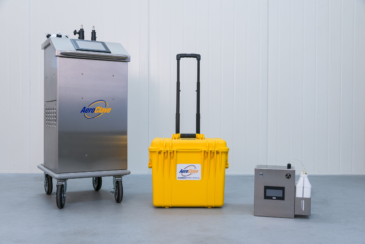
This downtime creates a bottleneck that can lead to procedural delays and lost revenue. That is where AeroClave fits. AeroClave provides the consistency that manual protocols lack. While a human technician may miss a corner or fail to maintain the required wet-contact time, an automated system delivers a uniform dose of disinfectant every time. This repeatability is the only way to maintain a high margin of safety in a high-tempo environment.
How AeroClave works in a Hospital environment
AeroClave utilizes a “room as a system” approach to decontamination. Instead of focusing on individual surfaces, the system treats the entire environment, including the air and hidden geometries. The process uses Vital Oxide, an advanced disinfectant that is EPA-registered and carries a Category IV toxicity rating. This is the lowest toxicity level assigned by the EPA, meaning the solution is safe for personnel and will not damage sensitive medical electronics. The system aerosolizes the disinfectant into a fine mist that penetrates areas manual cleaning cannot reach. This includes the back of equipment monitors, the undersides of surgical tables, and complex storage racks. By automating the delivery, AeroClave ensures that the chemical concentration and contact time are optimized for maximum microbial inactivation.
Why Healthcare teams use AeroClave during heavy Pathogen activity
When a facility faces an outbreak of MRSA, or CRE, the margin for error disappears. Teams integrate AeroClave into their response plans for five specific reasons:
- Standardization: It removes the variable of staff performance, ensuring that every room is treated with technical precision.
- Coverage: The aerosolized delivery reaches into the crevices and textures of the room that harbor biofilms.
- Speed: It decontaminates spaces significantly faster than vapor-based systems, reducing room downtime.
- Compliance: The automated logging simplifies the reporting requirements for infection control audits.
- Integration: It works alongside manual cleaning to provide a final, high-assurance safety step before the next patient is admitted.
What Success Looks Like
A successful sterilization and disinfection workflow follows a precise four-step sequence to ensure patient safety:
- Clean first: Manually remove all visible organic soil, blood, and inorganic salts. This step is vital because debris can act as a physical shield for microorganisms.
- AeroClave workflow: Deploy the automated system to provide comprehensive, hands-free disinfection of the entire space.
- Label basics: Once the cycle is complete, all equipment must be clearly labeled and tagged to distinguish processed items from those requiring decontamination.
- Repeat: Use in the next room or after any exposure or suspected exposure occurs.
The operational reality of modern medicine demands a solution that is both technically superior and operationally efficient. Facilities that fail to adopt automated secondary disinfection are leaving their patients and their reputations at risk.
Conclusion: Medical Equipment Sterilization
In conclusion, medical equipment sterilization and environmental disinfection are the most critical components of a facility’s safety infrastructure. The Spaulding classification system provides the theoretical framework, but the high-tempo nature of modern healthcare requires automated tools to bridge the gap between protocol and practice. By understanding the 17-log10 margin of safety required for surgical tools and the mortality risks associated with SSIs, it becomes clear that manual cleaning alone is insufficient. Integrating AeroClave into your infection control plan ensures a repeatable, documented, and technically precise standard of care. To learn more about how our systems can protect your facility and enhance your operational efficiency, please complete our contact form today.
Sign Up Below To Learn If AeroClave is Right For You
FAQs About Medical Equipment Sterilization
What is the difference between sterilization and high-level disinfection?
Sterilization is a validated process that destroys all forms of microbial life, including highly resistant bacterial spores. It is required for critical items that enter sterile body tissue. High-level disinfection (HLD) is the minimum requirement for semicritical items that contact mucous membranes. HLD kills all microorganisms but may allow a small number of bacterial spores to survive.
How much does a surgical site infection cost a hospital?
A single surgical site infection can be devastating to a facility’s finances. On average, an SSI increases a patient’s stay by 9.7 days and adds more than $20,000 to the cost of admission. These infections cost the U.S. healthcare system an estimated $3.3 billion annually in preventable expenses.
Is AeroClave safe for use on expensive medical electronics?
Yes. AeroClave uses Vital Oxide, which is an EPA Category IV disinfectant. This rating indicates the lowest level of toxicity and corrosivity. The system is designed to be safe for sensitive equipment, including patient monitors, infusion pumps, and imaging consoles, provided it is used according to the manufacturer’s instructions.
Does AeroClave help with Joint Commission audits?
AeroClave is a powerful tool for regulatory compliance. The system automatically generates documentation for every disinfection cycle. This provides a clear, digital audit trail that demonstrates to The Joint Commission and other regulatory bodies that your facility is adhering to strict infection control standards.
How does cleaning impact the efficacy of sterilization?
Meticulous cleaning is the most important step in the reprocessing cycle. Organic matter, such as blood or tissue, can physically shield pathogens from the sterilizing agent. Cleaning reduces the initial bioburden by 4 to 6 log10, which allows the sterilization process to reach its required sterility assurance level. If an item is not clean, it cannot be sterilized.
Explore More Articles on Health and Safety
- Managing Facility Safety During a Legionnaires Disease Outbreak 2026
- The New Front Line: Managing the Nipah Virus Outbreak 2026
- How to Prevent HAI in Hospitals
- Stop the Spread of Whooping Cough (Pertussis)
- Comparing The Best Automated Disinfection Systems on the Market
- MDRO: What It Means, How It Spreads, and What You Can Do About It
- Stop a Kennel Cough Outbreak Before It Spreads
- Protect Yourself from Subclade K Flu (The Super Flu)
- Measles Outbreak 2026: What to Do, What to Watch For, and How to Stop the Spread
- Locker Room Fungus: How to Stop Athletes Foot and Ringworm
- Candida Auris and Its Impact on Patient Safety
- How Long Will Norovirus Last and Its Impact
- Hantavirus Signs and Symptoms: How to Spot This Rare but Serious Infection Early
- MRSA VRE: Protecting Yourself from Infections
- Florida legionnaires outbreak: What’s Happening in Orange County and What to Do Next
- How Contagious is Hand foot and mouth disease?
- Norovirus vs Food Poisoning: Treatment and Prevention
- Emerging Threat Prep: Why You Should Already Have a Protocol for Avian Flu
- How to Prevent the Spread of RSV
- The Superbug Showdown: How We Tackle MRSA and NDM-1 Klebsiella
- Beyond the “Stomach Bug”: Killing The Foodborne Pathogen Listeria in Your Facility
© 2026 AeroClave