Ebola Outbreak Reinforces the Importance of Protecting Mission-Critical Assets
As the international community responds to the current Ebola outbreak in the Democratic Republic of the Congo (DRC), organizations around the world are once again evaluating their Ebola preparedness strategies. While much of the focus is placed on patient care and public health response, Ebola preparedness also depends on the ability to safely decontaminate the aircraft, vehicles, and equipment that support critical operations.
For more than 20 years, AeroClave has developed advanced decontamination technologies designed to help organizations eliminate dangerous biological threats, including Ebola, while maintaining operational readiness. Originally founded in response to the global SARS epidemic, the company has expanded its capabilities from commercial aircraft and healthcare applications to some of the world’s most advanced military aircraft decontamination systems.
Aircraft Are Critical During Ebola Response
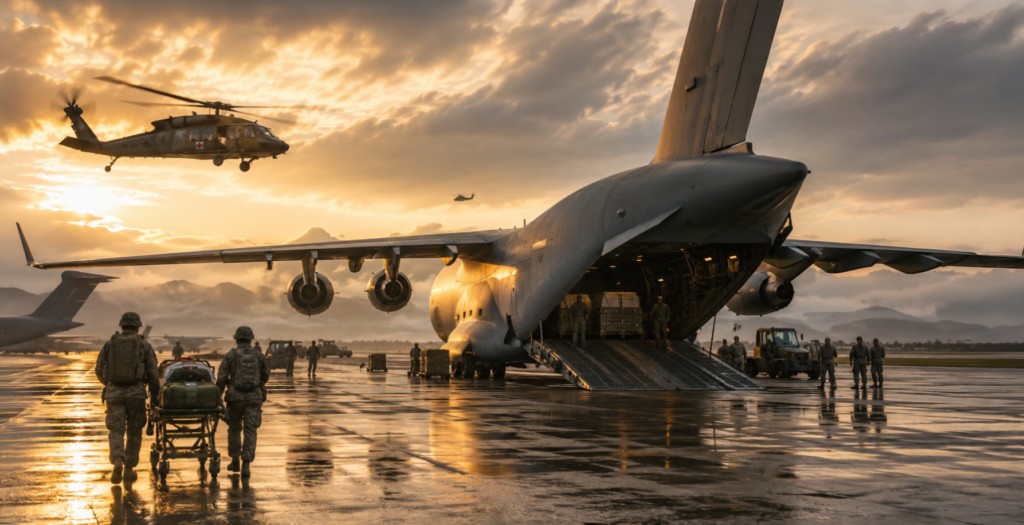
Military aircraft play an essential role during humanitarian assistance, disaster response, medical evacuation, and global logistics missions. During an Ebola response, these aircraft may transport personnel, medical supplies, patients, and support teams into and out of affected regions. Because of that, they can be exposed to biological contaminants that require thorough decontamination before returning to service.
Rapid, effective decontamination helps protect flight crews, maintenance personnel, medical teams, and future passengers while minimizing operational downtime during an Ebola response.
As Ebola and other infectious disease threats continue to evolve, maintaining aircraft readiness has become an important component of overall mission preparedness.
Engineered for Mission-Critical Operations
Building on decades of decontamination expertise, AeroClave developed advanced aircraft decontamination systems capable of restoring contaminated military assets to operational status following biological incidents.
Originally developed for the U.S. military, AeroClave’s Joint Biological Agent Decontamination System (JBADS) uses a precision-controlled heat and humidity process to neutralize biological threats without relying on harsh, corrosive chemicals that could damage sensitive aircraft systems. The technology is designed to decontaminate both the interior and exterior of large military aircraft in a single process while preserving mission-critical equipment.
The technology has undergone extensive government testing and has demonstrated effectiveness against a range of biological threats—including Ebola, SARS, and Anthrax—while meeting demanding military performance requirements.
The RDS 3110 uses the patented AeroClave Process™ to deliver an EPA-approved, hospital-grade disinfectant throughout the treatment area, helping provide consistent coverage that is difficult to achieve through manual cleaning alone.
Effective against a broad spectrum of bacteria, viruses, fungi, and other microorganisms, the AeroClave Process™ helps organizations eliminate harmful pathogens from critical assets while supporting safer environments for patients, healthcare workers, and first responders.
From Healthcare Preparedness to Defense Readiness
The same commitment to infection prevention that supports hospitals, EMS agencies, and public health organizations also extends to military operations.
Whether helping healthcare organizations decontaminate ambulances and treatment areas or enabling military organizations to rapidly restore aircraft following a biological incident, AeroClave’s mission remains the same: helping organizations safely eliminate harmful pathogens while protecting people, preserving critical assets, and maintaining operational readiness.
Preparing for Tomorrow’s Threats
Ebola is one of many infectious diseases that demonstrate how quickly biological threats can impact global operations. Preparing for future Ebola outbreaks and other infectious disease emergencies requires more than response plans—it requires proven technologies capable of supporting the people and equipment that make those plans possible.
From healthcare facilities and emergency response vehicles to fixed-wing aircraft, rotorcraft, and other mission-critical assets, effective decontamination helps ensure organizations are ready to respond whenever and wherever they are needed.
© 2026 AeroClave