A tiny protein can turn unsafe water into a medical emergency. People often search for cholera toxin b when they want to understand how cholera gets so dangerous-and what to do about it fast. According to the World Health Organization, between January 2025 and August 2025 there were 409,222 cholera/acute watery diarrhea cases and 4,738 deaths reported across 31 countries, showing how quickly outbreaks can escalate. While disinfectants can kill the cholera bacteria on surfaces, neutralizing the toxin itself takes different steps.
This post explains what cholera toxin b means in practice, how to cut risk in real settings, and the right way to clean, disinfect, and protect people during outbreaks.
What cholera toxin b means for everyday safety
Cholera is caused by the bacterium Vibrio cholerae. The bacterium can make a powerful toxin that drives the severe watery diarrhea and dehydration that put people at risk. For cleaning and prevention, two truths matter:
- You fight the bacteria on surfaces and in spaces.
- Toxins are proteins; neutralizing them often needs different steps than killing bacteria.
That difference is why the right response mixes WASH, fast treatment, surface/room disinfection for the bacteria, and special handling rules for protein toxins.
Symptoms to watch for and when to act
Most infected people never feel sick or have only mild symptoms-but they can still shed germs for days. When cholera causes illness, symptoms can appear 12 hours to 5 days after exposure and may include:
- Sudden, profuse watery diarrhea (often “rice-water” in appearance)
- Vomiting and stomach upset
- Rapid dehydration: intense thirst, dry mouth, sunken eyes, little or no urine, fatigue
- Electrolyte loss: leg cramps; in severe cases, shock
Act fast: Severe dehydration is a medical emergency. Start ORS immediately and seek care. Severe cases need IV fluids, continued ORS, and antibiotics under medical guidance. With proper care, the case-fatality rate in treatment centers should stay below 1%.
Who’s at higher risk-and why outbreaks surge
Cholera thrives where people lack safe water, sanitation, and hygiene. Conflict, displacement, floods, drought, and damaged infrastructure all raise risk. Outbreaks can spread across borders and hit rural, hard-to-reach areas where access to care is delayed. Long-term solutions are safe drinking water, basic sanitation, and hand hygiene. During crises, layered public-health action-surveillance, fast case management, WASH measures, community engagement, and vaccine campaigns-slows transmission.
Prevention 101 for travelers, households, and facilities
Water & food basics
- Drink bottled, boiled, or properly treated water. Don’t use unsafe ice.
- Eat food cooked and served hot. Avoid raw or undercooked seafood.
- Stick to fruits you can peel; skip raw salads in higher-risk areas.
Wash hands with soap and safe water often (or use ≥60% alcohol sanitizer if water isn’t available).
Community measures during outbreaks
- Set up oral rehydration points (ORPs) and distribute ORS widely.
- Improve WASH in clinics, shelters, schools, and markets.
- Share clear messages on symptoms, when to seek care, safe food and water, and safe burials.
- Use oral cholera vaccines (OCV) strategically when supply allows, alongside WASH and care access.
Cleaning smart: bacteria vs. protein toxins
People often ask if a disinfectant that kills bacteria will also knock out cholera toxin b. Short answer: not necessarily. Here’s the practical split you should use on the job.
Kill the bacteria on surfaces and in rooms
A hospital-grade disinfectant with proven bactericidal claims is your workhorse for Vibrio cholerae on non-porous surfaces.
- Stabilized chlorine dioxide (Vital Oxide) is an EPA-registered hospital-grade disinfectant. It’s designed to kill a broad range of bacteria, including the cholera germ, on inanimate surfaces.
- Use it as labeled: correct dilution, coverage, and contact time.
- Remember: surface disinfectants are not for people. They don’t treat illness and must never be applied on skin, ingested, or used as a medical therapy.
Neutralize the protein toxin with different tools
Protein toxins need inactivation, not routine surface kills. For suspected cholera toxin b contamination in lab or spill scenarios, follow stringent protocols:
- High heat: Autoclave at 121 °C (250 °F), 15 psi, for 60-90 minutes. In kitchens, thorough cooking destroys protein toxins in food.
- Strong oxidizers: 10% bleach (sodium hypochlorite) for at least one hour on compatible surfaces is a widely used lab method to inactivate toxins.
- Other avenues under study: Some research has shown certain plant extracts (e.g., red chili) may suppress toxin production in bacteria, and some probiotic strains can remove toxin from solutions. Treat these as adjuncts, not replacements for heat/bleach in safety protocols.
Don’t rely on general-use disinfectants alone to neutralize protein toxins. Their job is to kill organisms, not to dismantle already-secreted proteins.
Step-by-step cleanup if you suspect cholera toxin b or cholera contamination
- Protect yourself
- Wear gloves and, if splashes are possible, eye protection and a mask.
- Keep people out of the area.
- Contain and remove solids safely
- Absorb spills with disposable towels. Do not dry sweep or vacuum potentially contaminated powders or dried residues that could aerosolize.
- Disinfect for bacteria
- Apply an EPA-registered hospital-grade disinfectant per label (coverage + contact time). Focus on high-touch points, floors, handles, counters, and equipment.
- Inactivate protein toxin where applicable
- For lab-type spills or high-risk residues, use 10% bleach for ≥60 minutes on compatible surfaces, or bag/WHT (wet-hold-treat) items for autoclaving.
- For food contact items, after inactivation, wash, rinse, and sanitize appropriately; ensure materials tolerate bleach/heat.
- Waste & laundry
- Double-bag disposable materials. Handle laundry as potentially contaminated: hot water cycle; dry fully.
- Ventilation & re-entry
- Increase air exchange (open windows/turn on HVAC where safe). Re-enter after contact times are met and the area is dry.
Cholera Toxin b in context: what actually reduces community risk?
Most real-world transmission is fecal-oral-contaminated water or food. That means your biggest wins come from:
- Safe water: supply and storage
- Sanitation: working toilets/latrines, safe waste handling
- Hand hygiene with soap and safe water
- Food safety: cook thoroughly, avoid cross-contamination
- Fast treatment access: ORS everywhere people live, work, travel, and queue
- Targeted vaccination campaigns when available
Room and vehicle disinfection supports those pillars by cutting bacterial load on surfaces, reducing opportunities for indirect spread where people gather, receive care, or are transported.
How our disinfection systems support cholera response
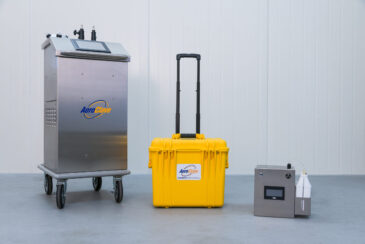
Surface and room infection control is only one layer, but it’s a critical one in outbreaks. Our room and vehicle decontamination systems use a fine-mist application of a hospital-grade, EPA-registered disinfectant (Vital Oxide) to provide uniform coverage across large and complex spaces, ambulances, exam rooms, waiting areas, classrooms, and dorms. Third-party-validated systems like these are:
- Consistent: automated cycles reduce misses and human error
- Fast: quick room/vehicle turnaround supports throughput in crises
- Electronics-friendly: appropriate for sensitive equipment when used as directed
Important: This engineering control targets bacteria, including Vibrio cholerae, on inanimate surfaces. It does not treat people and is not a toxin neutralizer. Use it alongside WASH, medical care, and toxin inactivation protocols where those apply.
Can disinfectants kill cholera toxin b? (What to expect-and what not to expect)
- Vital Oxide and similar hospital-grade disinfectants: great for bacteria on surfaces. They are not formulated to denature or neutralize protein toxins already present.
- Protein toxin inactivation: use autoclaving (121 °C, 60-90 min) and 10% bleach (≥1 hour) on compatible surfaces. For food, thorough cooking destroys protein toxins.
- Research notes: Some plant extracts have been shown to suppress toxin production in bacteria, and certain probiotics can bind/remove toxin from solutions in studies. Treat these as supporting science, not your primary cleanup method.
In Conclusion: Cholera Toxin B
In conclusion, cholera toxin b is a reminder that cholera safety has two parts: stop the bacteria and, when needed, inactivate the toxin. Use safe water, sanitation, and handwashing to cut everyday risk. For spaces and surfaces, an EPA-registered hospital-grade disinfectant controls the bacteria on inanimate surfaces. For the toxin, use protocols that work on proteins-like thorough cooking for food, 10% bleach for at least one hour on compatible surfaces, or autoclaving at 121 °C for 60-90 minutes. Keep ORS ready, seek care fast for dehydration, and follow local guidance on vaccination during outbreaks. Build simple SOPs, train your team, document cleaning cycles, and pair surface disinfection with strong WASH practices to protect people.
Contact AeroClave today to learn how our advanced decontamination systems can protect your team and community.
Sign Up Below To Learn If AeroClave is Right For You
FAQs About Cholera Toxin B
Is cholera toxin b contagious like cholera?
No. Toxins are not alive and do not spread on their own. The bacterium (Vibrio cholerae) is the contagious part. Focus on safe water, sanitation, hygiene, and surface disinfection to control bacteria.
Will an EPA-registered disinfectant neutralize cholera toxin b on a counter?
Expect it to kill bacteria, not to neutralize a protein toxin already present. For toxin concerns, use 10% bleach for ≥60 minutes on compatible surfaces or autoclave appropriate items.
Is there a vaccine-and does it relate to cholera toxin b?
Oral cholera vaccines (OCV) help prevent and control cholera when used with WASH and care access. They are a population-level tool; for day-to-day safety, stick to water/food hygiene and rapid treatment if symptoms start.
FAQs About AeroClave
What does AeroClave provide during outbreaks?
Automated room and vehicle disinfection that applies a hospital-grade, EPA-registered disinfectant uniformly, helping reduce bacterial load-including Vibrio cholerae-on hard, non-porous surfaces.
Can your systems neutralize cholera toxin itself?
No. Our systems target microorganisms on surfaces. Protein toxin inactivation requires heat (e.g., autoclaving) or strong oxidizers like 10% bleach per lab safety protocols.
Where are your systems most helpful in a cholera response?
Ambulances, triage areas, treatment rooms, shelters, classrooms, kitchens, and restrooms-anywhere consistent, rapid, and documented surface disinfection reduces indirect exposure risk.
Explore More Articles on Health and Safety
- Canine Coronavirus Explained: Keeping Dogs Safe
- Hantavirus Pulmonary Syndrome Prevention and Disinfection
- AeroClave Delivers Breakthrough Biosecurity Operation at Tinker AFB with JBADS Lite Decontamination of E-3 Sentry Aircraft
- Measles Outbreak Michigan: What You Need to Know
- Legionnaires Disease Outbreak in Harlem: What You Need to Know and How to Stay Safe
- Measles Outbreak Canada: Risk Factors and Safety
- Norovirus Outbreaks 2025: What You Need to Know
- Flu Brain Damage: Facts Every Parent Should Know
- What You Should Know About UVC Disinfection: The Hidden Risks
- Raw Milk Dangers: What You Need to Know Before You Drink
© 2026 AeroClave