A Florida legionnaires outbreak is the kind of headline that stops people mid-scroll-because it points to a problem that can affect everyday places like gyms, hotels, apartments, and any building with warm-water systems. Florida’s own public health data shows why this matters: in 2024, the state recorded 632 legionellosis cases, a rate of 2.7 per 100,000 people. FLHealthCHARTS
That context helps explain the concern around what’s been reported in Orange County: a sharp late-2025 increase in cases and a smaller cluster described as linked to “gym exposure,” with public reporting pointing to a facility in the Ocoee area and an ongoing investigation.
In this post, you’ll get the latest publicly reported facts about the Florida situation, what Legionnaires’ disease is and how it spreads, who is most at risk, what symptoms to watch for, and the practical steps residents and facility managers can take to reduce risk during a Florida legionnaires outbreak.
Florida legionnaires outbreak in Orange County: what’s been reported
Orange County has seen a sharp rise in reported Legionnaires’ disease cases compared to what is typically observed at this time of year.
A major spike in late 2025
According to Florida Department of Health reporting cited by local media, 38 confirmed cases were reported in Orange County between November 1 and December 6. That figure was described as a large seasonal spike compared with what is usually observed (no more than four since 2020, for the same time of year). Orange County was also reported to have 95 cases in 2025, the highest in the county’s 30-year state record.
“Gym exposure” and limited public detail
The Florida Department of Health has said an investigation is ongoing, and the agencies involved have not publicly released full details about where exposures occurred.
State Sen. Carlos Guillermo Smith reported that the state health department confirmed 14 cases associated with “gym exposure,” but did not name the gym in that message.
Local media identified the gym as a Crunch Fitness in Ocoee, and the gym publicly stated it was working with public health officials.
Environmental testing reports from the gym
Two sets of test details were publicly shared via the gym’s communications in separate reporting:
- One report described the Department collecting 40 water samples across gym facilities and that those were testing negative.
- Another report cited 20 environmental samples (including bulk-water and swab samples) and stated they tested negative for Legionella, including samples from spa systems, showers, hot water heaters, fountains, sinks, and the exterior water main.
Public health officials did not publicly confirm the gym’s statements in the reporting cited, and the investigation was described as ongoing.
What Legionnaires’ disease is
Legionnaires’ disease (legionellosis) is a lung infection caused by Legionella bacteria. It was first identified after a 1976 pneumonia outbreak linked to an American Legion convention in Philadelphia.
How it spreads
Legionnaires’ disease is generally linked to inhaling aerosolized water that contains Legionella. It is not transmitted person to person.
Sources of contaminated aerosols can include:
- Cooling towers
- Showers
- Faucets
- Spas and hot tubs
- Decorative fountains
Legionella bacteria thrive in warm, aquatic environments and are described as relatively resistant to the effects of chlorine and heat.
The exposure window
Symptoms can appear 2 to 14 days after exposure, with many cases experiencing symptoms around five to six days after exposure.
Symptoms to watch for in a Florida legionnaires outbreak
Legionnaires’ disease is a severe form of pneumonia. Reported signs and symptoms can include:
- High fever
- Chills
- Cough
- Shortness of breath
- Muscle aches
- Headaches
Gastrointestinal symptoms occur in 20% to 40% of cases.
When to contact a physician
If symptoms begin to develop-especially after potential exposure-public health and medical experts emphasized checking in with your physician promptly.
Pontiac Fever: a milder illness caused by the same bacteria
A milder infection caused by the same type of Legionella bacteria is called Pontiac Fever.
- Symptoms can include fever, headache, and muscle aches.
- Unlike Legionnaires’ disease, Pontiac Fever does not involve pneumonia.
- Symptoms usually resolve without medical intervention.
Who is most at risk
In a Florida legionnaires outbreak, risk is not equal across the population. People reported as most at risk include:
- Individuals 50 or older
- Current or past smokers
- People with chronic lung disease (such as emphysema)
- People with weak immune systems due to diseases such as cancer, diabetes, or kidney failure
- People taking immunosuppressive drugs, including after transplant operations or during chemotherapy
How serious is Legionnaires’ disease?
In reporting cited from epidemiologists and public health sources:
- Even with treatment, Legionnaires’ disease was described as having about a 10% case fatality rate.
- CDC-referenced figures also stated that about 1 out of every 10 people who develops Legionnaires’ disease will die due to complications.
- Among those who develop the disease during a health care facility stay, the CDC-referenced figure cited about 1 out of every 4 people dying due to complications.
At the time of the Orange County reporting, no fatalities were reported in connection with the group of gym-exposed cases described.
Why water systems and maintenance practices matter
The core risk factor in many outbreaks is not “dirty surfaces.” It is water systems that allow Legionella to grow and spread through aerosols.
What conditions support Legionella growth
Public health information described Legionella as growing best in warm water, and legal/public reporting emphasized concern about stagnant or slow-moving warm water (such as hot tubs and spa systems).
What controls reduce growth risk
Reporting tied to gym inspections and broader water-safety practices referenced several control points:
- Maintaining proper water temperature
- Maintaining proper water movement
- Using disinfectants to disinfect the water
- Monitoring key measures such as disinfectant levels and water pH
- Using water management plans that include regular testing and proper sanitation
Practical steps for facility owners during a Florida legionnaires outbreak
If you run or manage a building with showers, spas, or complex plumbing (including gyms, hotels, multi-family properties, and healthcare-adjacent facilities), these steps follow what has been publicly discussed in the reporting you shared.
Immediate steps
- Cooperate quickly with public health investigators and provide access for sampling and evaluation.
- Restrict access to higher-risk water features (such as spas) if advised, or if concerns arise during investigation.
- Document system conditions (temperature, pH, disinfectant levels) as part of the facility response.
Ongoing controls
- Maintain and follow a water management plan designed to reduce Legionella growth.
- Monitor and maintain proper disinfectant levels, along with temperature and pH.
- Ensure water systems do not create conditions where warm, slow-moving water persists.
Practical steps for residents and gym members
If you are concerned about a Florida legionnaires outbreak, these are practical steps grounded in what’s been reported:
- Remember that Legionnaires’ disease is not person-to-person, so household spread is not the core risk.
- Focus your attention on potential water aerosol sources (showers, spas, fountains, and similar features).
- If you develop pneumonia-like symptoms-fever, cough, shortness of breath-contact your physician, especially if you are in a higher-risk group.
How to strengthen your facility response during a Florida legionnaires outbreak
If you manage a gym, hotel, apartment community, healthcare-adjacent space, or any building with showers, spas, or complex plumbing, a Florida legionnaires outbreak is a reminder to treat water-system risk as an operational priority-not a PR issue.
What to do right now
- Document your water conditions: disinfectant levels, water temperature, and pH-especially for spa systems, showers, and other warm-water features.
- Reduce aerosol risk where possible: limit access to higher-risk water features if concerns arise and follow guidance from inspectors or public health officials.
- Support investigation quickly: make it easy for sampling, walkthroughs, and follow-up requests so potential exposure sources can be ruled in or out faster.
- Reinforce your water management plan: consistent monitoring and corrective action are central themes in both public health guidance and outbreak reporting.
When you should ask for outside support
Consider getting help if you’re facing any of the following:
- You operate high-use showers/spas or similar warm-water systems.
- You’ve had recent complaints or community concern tied to your facility.
- You need a faster, more structured way to document controls and response steps during a Florida legionnaires outbreak.
AeroClave decontamination and disinfection for facilities impacted by a Florida legionnaires outbreak
When a Florida legionnaires outbreak is tied to “gym exposure” or any building water system, the operational challenge is speed and consistency: you need a repeatable way to reduce microbial risk in the environment while your team documents conditions and cooperates with public health steps.
How AeroClave supports facility-wide decontamination
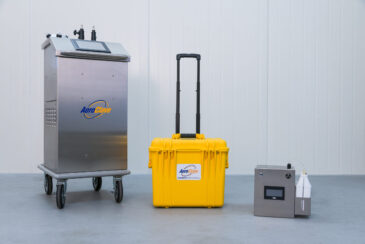
AeroClave’s approach centers on automated room and facility decontamination systems that apply disinfectant as an aerosolized fog to help deliver significantly more uniform coverage than hand-wiping alone-especially in hard-to-reach areas and across larger spaces.
Key components include:
- Vital Oxide: An EPA-registered hospital disinfectant that is surface safe to treat surfaces and is perfect for use in Aeroclave systems like the RDS 3110.
- Broad-spectrum positioning and Legionella relevance: Vital Oxide is broad-spectrum and lists Legionella pneumophilia among organisms it says it has been proven effective against. Using Vital Oxide with AeroClave systems is proven to protect against Legionella and help reduce the risk of an outbreak.
- Scalable systems: AeroClave has solutions ranging from modular, permanently mounted systems (mRDS) to larger room systems (RDS 6110) designed for decontamination use cases in institutional environments.
Your next step
If you manage a gym, hotel, multifamily property, or public facility and want a practical way to strengthen environmental controls during a Florida legionnaires outbreak, fill out the form on this page. The goal is to help you quickly evaluate a decontamination workflow that fits your layout, operational constraints, and response timeline-so you can move from uncertainty to a documented, repeatable process.
Conclusion: Florida legionnaires outbreak
In conclusion, the Florida legionnaires outbreak reporting in Orange County underscores a critical point: Legionnaires’ disease is a serious, pneumonia-like illness tied to aerosolized water exposure (not person-to-person spread), and it can be associated with warm-water systems and features like showers, spas, and other plumbing components. The most important takeaways are to recognize the key symptoms (fever, cough, shortness of breath, muscle aches, headaches, and possible gastrointestinal issues), understand the 2-14 day exposure window, and pay attention to higher-risk groups such as adults 50+, current or former smokers, and people with chronic lung disease or weakened immune systems. For facilities, the priority is consistent water management, including monitoring disinfectant levels, temperature, and pH, and promptly supporting public health investigations when cases are suspected.
Contact AeroClave today to learn how our advanced decontamination systems can protect your team and community.
Sign Up Below To Learn If AeroClave is Right For You
FAQs About Florida legionnaires outbreak
What is a Florida legionnaires outbreak?
A Florida legionnaires outbreak refers to a situation where multiple cases of Legionnaires’ disease are reported in the same area or linked by suspected exposure sources. In Orange County reporting, investigators described a spike in countywide cases and reported a subset associated with “gym exposure.”
Is Legionnaires’ disease contagious from person to person?
No. Legionnaires’ disease is not transmitted person to person. Infection is linked to inhaling aerosolized water droplets contaminated with Legionella.
What are common sources of exposure in a Florida legionnaires outbreak?
Public health information links exposure to aerosolized water from sources such as cooling towers, showers, faucets, spas/hot tubs, and decorative fountains.
How soon do symptoms show up after exposure?
The exposure window cited was 2 to 14 days, with many cases experiencing symptoms around five to six days after exposure.
What symptoms should I watch for?
Common symptoms include high fever, chills, cough, shortness of breath, muscle aches, and headaches. Gastrointestinal symptoms occur in 20% to 40% of cases.
Who is most at risk during a Florida legionnaires outbreak?
Higher-risk groups include people 50+, current or former smokers, those with chronic lung disease, and people with weakened immune systems (including from diseases like cancer, diabetes, or kidney failure) or those taking immunosuppressive drugs.
How deadly is Legionnaires’ disease?
Figures cited in the reporting stated that about 1 in 10 people with Legionnaires’ disease die due to complications. Among cases acquired during a health care facility stay, the figure cited was about 1 in 4.
What is Pontiac Fever?
Pontiac Fever is a milder illness caused by the same type of Legionella bacteria. It can cause fever, headache, and muscle aches, but does not cause pneumonia and usually resolves without medical intervention.
Explore More Articles on Health and Safety
- What You Need to Know About the Dengue Outbreak in 2025
- Razor Blade Throat Covid Variant: What it is and How to Stay Safe
- West Nile Virus: What You Need to Know Now
- Cholera Toxin B: Protecting Against Outbreaks
- Henipavirus: Understanding this Emerging Threat
- Flesh Eating Bacteria in Florida: What You Need to Know
- Measles Outbreak in Wisconsin: What You Need to Know
- Staphylococcus Prevention: How to Stay Safe from Staph Infections
- Best Ways to Kill and Protect Yourself with Legionella Pneumophila Prevention
- How to Kill and Protect Against Norovirus 2025 with AeroClave
- Chikungunya Explained: A Comprehensive Guide
- West Nile Virus Outbreak: What You Need to Know
- Oropouche: What You Need to Know Now
- Nipah Virus: What You Need To Know
- What causes hand foot and mouth disease
- Norovirus vs Food Poisoning: Treatment and Prevention
- How Flu Spreads: Simple Steps to Protect Your Family This Season
- Tuberculosis Outbreak 2025: What You Need to Know Right Now
- The Superbug Showdown: How We Tackle MRSA and NDM-1 Klebsiella
- Beyond the “Stomach Bug”: Killing The Foodborne Pathogen Listeria in Your Facility
© 2026 AeroClave