As of February 2026, healthcare systems across Asia have been placed on high alert following the confirmation of new human cases in West Bengal, India, where local health officials successfully quarantined nearly 200 individuals to prevent further spread. The Nipah Virus Outbreak 2026 highlights a persistent and lethal threat, with case fatality rates historically ranging from 40% to 75% or higher depending on the strain and the speed of medical intervention. This article provides an operational guide for healthcare and border security professionals on identifying transmission risks, implementing high level disinfection protocols, and integrating advanced technology to ensure facility safety.
Understanding the Nipah Virus Outbreak 2026
Nipah virus (NiV) is a member of the Henipavirus genus and is classified as a Risk Group 4 pathogen, necessitating the highest levels of biocontainment. It is a zoonotic virus, meaning it primarily jumps from animals to humans, with fruit bats of the Pteropodidae family serving as the natural reservoir. While outbreaks are often geographically limited to South and Southeast Asia, the 2026 events in West Bengal have underscored the virus’s ability to compromise healthcare environments, specifically infecting two nurses in a private facility in Barasat.
The Stakes: Mission Readiness and Personnel Safety
In the high-stakes environment of a hospital or border checkpoint, the appearance of a pathogen like Nipah is not just a medical emergency; it is an operational crisis. Because the virus can be transmitted through direct contact with infected bodily fluids, including respiratory droplets, urine, and saliva, healthcare workers are at a significantly higher risk. The current lack of any licensed vaccine or specific antiviral treatment means that facility management must rely entirely on intensive supportive care and rigorous infection control to protect staff and maintain mission readiness.
Critical Transmission Pathways and Operational Hygiene
The Nipah Virus Outbreak 2026 is primarily driven by three transmission routes: zoonotic spillover, contaminated food, and human-to-human contact. Understanding these pathways is essential for developing an effective hygiene and disinfection strategy in both community and clinical settings.
Zoonotic and Foodborne Exposure
In the current Nipah virus 2026 landscape, infections often start when humans come into contact with the secretions of infected fruit bats (Pteropus species).
- Contaminated Food: Consuming raw date palm sap contaminated with bat saliva or urine has been a major source of transmission in Bangladesh and India.
- Animal Vectors: Direct contact with infected animals, such as pigs, can also spread the virus, as seen in the original 1999 Malaysia outbreak.
- Prevention Measures: Professionals in endemic areas must advise against consuming fruit showing signs of bat bites and ensure all date palm juice is boiled before consumption.
Human-to-Human Transmission in Healthcare
Person-to-person spread occurs through close contact with the bodily fluids of an infected individual.
- Caregiver Risk: Transmission is most common among family members and healthcare providers who care for infected patients without adequate protection.
- Respiratory Transmission: Individuals with respiratory symptoms pose a high risk of spreading the virus through droplets.
- Infection Control: Strict adherence to contact, droplet, and airborne precautions is mandatory in any facility managing a suspected Nipah case.
Operational Challenges in Pathogen Containment
Managing a Nipah virus event involves overcoming several critical industry obstacles that can lead to protocol breakdown. These challenges are often exacerbated by the high-tempo nature of modern healthcare and travel hubs.
Diagnostic Complexity and Asymptomatic Spread
Early detection of the Nipah virus is notoriously difficult because the initial symptoms, fever, headache, and muscle pain, are non-specific and easily mistaken for more common illnesses like influenza or malaria. The incubation period typically ranges from 4 to 21 days, though periods as long as 45 days have been documented in rare instances. This “silent period” creates a window where infected individuals may traverse border points or interact with healthcare staff before severe neurological symptoms, such as encephalitis or brain swelling, emerge.
Environmental Persistence and Biohazard Risk
Nipah virus is shed in various bodily excretions and can survive in the environment, particularly on moist surfaces soiled by infected animals or humans. In healthcare settings, all waste generated during the care of a suspected patient must be handled as a high-level biohazard. The requirement to treat linen, laundry, and all contact surfaces with specialized protocols adds a layer of complexity to facility turnover times.
Protocol vs. Reality
The friction point occurs where standard manual cleaning protocols meet the high-tempo reality of a busy hospital or international airport. Manual wiping is subject to human error, particularly when staff are facing burnout or operating under the pressure of a potential epidemic. When a single missed surface or a slight lapse in PPE usage can lead to a 75% fatality risk, the gap between “standard protocol” and “total containment” becomes a liability that facilities cannot afford to ignore.
Disinfection Strategies for High-Risk Pathogens
Effective management of the Nipah Virus Outbreak 2026 requires a move beyond traditional housekeeping toward a comprehensive, high-level disinfection (HLD) framework. This strategy must account for the virus’s ability to infect multiple organ systems and survive in diverse excretions.
Manual Surface Protocols and Their Limitations
Standard manual cleaning involves the use of hospital-grade disinfectants, often bleach-based, to treat high-touch surfaces. While essential for removing organic matter, manual wiping has significant drawbacks in an outbreak scenario. It is often inconsistent, leaves behind “shadow areas” that a wipe cannot reach, and relies heavily on the staff’s ability to maintain a wet contact time of up to ten minutes depending on the chemical used. In a Nipah-contaminated room, even a microscopic omission can lead to secondary transmission to the next occupant or cleaning crew.
Where AeroClave Fits into a Healthcare Protection Plan
The modern healthcare environment is under unprecedented pressure. Staffing shortages and the constant need for rapid room turnover often result in a “speed over thoroughness” culture that pathogens like Nipah exploit. Facilities need a system that removes the variability of human performance from the disinfection equation.
That is where AeroClave fits.
Treating the Room as a System with AeroClave
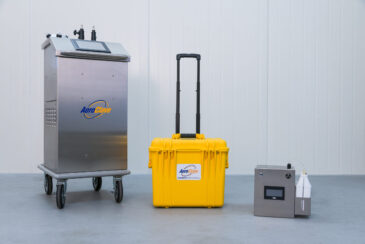
AeroClave transitions the disinfection process from a manual chore to an automated, systematic operation. An automated fogging system treats every square inch of a room-including ceilings, under beds, and high-velocity air ducts-simultaneously. This room as a system approach is powered by Vital Oxide, a hospital-grade disinfectant that is effective against a broad spectrum of pathogens while remaining safe for sensitive medical equipment.
The Preferred Option for Repeatability and Documentation
In the context of the Nipah virus, where legal and regulatory scrutiny is inevitable during an outbreak, documentation is as important as the cleaning itself. AeroClave provides a repeatable, verifiable disinfection cycle that can be logged and audited. This removes the guesswork of whether a room was properly treated, providing a level of liability protection and peace of mind that manual cleaning cannot offer.
Why Healthcare Teams use AeroClave during the Nipah Virus Outbreak 2026
- Standardization: Every cycle is identical, ensuring that the last room of the day is as clean as the first, regardless of staff fatigue.
- Total Coverage: The fine mist reaches into crevices and shadow areas where manual wipes fail to penetrate.
- Speed of Operation: Automated cycles can treat an entire patient room or ambulance in a fraction of the time required for a manual deep-clean.
- Compliance: Helps facilities meet the rigorous IPC (Infection Prevention and Control) standards required for high-priority pathogens.
- Staff Integration: Simple to deploy, allowing clinical staff to focus on patient care while the system handles the biohazard mitigation.
What Success Looks Like: The 3-Step Operational Workflow
- Clean First: Remove all visible organic matter and debris from the environment.
- AeroClave Workflow: Deploy the system to saturate the space with an automated mist of Vital Oxide.
- Label Basics: Ensure all treated areas are marked and allowed the appropriate dwell time for total pathogen inactivation.
For organizations facing the operational realities of a high-consequence viral event, maintaining a virus-free environment is the only way to safeguard the bottom line and public health.
Conclusion: Nipah Virus Outbreak 2026
In conclusion, managing the Nipah Virus Outbreak 2026 requires a dual focus on early detection and rigorous environmental control. While the virus presents a formidable challenge due to its high fatality rate and lack of a vaccine, proactive measures such as contact tracing, public education, as well as high-level disinfection can significantly reduce its impact. By integrating advanced solutions like AeroClave into their safety protocols, facilities can ensure they are prepared for the operational realities of this high-risk pathogen.
If you are ready to enhance your facility’s protection plan, contact AeroClave today to learn more about our automated disinfection systems and how they can safeguard your team against the threat of emerging viruses.
Sign Up Below To Learn If AeroClave is Right For You
FAQs About Nipah Virus Outbreak 2026
What are the primary symptoms of a Nipah virus infection?
Symptoms typically begin with a sudden-onset flu-like illness, including fever, headache, and muscle pain. Overall the most serious complication is encephalitis (brain inflammation), which can lead to confusion, seizures, and coma.
Is there a vaccine available for Nipah virus in 2026?
No, there is currently no licensed vaccine or specific antiviral treatment for Nipah virus. Usually care is limited to intensive supportive treatment for severe cases.
How can I protect my healthcare facility from Nipah virus?
Protection involves strict adherence to infection prevention and control (IPC) measures. This includes the use of PPE and high-level disinfection of patient environments. Automated systems like AeroClave provide an added layer of safety by ensuring consistent, total-room coverage.
Does AeroClave offer on-site training for its disinfection systems?
Yes, AeroClave provides comprehensive training and support. In order to ensure that staff can effectively and safely operate the equipment in high-stakes environments.
Is AeroClave technology suitable for use in public transportation hubs?
Yes, AeroClave systems can serve airports, schools, and other public spaces.. They help to maintain high standards of hygiene and prevent the spread of contagious diseases.
Explore More Articles on Health and Safety
- What You Need to Know About the Dengue Outbreak in 2025
- Razor Blade Throat Covid Variant: What it is and How to Stay Safe
- West Nile Virus: What You Need to Know Now
- Cholera Toxin B: Protecting Against Outbreaks
- Henipavirus: Understanding this Emerging Threat
- Flesh Eating Bacteria in Florida: What You Need to Know
- Measles Outbreak in Wisconsin: What You Need to Know
- Staphylococcus Prevention: How to Stay Safe from Staph Infections
- Best Ways to Kill and Protect Yourself with Legionella Pneumophila Prevention
- How to Kill and Protect Against Norovirus 2025 with AeroClave
- Chikungunya Explained: A Comprehensive Guide
- West Nile Virus Outbreak: What You Need to Know
- Oropouche: What You Need to Know Now
- Nipah Virus: What You Need To Know
- What causes hand foot and mouth disease
- Norovirus vs Food Poisoning: Treatment and Prevention
- How Flu Spreads: Simple Steps to Protect Your Family This Season
- Tuberculosis Outbreak 2025: What You Need to Know Right Now
- The Superbug Showdown: How We Tackle MRSA and NDM-1 Klebsiella
- Beyond the “Stomach Bug”: Killing The Foodborne Pathogen Listeria in Your Facility
© 2026 AeroClave