Recent reports from early 2026 indicate a significant rise in respiratory health alerts across the United States.(CDC) In the opening weeks of the year, a legionnaires disease outbreak 2026 has already been identified in major metropolitan areas like New York City and Ector County, Texas. This guide examines the technical causes of these clusters, the operational risks to facility managers, and the protocols required to maintain safety in high-stakes environments. This article provides a comprehensive analysis of pathogen behavior, structural risks, and the implementation of automated disinfection solutions.
Understanding Legionnaires Disease Outbreak 2026
Legionnaires’ disease is a severe, potentially fatal form of pneumonia caused by the Legionella bacteria. While scientists have identified over 50 known species of the genus, Legionella pneumophila is responsible for more than 80 percent of reported infections in the United States. This specific pathogen thrives in manmade water systems where temperatures, nutrients, and stagnation create an ideal incubation environment.
Technical Foundations of Legionella Growth
The bacteria typically grow within a biofilm layer, which is a thin, slimy film that forms on the interior surfaces of pipes and tanks. This biological layer protects the bacteria from standard chemical treatments and allows it to replicate undisturbed. When contaminated water is aerosolized into fine mists or droplets, it becomes a significant inhalation hazard for anyone in the vicinity.
Pathogen Profile and Incubation Periods
Understanding legionnaires disease and how it is spread is the first step in preventing a life-threatening cluster. Symptoms usually develop between 2 to 14 days after exposure to the bacteria, though some cases may take longer to manifest. The primary mode of transmission is the inhalation of contaminated aerosols from cooling towers, showerheads, or decorative fountains.
Environmental Stability and Temperature Zones
The bacteria remain dormant in cold water but begin to multiply rapidly as temperatures rise. The “danger zone” for bacterial amplification is between 68 degrees and 122 degrees Fahrenheit. Maintaining water temperatures outside of this range is a critical component of any facility safety plan.
The Operational Stakes of Infection Control
The stakes of an outbreak are measured in human lives and organizational liability. Beyond the clinical impact, an outbreak threatens the very mission and continuity of a facility. Personnel safety and mission readiness must remain the top priorities for any administrator or safety officer.
Clinical Impacts and Mortality Rates
Statistical data indicates a general fatality rate of approximately 10% for those who contract the disease. Furthermore, this risk increases dramatically in healthcare settings, where 1 out of every 4 infected patients will die. Ultimately, these numbers prove the absolute necessity of rigorous environmental controls.
Organizational Liability and Public Trust
A single confirmed case can lead to mandatory shutdowns, intense local health department investigations, and legal action. The loss of public trust following an outbreak can have long-term financial and reputational consequences. Maintaining a safe environment is a core component of operational readiness and personnel protection.
Industry-Specific Challenges and Environmental Obstacles
Managing Legionella in a modern facility involves overcoming complex technical and staffing obstacles. High turnover in maintenance staff can lead to critical gaps in the execution of water management programs. Furthermore, the physical complexity of large-scale plumbing and HVAC systems creates numerous blind spots for traditional cleaning methods.
Biological Barriers to Standard Decontamination
Biofilms act as a protective shield for Legionella bacteria. These slimy layers of microorganisms provide nutrients and shelter the bacteria from standard chlorination processes. Once a biofilm is established inside a pipe or cooling tower, the pathogen becomes highly resistant to routine maintenance.
The Role of Biofilms and Amoebae
This persistence is exacerbated by the presence of other microorganisms like amoebae and protozoa. Legionella often grows inside these larger organisms, using them as a host for replication. This biological complexity makes it difficult to eliminate the threat without a comprehensive, system-wide strategy.
Microbial Resistance in Aging Infrastructure
Older buildings often possess complex piping networks that staff struggle to monitor and treat effectively. Over time, corrosion and pits develop within these pipes, offering bacteria more places to hide. Ultimately, these structural vulnerabilities demand more aggressive disinfection strategies to ensure occupant safety.
Engineering Hazards in Modern Plumbing
Stagnation is perhaps the most dangerous operational reality in large facilities. When water ceases to flow through a pipe, it allows biofilms to develop rapidly. This stagnation also allows water temperatures to stabilize in the range that promotes optimal bacterial growth.
Stagnation and Dead Leg Identification
A dead leg is a pipe or plumbing component that has been isolated or capped, preventing regular water flow. These areas are common in buildings that have undergone renovations or changes in usage. Because the water in a dead leg never moves, it becomes a primary site for bacterial amplification.
Scale, Sediment, and Nutrient Accumulation
Mineral deposits, known as scale, provide additional surface area for biofilms to attach and grow. These deposits often build up inside water heaters and distribution lines, particularly in areas with high calcium and magnesium content. Sediment also provides a source of organic nutrients that sustain bacterial colonies over long periods.
Disinfection Strategies for the 2026 Safety Landscape
The current safety landscape requires a multi-layered approach to decontamination. Effective strategies must address both the water source and the surfaces where aerosolized droplets may settle. This involves a combination of engineering controls, chemical treatments, and advanced disinfection technology.
Critical Evaluation of Current Protocols
Most facilities rely on standard cleaning protocols and visual inspections to manage safety. However, the high-tempo reality of 2026 operations often leaves a gap between protocol and reality. Standard cleaning alone is frequently insufficient to address the microscopic threats hiding within complex HVAC and plumbing systems.
Manual Surface Protocols and Human Error
Manual wipe-downs are the foundation of basic sanitation but have significant limitations in an outbreak scenario. Human error is a constant variable: staff may miss hidden surfaces, use incorrect chemical dilutions, or fail to allow for proper dwell times. In high-tempo environments like hospitals, the time required for thorough manual cleaning is rarely available.
Where AeroClave Fits into an Institutional Protection Plan
Modern facility managers face immense operational pressure to maintain 100 percent uptime while ensuring 100 percent safety. However, an active Legionnaires’ disease outbreak in 2026 further compounds this pressure, leaving zero margin for error. Consequently, overwork often exhausts staff, while the complexity of modern equipment turns manual decontamination into a logistical nightmare.
That is where AeroClave fits.
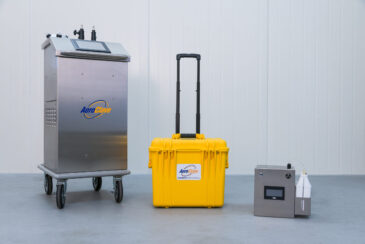
AeroClave systems provide a bridge between traditional cleaning and the absolute requirement for total environment decontamination. While water management programs handle the source, AeroClave addresses the risk of aerosolized bacteria that has already entered the facility air space and settled on surfaces.
Room-as-a-System Decontamination
AeroClave treats the entire room as a single, integrated system. By using an automated process to distribute Vital Oxide, the system ensures that every square inch of a space is contacted by the disinfectant. This includes high-touch surfaces, complex equipment, and even the air itself.
Vital Oxide and Microscopic Efficacy
Vital Oxide is a powerful, EPA-registered disinfectant that is effective against a wide range of pathogens. In an institutional environment, the AeroClave system decontaminates patient rooms, common areas, or offices without the variability of manual labor. This creates a standard of care that is repeatable and verifiable.
Operational Implementation and Success Metrics
The consistency of the AeroClave process makes it the preferred option for teams managing active threats. Unlike manual cleaning, which depends on the skill and stamina of a specific worker, AeroClave delivers the same high-level disinfection every time it is activated. This repeatability allows facility managers to document their safety protocols with precision.
Four Pillars of AeroClave Deployment
Facility teams rely on AeroClave for four primary reasons:
- Standardization: The automated process removes human variability from the disinfection equation.
- Coverage: The fogging technology reaches areas that are physically impossible for a person to wipe down.
- Speed: Entire rooms can be treated and returned to service faster than with manual methods.
- Integration: AeroClave fits into existing maintenance schedules as a final, fail-safe step.
The 4-Step High-Level Disinfection Workflow
Implementing high-level disinfection during a legionnaires disease outbreak 2026 requires a repeatable, documented process.
- Clean First: Staff must perform a manual cleaning to remove visible gross soil, biofilms, or mineral scale.
- AeroClave Workflow: The unit is activated to saturate the environment with a consistent fog of disinfectant.
- Label Basics: Use clear, standardized labeling to indicate that the room has undergone high-level disinfection.
- Repeat: Use on the next room or after any exposure or suspected exposure occurs.
Conclusion: Legionnaires Disease Outbreak 2026
In conclusion, the current legionnaires disease outbreak 2026 serves as a stark reminder of the vulnerabilities inherent in modern water and HVAC systems. From the significant cases in New York City to the sporadic community clusters in Texas, the threat of Legionella pneumophila remains a primary concern for facility managers. Protecting your staff and residents requires a move away from variable manual cleaning toward standardized, high-level disinfection protocols. By treating the room as a system and integrating automated technology, facilities can ensure mission readiness even during the height of a public health alert.
If you are managing a facility and need to bolster your infection control plan against waterborne pathogens, the time to act is before an outbreak occurs. Contact an AeroClave specialist today to see how our automated systems can protect your environment and your reputation.
Sign Up Below To Learn If AeroClave is Right For You
FAQs About Legionnaires Disease Outbreak 2026
How is legionnaires disease how is it spread in 2026?
People contract Legionnaires’ disease by breathing in small droplets of water, or mist, that contain the Legionella bacteria. This typically occurs in environments with cooling towers, hot tubs, or complex plumbing systems where water has stagnated and the bacteria has aerosolized.
What is the fatality rate for a legionnaires disease outbreak 2026?
The general fatality rate is approximately 10 percent. However, this risk is significantly higher in healthcare settings, where 1 out of 4 people who contract the disease may die due to underlying health factors and the severity of the pneumonia.
Can AeroClave be used on sensitive electronic equipment?
Yes. AeroClave is a business built on protecting critical infrastructure. The Vital Oxide fog is non-corrosive and safe for use around sensitive medical and electronic equipment when used according to the operational protocol.
Does AeroClave satisfy OSHA requirements for disinfection?
While OSHA does not certify specific pieces of equipment, they do enforce the General Duty Clause. Using the AeroClave system provides a documented, high-level disinfection process that demonstrates a facility’s commitment to mitigating known pathogen risks.
How long does it take to treat a room with AeroClave during an outbreak?
Treatment times vary based on room size, but most standard patient rooms or offices can be fully decontaminated and ready for re-entry in a fraction of the time required for a deep manual scrub. This allows for faster turnover without compromising safety.
Explore More Articles on Health and Safety
- What You Need to Know About the Dengue Outbreak in 2025
- Razor Blade Throat Covid Variant: What it is and How to Stay Safe
- West Nile Virus: What You Need to Know Now
- Cholera Toxin B: Protecting Against Outbreaks
- Henipavirus: Understanding this Emerging Threat
- Flesh Eating Bacteria in Florida: What You Need to Know
- Measles Outbreak in Wisconsin: What You Need to Know
- Staphylococcus Prevention: How to Stay Safe from Staph Infections
- Best Ways to Kill and Protect Yourself with Legionella Pneumophila Prevention
- How to Kill and Protect Against Norovirus 2025 with AeroClave
- Chikungunya Explained: A Comprehensive Guide
- West Nile Virus Outbreak: What You Need to Know
- Oropouche: What You Need to Know Now
- Nipah Virus: What You Need To Know
- What causes hand foot and mouth disease
- Norovirus vs Food Poisoning: Treatment and Prevention
- How Flu Spreads: Simple Steps to Protect Your Family This Season
- Tuberculosis Outbreak 2025: What You Need to Know Right Now
- The Superbug Showdown: How We Tackle MRSA and NDM-1 Klebsiella
- Beyond the “Stomach Bug”: Killing The Foodborne Pathogen Listeria in Your Facility
© 2026 AeroClave