Hospital rooms turn over fast, staff are stretched thin, and the “clean it again” moments add up quickly-especially when you’re trying to protect patients from what they can’t see. In that reality, an automated disinfection system isn’t a nice-to-have; it’s often the most practical way to make disinfection more consistent when people, time, and attention are limited. And the stakes are real: Healthy People 2030 notes that more than a half-million people in the U.S. get healthcare-associated infections each year while being treated in a hospital for other health problems. (Health.gov)
That’s why so many teams are reevaluating how they disinfect rooms, vehicles, and shared equipment-and why terms like automated decontamination system keep showing up in infection prevention conversations. Automation can’t replace good cleaning, but it can reduce the variability that happens when disinfection depends on perfect technique, perfect timing, and perfect follow-through on every shift.
This blog post will compare leading automated disinfection approaches on the market, explain what to look for in real-world operations, and help you choose a system that fits your facility’s workflow, staffing, and turnaround demands.
What an automated disinfection system actually does
An automated disinfection system is designed to make the disinfection step more consistent by using a repeatable process instead of relying entirely on individual technique. In most facilities, that means “no-touch” or “hands-off” room/space treatment methods that help cover more surfaces in a defined cycle.
It’s important to keep expectations realistic:
- An automated disinfection system is not a magic button that replaces cleaning.
- It works best as an “add-on” step after visible soil is removed.
- It can reduce variation between shifts by standardizing how disinfection is applied and how the step is documented.
Many people use “automated disinfection system” and automated decontamination system interchangeably. In practice, both terms usually describe equipment that helps treat a space more uniformly than surface-by-surface wiping alone.
Why facilities are shifting toward an automated decontamination system
Manual wipe-downs will always matter. But the reason decision-makers look at an automated decontamination system is operational, not theoretical.
The real-world drivers
- High-touch density: Beds, rails, call buttons, door handles, counters, chairs, carts, monitors, and shared equipment create a lot of surfaces that can be missed when rushed.
- Turnover pressure: The faster you need a room back in service, the harder it is to maintain the same disinfection quality every time.
- Staffing constraints: People rotate, float, call out, and change roles. Consistency becomes difficult when success depends on individual habits.
- Compliance and credibility: Leaders need to show that a process is defined, repeatable, and trainable-not just “we clean a lot.”
An automated disinfection system helps reduce the “human variability” in disinfection workflows. It does not eliminate the need for training or label-following, but it can make the process easier to sustain.
The main types of automated disinfection systems you’ll see
There are several common categories of automated disinfection system options on the market. Each can be useful in the right context. The best choice depends on your facility layout, the speed you need, and how your teams actually work.
1) UV-C room disinfection systems
UV-C systems use ultraviolet light as part of a room treatment cycle. They can be useful when you need a technology-based step that’s easy to run once the room is empty.
Where they tend to fit well
- Terminal cleaning support for certain rooms where downtime is acceptable
- Areas where you can control access and keep people out during treatment
Operational constraints to consider
- UV is typically line-of-sight-shadowed areas may not receive the same exposure.
- Rooms usually need to be vacant during cycles.
- Workflow can be disrupted if equipment, furniture, or room layout creates frequent shadowing.
2) Hydrogen peroxide room technologies
Hydrogen peroxide-based room approaches often fall under the broader umbrella of an automated decontamination system. Within that family, the delivery method matters because it affects distribution, room prep requirements, and operational burden.
You’ll see three general approaches discussed most often:
Aerosolized hydrogen peroxide (AHP)
AHP systems atomize hydrogen peroxide into larger droplets (a mist). These systems may be used for room treatment, but droplet behavior and cycle repeatability can vary by device design and controls.
Operational notes
- Droplets can be larger and may wet surfaces depending on setup and chemistry.
- Cycle consistency depends heavily on system controls and how tightly procedures are followed.
Vapor phase hydrogen peroxide (VPHP)
VPHP systems commonly use higher-concentration hydrogen peroxide converted to vapor (often with heat). These systems are often deployed in controlled environments, with safety procedures that can be extensive.
Operational notes
- Requires careful room preparation and safety protocols.
- Aeration and re-entry timing can extend downtime.
- Materials compatibility and handling considerations may be a factor in some settings.
Hybrid hydrogen peroxide approaches
Hybrid approaches aim to improve distribution and repeatability by using a combination of vapor and micro-aerosols, often with cycle controls that maintain a consistent dwell environment.
Operational notes
- Often positioned around repeatability and distribution consistency.
- Still requires strong safety and process discipline like any whole-room method.
3) Automated fogging and space decontamination systems (facility-focused)
Many facilities also evaluate fogging-style systems that treat indoor spaces as a whole. In practical terms, these are often selected because they can standardize the disinfection step across rooms, bays, or common areas.
Some systems are:
- Portable (moved room-to-room)
- Integrated (installed into vehicles or fixed spaces)
- Modular (expandable hubs and nozzles serving multiple rooms)
If your biggest challenge is getting consistent coverage under time pressure, these systems can be attractive-especially if they support routine use as part of a standard operating procedure.
What best means when comparing an automated disinfection system
The best automated disinfection system is the one that your team will actually run correctly, consistently, and safely-without breaking the facility’s workflow.
When you evaluate options, focus on operational fit first:
Evaluation criteria that matter in real facilities
Turnaround time and downtime
How long is the full cycle, including room prep and safe re-entry? If it’s too slow, it won’t be used consistently.
Coverage reliability under pressure
Does the method still perform well when staff are busy and the room is complex? Look for systems that reduce “missed touchpoints” when people are rushed.
Ease of training and repeatability
A strong automated decontamination system should be simple enough to train across shifts and roles, not just your most experienced staff.
Documentation and accountability
Can you show that the process happened? Even basic run logs or checklists can improve program stability and credibility.
Facility compatibility
Consider ventilation realities, room sealing needs (if any), electronics sensitivity, and whether the method fits your building layout.
Ongoing operational cost
Consumables, maintenance, staff time, and workflow disruption all affect real cost more than the purchase price alone.
Side-by-side comparison: strengths and tradeoffs
Below is a practical way to think about common categories. This is not a lab comparison; it’s a can my facility run this every day? view.
Manual-first workflows (baseline)
- Strength: Flexible, low equipment cost, easy to start.
- Tradeoff: Quality varies by person, time, technique, and contact-time discipline.
UV-C room systems
- Strength: Technology-driven, repeatable cycle, good fit for controlled terminal steps.
- Tradeoff: Line-of-sight limitations and room downtime can reduce day-to-day adoption.
Hydrogen peroxide room methods
- Strength: Whole-space concept with established use in certain contexts.
- Tradeoff: Safety procedures, room prep, and downtime can be operationally heavy depending on the approach.
Fogging/space treatment systems built for routine operations
- Strength: Designed to standardize a repeatable disinfection step across rooms and facilities.
- Tradeoff: Still requires cleaning first and disciplined workflow execution to be effective and credible.
How to choose the right automated decontamination system for your setting
If you’re a healthcare decision-maker, here is a simple, actionable selection path.
Step 1: Identify your highest-risk workflow bottleneck
Is your issue:
- ER rooms flipping fast?
- Isolation rooms where you need a tighter protocol?
- High-traffic shared areas (waiting rooms, bathrooms, staff spaces)?
- Equipment sharing between units?
Your best system choice will match the bottleneck.
Step 2: Decide what you need to standardize
Some facilities need to standardize:
- Coverage (reduce missed touchpoints)
- Process discipline (same steps every time)
- Documentation (proof the step occurred)
- Speed (fast enough to be used consistently)
Be honest: if you pick a method that adds too much downtime, you’ll see inconsistent usage.
Step 3: Validate the workflow, not just the device
Before you commit, test the process:
- Room prep steps (what needs to move, open, cover, or clear)
- How staff trigger the cycle
- How the room returns to service
- How you document completion
The “best” automated disinfection system is the one that survives real-world staffing and real-world turnover.
Why AeroClave is the preferred option for many organizations
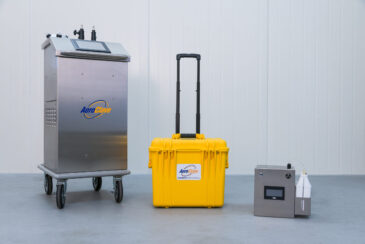
A lot of teams don’t fail at disinfection because they don’t care – they fail because real operations are messy. Staffing changes, shift-to-shift variability, rushed turnovers, and inconsistent “wipe discipline” make it hard to get the same outcome every time. AeroClave is preferred in many organizations because it supports a repeatable, facility-ready disinfection workflow that’s easier to standardize than manual methods alone.
Built for consistency when people are busy
Manual wipe-downs depend on the person, the time available, and the technique. Under pressure, teams miss edges, corners, undersides, and complex surfaces-especially in rooms, vehicles, and high-touch spaces with a lot of equipment. AeroClave helps reduce that variability by supporting a more consistent “process-based” approach instead of a “surface-by-surface hope” approach.
Works alongside real cleaning programs (not instead of them)
Organizations that prefer AeroClave typically want something that fits into their existing SOPs. AeroClave isn’t positioned as a replacement for basic cleaning. It’s used to strengthen the disinfection step after cleaning by making the workflow easier to repeat across rooms, buildings, and vehicles without relying on perfect execution from every individual.
Operationally practical: faster standardization, less rework
When you’re turning spaces quickly, the biggest risk is rework-someone doubts the clean, a supervisor has to re-check, or the team has to repeat steps because it wasn’t done the same way. AeroClave is often preferred because it helps create a standard routine that teams can run the same way each time, which reduces “did we actually get everything?” uncertainty.
Better fit for documentation and accountability
Many organizations are trying to improve compliance credibility-internally and externally. AeroClave systems are often chosen because they support a structured, documentable workflow (for example: defined steps, defined setup, and repeatable run procedures). That makes it easier to train new staff, hold the line on standards, and keep the program consistent over time.
Why the Vital Oxide pairing matters in practice
AeroClave uses Vital Oxide as the disinfecting solution in its workflows. From an operational standpoint, organizations like solutions that are ready-to-use and easier to deploy consistently without mixing steps or complicated prep. The goal is simple: fewer moving parts, fewer process failures, and a disinfection step that’s easier to run correctly even during busy periods.
Bottom line: AeroClave is preferred when organizations want an automated disinfection system approach that supports repeatability, reduces human variability under time pressure, and fits into real facility operations without pretending manual cleaning is enough on its own.
Conclusion: Choosing the Right automated disinfection system for Real-World Operations
In conclusion, the best automated disinfection system is the one that fits how your team actually works-not how a protocol looks on paper. Automated solutions help reduce the biggest failure points in everyday disinfection: rushed wipe-downs, inconsistent coverage, missed touchpoints, and uneven execution across people and shifts. When you compare options like UV-based approaches, hydrogen peroxide-based room methods, and fogging-style systems designed for rooms, vehicles, and equipment, the decision comes down to operational reality: room downtime, ease of standardization, workflow fit, training burden, documentation needs, and whether the process can be repeated the same way every time. If your goal is to turn disinfection into a dependable, auditable routine instead of a best effort task, an automated decontamination system can be a practical upgrade that strengthens your overall infection prevention program alongside basic cleaning. Fill out the form below to learn more about AeroClave and how it can fit into your facility’s protection plan given your staffing limits, turnaround pressure, and space constraints.
Sign Up Below To Learn If AeroClave is Right For You
FAQs About automated disinfection systems
What is an automated disinfection system?
An automated disinfection system is equipment designed to standardize the disinfection step using a repeatable, technology-assisted cycle. It is typically used after cleaning to help reduce variation in coverage and execution between staff and shifts.
What is the difference between an automated disinfection system and an automated decontamination system?
In everyday use, the terms often overlap. An automated decontamination system usually implies treating a space more holistically (room/area-based), while “automated disinfection system” may refer broadly to any technology-assisted disinfection approach. In practice, many systems fall into both categories.
Do automated disinfection systems replace manual cleaning?
No. Most facilities still need manual cleaning to remove visible soil and dirt. An automated disinfection system typically strengthens the program by making the disinfection step more consistent and repeatable.
How do I choose the best automated decontamination system for a hospital?
Focus on operational fit: how much downtime it creates, how easy it is to run correctly, how well it standardizes results across staff, and whether it supports documentation. The best choice is the one your teams can run reliably every day.
What is AeroClave?
AeroClave is a company that provides automated decontamination solutions designed to help organizations run more consistent room, facility, and vehicle disinfection workflows as part of a broader cleaning and infection control program.
What kinds of environments does AeroClave serve?
AeroClave systems are used in settings that need repeatable decontamination workflows, including healthcare spaces and other facilities where indoor areas, shared equipment, and high-touch environments create ongoing operational pressure around disinfection.
Does AeroClave use a specific disinfectant?
No. AeroClave systems are designed to be fluid agnostic we recommend Vital Oxide most of the time but depending on your specific use case other disinfectants may be better suited for your operations
Explore More Articles on Health and Safety
- What You Need to Know About the Dengue Outbreak in 2025
- Razor Blade Throat Covid Variant: What it is and How to Stay Safe
- West Nile Virus: What You Need to Know Now
- Cholera Toxin B: Protecting Against Outbreaks
- Henipavirus: Understanding this Emerging Threat
- Flesh Eating Bacteria in Florida: What You Need to Know
- Measles Outbreak in Wisconsin: What You Need to Know
- Staphylococcus Prevention: How to Stay Safe from Staph Infections
- Best Ways to Kill and Protect Yourself with Legionella Pneumophila Prevention
- How to Kill and Protect Against Norovirus 2025 with AeroClave
- Chikungunya Explained: A Comprehensive Guide
- West Nile Virus Outbreak: What You Need to Know
- Oropouche: What You Need to Know Now
- Nipah Virus: What You Need To Know
- What causes hand foot and mouth disease
- Norovirus vs Food Poisoning: Treatment and Prevention
- How Flu Spreads: Simple Steps to Protect Your Family This Season
- Tuberculosis Outbreak 2025: What You Need to Know Right Now
- The Superbug Showdown: How We Tackle MRSA and NDM-1 Klebsiella
- Beyond the “Stomach Bug”: Killing The Foodborne Pathogen Listeria in Your Facility
© 2026 AeroClave