Norovirus isn’t rare-it’s everywhere. In the United States alone, norovirus causes an estimated 19-21 million illnesses every year, along with about 465,000 emergency department visits and 900 deaths, according to CDC data. When this “stomach bug” hits your home, school, or workplace, the first thing everyone wants to know is, “How long will norovirus last?”-in your body, on your hands, and on the surfaces people touch all day. This blog post will explain how long norovirus typically lasts in people and environments, what affects that timeline, and the specific steps you can take to shorten its impact and protect the people in your care.
How long will norovirus last in your body?
When people ask, How long will norovirus last, they usually mean: “How long will I feel sick?” and “When am I safe to be around other people again?” The virus has a clear pattern, but it isn’t as simple as “you’re done once you feel better.”
How long will norovirus last from first exposure to first symptoms?
After you’re exposed, symptoms usually start in about 12 to 48 hours. You can feel completely fine and then suddenly get hit with:
- Vomiting
- Watery diarrhea
- Nausea and stomach cramps
- Sometimes fever, headache, chills, or body aches
How long will norovirus last in terms of symptoms?
For most healthy people, the worst of the illness lasts about 1 to 3 days. Many people have a rough 24-72 hours with frequent vomiting and diarrhea and then start to feel much better.
That sounds short, but the intensity can be brutal. You can vomit or have diarrhea many times a day, which is why dehydration is such a big risk, especially for:
- Children under 5
- Older adults, especially 65 and older
- People with other illnesses or weakened immune systems
How long will norovirus last in your stool (virus shedding)?
Here’s the part most people don’t realize: even after the vomiting and diarrhea stop, the virus doesn’t just disappear from your body.
You can:
- Be most contagious while you have symptoms, especially when you’re vomiting.
- Continue to shed virus particles in your stool for 2 weeks or more after you start feeling better.
That’s why public health guidance says you should stay out of work, school, childcare, and food handling for at least 48 hours after symptoms stop. You might feel fine, but you’re still a risk to everyone around you.
How long will norovirus last on surfaces and in the environment?
If you’re asking How long will norovirus last in your home or workplace, the answer is: much longer than you’d like.
Norovirus is extremely tough and can:
- Survive on hard and soft surfaces for days to weeks.
- Stay on food, countertops, and utensils even at freezing temperatures.
- Withstand many common disinfectants and standard cleaning products.
How norovirus gets onto surfaces
- Dirty hands: A sick person touches doorknobs, light switches, railings, phones, toys, tables, or cards.
- Vomit droplets: When someone throws up, tiny droplets can become airborne, then settle on nearby surfaces and objects.
- Diarrhea splatter: Diarrhea can contaminate bathroom surfaces and anything nearby.
Because it only takes a few virus particles to make someone sick, missing even a small patch during cleanup can keep the outbreak going.
How long will norovirus last on surfaces without proper cleaning?
By some estimates, norovirus particles can remain infectious on surfaces for weeks if not cleaned and disinfected correctly. That’s long enough for one sick person to trigger a chain of infections in homes, schools, camps, nursing homes, restaurants, and cruise ships.
Who gets hit hardest and when to call a doctor
Most healthy adults will suffer through a bad couple of days and recover at home. But for some people, how long norovirus will last is not the main problem – it’s how severe the dehydration gets.
High-risk groups
- Children under 5 years old
- Older adults, especially 65 and older
- People with weakened immune systems or serious health problems
Norovirus causes:
- Hundreds of thousands of emergency department visits each year, mostly in young children.
- Over 100,000 hospitalizations annually in the U.S.
- About 900 deaths a year, mostly in older adults.
Warning signs of dangerous dehydration
Call a doctor or seek emergency care if you or someone you care for has:
- Very little or no urination
- Very dark urine
- Dry mouth and throat
- Dizziness when standing up
- In children: few or no tears when crying, unusual sleepiness, or extreme fussiness
- Confusion or changes in mental status
How to manage norovirus at home
You can’t shorten how long the virus stays in your system, but you can manage symptoms and prevent complications.
Hydration comes first
- Drink small, frequent sips rather than big gulps that might trigger vomiting.
- Use oral rehydration solutions, broths, or electrolyte drinks for mild dehydration.
- Avoid alcohol, caffeine, and very sugary drinks, which can worsen diarrhea.
What to eat when you’re ready
When vomiting slows down and you start to feel like you could eat:
- Start with bland, easy foods – the classic BRAT diet: bananas, rice, applesauce, toast.
- Add simple foods like plain crackers, boiled potatoes, or plain chicken as tolerated.
- Avoid greasy, spicy, or very rich foods for a few days.
- Skip dairy for at least 48 hours after symptoms end, because temporary lactose intolerance is common.
How long to stay home
Even if you want to get back to normal, remember how easily this virus spreads. You should:
- Stay home while you have vomiting or diarrhea.
- Wait at least 48 hours after your symptoms stop before returning to work, school, camp, or food handling.
This is especially important if you work in:
- Restaurants, cafeterias, catering
- Childcare, schools, youth camps
- Healthcare and long-term care facilities
Cleaning and disinfection that actually works
If you want to change the answer to “How long will norovirus last in your environment?”, cleaning and disinfection done the right way is non-negotiable. Norovirus is tough, but it’s not unbeatable if you follow the basics every time.
Handwashing beats hand sanitizer
- Wash your hands with soap and water for at least 20 seconds.
- Always wash after using the toilet, changing diapers, cleaning up vomit or diarrhea, and before preparing or eating food.
- Alcohol-based hand sanitizer does not work well against norovirus. You can use it as a backup, but it is not a substitute for proper handwashing.
Use bleach correctly on surfaces
After someone vomits or has diarrhea:
- Put on rubber or disposable gloves.
- Wipe up all visible vomit or stool with paper towels and seal them in a plastic trash bag.
- Disinfect the area with a bleach solution:
- Mix 5 to 25 tablespoons of household bleach (5-8%) per gallon of water (about 1,000-5,000 ppm).
- Make sure the surface stays visibly wet for at least 5 minutes so the bleach has time to work.
- When disinfection is done, clean again with soap and hot water to remove residue.
Laundry: don’t shake it
- Immediately remove any clothes, bedding, or linens with vomit or stool on them.
- Wear gloves and avoid shaking items so you don’t spread particles into the air.
- Wash with detergent and hot water on the longest cycle, then machine-dry on high heat.
- When you’re done, wash your hands thoroughly with soap and water.
Automated disinfection with AeroClave systems
Manual cleaning will always be the first step, but in a tight, busy space like an ambulance it’s very easy to miss surfaces when you’re tired, rushed, or trying to turn a unit quickly in Norovirus Season. This is where an AeroClave system can turn your basic cleanup into a fast, consistent disinfection process.
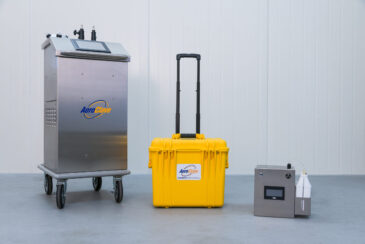
Integrated ADS for between-call vehicle decon
The ADS is installed directly in the patient compartment, with a compact stainless-steel main module and a ceiling or wall-mounted nozzle that fogs the entire space. Once bulk mess and linens are removed, crews can:
- Clear the box, close the doors, and start a cycle with push-button or touchscreen control.
- Let the onboard nozzle lay down an even blanket of EPA-approved hospital grade disinfectant across all exposed surfaces, including corners, seams, and hardware that wipes tend to miss.
- Rely on built-in safety features like motion detection, a strobe light, and audible warnings to keep people out while the system runs.
Because the ADS is always mounted and ready, you can decontaminate the patient compartment in minutes between transports, with consistent coverage up to about 700 cubic feet, without tying up crews in a cloud of spray.
RDS 3110 for stations, bays, and flexible vehicle support
For larger spaces or rigs without an integrated system, the RDS 3110 gives you portable total asset decontamination that works the same way operationally:
- Facility fogging for rooms, offices, locker rooms, or apparatus bays up to 5,000 cubic feet, using the same hospital-grade disinfectant.
- Vehicle treatments using patented port technology so you can fog an ambulance interior from outside the vehicle.
- Hand application with the APA portable applicator to spot-treat high-contact gear, backboards, and exterior compartments where norovirus contamination is a concern.
Both systems are designed for low operating cost, are safe for sensitive electronic equipment, and run on ready-to-use disinfectant with no mixing required. When you combine proper manual cleanup (gloves, bleach, laundry) with a short automated fogging cycle, you get a repeatable process that’s realistic on a busy schedule and much more effective against norovirus than wipes alone.
How long will norovirus last in schools, camps, and group settings?
Group environments change the equation. One sick person can start a chain reaction, especially where there are shared bathrooms, close sleeping quarters, and communal food.
Schools, childcare centers, and youth camps
- Kids are in close contact and touch shared surfaces constantly.
- Outbreaks can lead to class or even campus closures.
- Strict handwashing, quick cleanup of vomit and diarrhea, and keeping sick kids home for at least 48 hours after symptoms are key.
- Camps should isolate sick campers and staff, use separate restrooms and eating areas, and clean contaminated areas right away with bleach-based products.
Camping, hiking, and outdoor trips
- Limited clean water and handwashing make it easy for norovirus to spread.
- Boil water for drinking and cooking; many portable filters don’t remove viruses.
- Set up bathroom and washing areas far from camp, food prep, and water sources.
- Do not let sick people handle food, and keep them separated from healthy campers.
In all these settings, better hygiene, smarter food handling, and reliable surface decontamination systems help reduce the risk and limit how long outbreaks drag on.
Take the next step: get help for your specific environment
Reading about How long will norovirus last is a good start, but real protection comes from having a clear plan for your own building, vehicles, or campus. Every setting is different – a fire station, EMS agency, school district, long-term care facility, or municipal building all face unique risks and workflows.
If you want to cut down how long norovirus will last in your facility and reduce the chance of repeated outbreaks-not just keep asking “How long will norovirus last” every season-use the contact form below to reach out. Share what type of facility you run, how many people move through it each day, and what your current cleaning and disinfection process looks like. A member of the team will review your use case and walk you through practical options to:
- Strengthen your day-to-day infection-control routine
- Improve response after a vomiting or diarrhea incident
- Protect high-risk groups like young children, older adults, or immunocompromised patients
- Support staff safety and reduce operational disruptions from outbreaks
Use the form just below this article to get started. The more detail you provide about your space and your current challenges, the easier it is to see where upgrades can help shorten How long will norovirus last in your environment and keep your people safer.
Conclusion: How long will norovirus last
In conclusion, How long will norovirus last depends on where you look: in most people, the worst symptoms usually hit for 1-3 days, but the virus can keep shedding in stool for 2 weeks or more and survive on surfaces for days to weeks if they aren’t disinfected properly. The big levers you control are smart hygiene and environment: strict handwashing with soap and water, staying home for at least 48 hours after symptoms stop, cooking food (especially shellfish) safely, and using bleach-based disinfection on high-touch surfaces and any area contaminated by vomit or diarrhea. If you’re responsible for protecting patients, crews, students, or residents and want to reduce both the risk and duration of outbreaks-not just keep asking “How long will norovirus last” every season-contact AeroClave today to learn how our advanced decontamination systems can protect your team and community.
Sign Up Below To Learn If AeroClave is Right For You
FAQs About How long will norovirus last
How long will norovirus last in most healthy adults?
For most healthy adults, norovirus symptoms last about 1 to 3 days. You may feel drained for a bit longer, but the vomiting and diarrhea usually calm down within that window.
How long will norovirus last in children?
In children, the illness usually lasts a similar 1-3 days, but the risk of dehydration is higher. Kids lose fluids faster and may not be able to explain how bad they feel, so watch them closely for fewer wet diapers, no tears when crying, or unusual sleepiness or fussiness.
How long will norovirus last on hands?
Norovirus can stay on your hands until you physically remove it. Hand sanitizer alone doesn’t work well. You need to scrub with soap and water for at least 20 seconds and rinse under running water to wash the virus away.
How long will norovirus last on household surfaces?
On counters, doorknobs, railings, phones, and other surfaces, norovirus particles can survive for days to weeks if you don’t disinfect them properly with a bleach solution or an EPA-registered product that specifically works against norovirus.
How long will norovirus last before I can go back to work or school?
Stay home the entire time you have vomiting or diarrhea, and wait at least 48 hours after your symptoms stop before you go back. You can still shed virus for 2 or more weeks, but that 2-day buffer after symptoms is critical to cutting down spread.
How is norovirus different from food poisoning?
Norovirus can be one cause of foodborne illness, but what most people call “food poisoning” often comes on within hours of eating a specific bad meal and may not cause fever. Norovirus typically shows up 12-48 hours after exposure, can spread from person to person, and often includes fever or body aches.
Do antibiotics help with norovirus?
No. Norovirus is a virus, and antibiotics only work against bacteria. The focus is on hydration, rest, and preventing spread, not on antibiotics.
When should I go to the hospital for norovirus?
You should seek urgent care if you can’t keep fluids down, are not urinating, have very dark urine, feel extremely dizzy on standing, are confused, or notice severe dehydration signs in a child (no tears, very sleepy, or very fussy).
What does this company’s technology do?
It provides advanced decontamination solutions designed to help organizations like healthcare facilities, first responders, schools, and government agencies improve their environmental infection control and reduce the risk of outbreaks in high-traffic, high-risk spaces.
Who typically uses these systems?
Customers are usually organizations that need consistent, reliable infection control: hospitals, clinics, EMS and fire services, emergency vehicles, and facilities that serve large or vulnerable populations, such as schools and public agencies.
Can these solutions replace basic hygiene and cleaning?
No. Even the most advanced disinfection technology works best when combined with the basics: proper handwashing, safe food handling, quick cleanup of vomit and diarrhea, and good isolation practices for sick people. Technology should support, not replace, those core habits.
Explore More Articles on Health and Safety
- What You Need to Know About the Dengue Outbreak in 2025
- Razor Blade Throat Covid Variant: What it is and How to Stay Safe
- West Nile Virus: What You Need to Know Now
- Cholera Toxin B: Protecting Against Outbreaks
- Henipavirus: Understanding this Emerging Threat
- Flesh Eating Bacteria in Florida: What You Need to Know
- Measles Outbreak in Wisconsin: What You Need to Know
- Staphylococcus Prevention: How to Stay Safe from Staph Infections
- Best Ways to Kill and Protect Yourself with Legionella Pneumophila Prevention
- How to Kill and Protect Against Norovirus 2025 with AeroClave
- Chikungunya Explained: A Comprehensive Guide
- West Nile Virus Outbreak: What You Need to Know
- Oropouche: What You Need to Know Now
- Nipah Virus: What You Need To Know
- What causes hand foot and mouth disease
- Norovirus vs Food Poisoning: Treatment and Prevention
- How Flu Spreads: Simple Steps to Protect Your Family This Season
- Tuberculosis Outbreak 2025: What You Need to Know Right Now
- The Superbug Showdown: How We Tackle MRSA and NDM-1 Klebsiella
- Beyond the “Stomach Bug”: Killing The Foodborne Pathogen Listeria in Your Facility
© 2026 AeroClave