
Hospitals are supposed to be the place you go to heal, not the place you pick up a new problem on the way out. But it happens more than most people think. The CDC notes that on any given day, about 1 in 31 hospitalized patients in the U.S. has a healthcare-associated infection-an issue that makes HAI Prevention a real-world priority for patients, families, and healthcare teams. (CDC)
So what does that mean? A healthcare-associated infection (often called an HAI) is an infection that shows up during or soon after care in a healthcare setting-like a hospital, surgery center, clinic, or nursing home-and it can be tied to things like IV lines, urinary catheters, ventilators, or surgical wounds. If you’ve been searching for How to prevent HAI, the good news is there are practical steps that actually reduce risk, even when you can’t control everything happening around you.
In this post, you’ll get a clear, actionable game plan for HAI Prevention-what increases risk, what to watch for, what to ask, and how facilities can build more consistent infection-control routines (including where AeroClave can fit into a stronger disinfection workflow).
What counts as an HAI, and why HAI Prevention matters
An HAI is an infection that develops during or soon after receiving healthcare. Common HAIs include:
- Bloodstream infections (often related to IV lines or central lines)
- Surgical site infections
- Catheter-associated urinary tract infections (CAUTIs)
- Ventilator-associated pneumonia (VAP)
HAIs matter because they can increase illness, extend hospital stays, add extra tests and treatments, and raise costs. Some infections are hard to treat when germs become resistant to common antibiotics, which makes HAI Prevention even more important.
Who is most at risk for HAIs?
Anyone receiving care can be at risk, but some people are more vulnerable. Risk is often higher for:
- Older adults or frail patients
- Premature babies and very sick children
- People with chronic conditions like diabetes
- People with weakened immune systems (for example, from certain diseases or treatments)
Risk also increases when care involves more invasive procedures and devices-because devices can bypass the body’s normal barriers like skin.
How HAIs spread in real life
A lot of How to prevent HAI comes down to understanding how spread happens. In healthcare settings, germs often move through:
Contact spread (the most common)
This includes direct touch or indirect touch through shared surfaces and objects. Think: bed rails, call buttons, IV poles, blood pressure cuffs, keyboards, door handles, and phones.
Droplets and respiratory spread
Coughing, sneezing, and even talking can push germs onto nearby people and surfaces. Those surfaces then become touchpoints.
Airborne spread (in certain cases)
Some germs can stay suspended in the air and require specific ventilation and isolation practices.
Common-source spread
This is when multiple people are exposed to the same contaminated item (like a medication vial, device, food, or water source). It’s less common day-to-day, but it can drive outbreaks.
HAI Prevention starts with the basics that never change
If you want a simple, reliable answer to How to prevent HAI, start here. These steps sound basic, but they are the backbone of prevention in every setting.
Hand hygiene: the highest impact habit
Clean hands break the most common route of transmission. Hand hygiene should happen:
- When entering and leaving a patient area
- Before and after touching a patient
- Before and after touching devices, dressings, or wound areas
- After touching near-patient surfaces (bed rails, tables, monitors)
Soap and water are important, especially when hands are visibly soiled. Alcohol-based hand rubs are useful when sinks aren’t close and hands aren’t visibly dirty.
Clean first, then disinfect
Cleaning removes visible dirt and organic material that can block disinfectants from doing their job. Disinfection comes after cleaning, and it only works well when contact time and coverage are consistent.
Devices and lines: use only what’s needed, for as short as possible
Many HAIs are associated with invasive devices. A practical HAI Prevention habit is to ask every day:
- Is this catheter still needed?
- Is this IV line still needed?
- Can we switch to a lower-risk option?
Shorter device time usually means lower risk.
Use antibiotics wisely
Antibiotics don’t treat viral illnesses like colds and many respiratory infections. When antibiotics are needed, the goal is the right drug, at the right dose, for the right duration. Overuse and misuse can fuel resistance and lead to complications.
How to prevent HAI as a patient or caregiver
You don’t need medical training to support HAI Prevention. You just need a plan and the confidence to speak up.
1) Speak up early (and keep it simple)
Ask clear questions, especially around devices and procedures:
- “What’s the reason for this catheter/IV?”
- “What are the risks?”
- “When can it come out?”
- “What should I watch for?”
If you’re nervous, write your questions down ahead of time.
2) Make hand hygiene visible
If you don’t see someone clean their hands, it’s okay to say:
“Would you mind cleaning your hands before you start? Thank you.”
This is one of the most direct ways how to prevent HAI becomes real at the bedside.
3) Learn the early signs of infection
Ask what’s normal and what’s not for your situation. Common warning signs include:
- Fever or chills
- New redness, swelling, pain, or drainage around a surgical site
- Burning or pain with urination (especially after a catheter)
- Worsening cough or shortness of breath
- Unusual confusion or sudden weakness (especially in older adults)
If something feels off, say so. Early attention can prevent bigger problems.
4) Protect wounds and lines
Don’t touch IV lines or catheter connections. Keep dressings clean, dry, and in place. If a dressing is loose, wet, or dirty, ask staff to change it.
5) Limit “extra germs” from visitors
If friends or family feel sick, they should not visit. If visiting is allowed, basic steps like clean hands and masking (when required) reduce risk.
6) Stay up to date on vaccines when appropriate
Vaccines can reduce the chance you get sick in the first place and lower the spread of respiratory illnesses in healthcare settings.
HAI Prevention for healthcare teams: build systems, not heroics
Healthcare teams already have heavy workloads. The best HAI Prevention programs reduce reliance on memory and individual perfection.
Standardize critical steps with checklists
Checklists help with repeatability-especially for:
- Line insertion and line care
- Dressing changes
- Isolation workflows
- Cleaning and disinfection routines
- Daily device necessity checks
Make compliance easy (not annoying)
If supplies are hard to reach or missing, compliance drops. Put hand rub where the work happens. Keep PPE stocked. Make cleaning tools and approved disinfectants easy to access.
Train for real conditions
Training should match real life: high turnover, interruptions, shift changes, and staffing pressure. Perfect world training doesn’t hold up in actual operations.
Watch the environment like it’s part of patient care
High-touch surfaces get re-contaminated constantly. Even after a room is cleaned, surfaces can remain a risk if coverage is inconsistent or if key touchpoints are missed.
Use surveillance and feedback to improve (not punish)
Tracking infection patterns and process compliance helps teams spot weak points and fix them. The goal is improvement, not blame.
Antibiotic stewardship is part of HAI Prevention
Stewardship supports better outcomes and helps slow resistance. It’s not only about restricting antibiotics-it’s about making antibiotic decisions more accurate and consistent.
The most common operational failure points that raise HAI risk
If you’re trying to improve How to prevent HAI in a real facility, these are frequent problem areas:
Under time pressure, touchpoints get missed
When staff are rushing, it’s easy to miss edges, corners, undersides, and complex surfaces-especially on equipment with seams, cords, handles, and textured materials.
Contact time discipline breaks down
A disinfectant can only work as intended if it stays wet for the required contact time. In real life, surfaces get wiped too soon, sprayed too lightly, or allowed to dry unevenly.
Device creep
Lines and catheters stay in just in case, and then days pass. Daily device review is a simple way to reduce risk.
Inconsistent technique across shifts
Even good teams vary. Different people clean differently. Different shifts prioritize different things. Consistency is the main challenge-and also the main opportunity.
HAI Prevention disinfection strategies for real facilities
Disinfection is a major part of HAI Prevention, but it works best when it’s operationally realistic. The goal is to build a process that can be repeated on busy days-not just on perfect days.
Other effective ways to disinfect (balanced, actionable, non-promotional)
Manual wipe-down disinfection
When it makes sense: Daily cleaning of high-touch surfaces, spot cleaning, and focused disinfection around obvious contamination or patient turnover.
Main limitation in real operations: Coverage and contact time vary by person, time, and technique. Under pressure, teams may miss touchpoints, wipe too quickly, or skip complex surfaces like seams, undersides, cords, and irregular equipment.
Electrostatic sprayers or pump sprayers
When it makes sense: Faster coverage for larger areas, frequent turnover zones, or when you need to apply disinfectant more broadly than hand wipes allow.
Main limitation in real operations: Coverage can still be uneven depending on distance, angle, and training. Overspray management, room setup, and consistent process discipline can become burdens. Spraying does not automatically solve missed touchpoints or contact time discipline.
UV-C or similar room technologies
When it makes sense: As an added layer for certain rooms or higher-risk turnover situations where downtime is available and the workflow is controlled.
Main limitation in real operations: Line-of-sight limitations mean shaded areas may not be treated. Rooms often require downtime, and results depend on placement, cycle time, and consistent use. It’s not a substitute for cleaning and does not remove soil.
Where AeroClave fits into a hospital protection plan
Hospitals run on turnover. Rooms flip fast. Staff are covering a lot at once. High-touch surfaces are everywhere-bed rails, pumps, monitors, keyboards, carts, handles, and call buttons. And when respiratory virus activity rises, every missed step feels higher risk. At the same time, teams can’t add unlimited downtime or expect perfect wipe technique across every shift.
Compliance pressure is real, too. Leaders need a process they can train, repeat, and document without slowing care delivery.
That is where AeroClave fits.
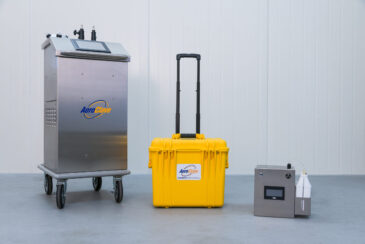
AeroClave helps hospital teams reduce cross-contamination risk by supporting standardized room and space decontamination workflows built for real facilities. Instead of relying entirely on surface-by-surface wiping (which can vary by person, time, and technique), AeroClave supports a more consistent, repeatable disinfection step that’s easier to execute the same way across rooms, buildings, and shifts.
How AeroClave works in a hospital environment
AeroClave supports decontamination of indoor spaces by distributing Vital Oxide as the disinfecting solution so the room or area is treated as a system-not just a checklist of surfaces. That matters because when teams are rushed, it’s common to miss edges, corners, undersides, and complex surfaces that are hard to wipe perfectly every time.
AeroClave is not a replacement for basic cleaning. It strengthens the program by making the disinfection step more reliable and easier to standardize across multiple rooms, teams, and facilities-so the process doesn’t fall apart when the day gets busy.
Because of that, AeroClave is often the preferred/best option for hospitals compared to common approaches that depend heavily on perfect execution-manual wipe-downs, sprayers, or UV-especially when staffing is stretched. The value is operational: less variability under time pressure, more repeatable coverage across teams, easier documentation as a standard operating procedure, and a structured workflow that fits alongside routine cleaning rather than relying on individual technique to be flawless every time.
Why hospital teams use AeroClave during heavy respiratory virus activity
Hospital teams typically choose AeroClave when they want to:
- Standardize results with a repeatable process
- Improve coverage beyond surface-by-surface wiping alone
- Support faster turnaround by reducing variability under time pressure
- Strengthen compliance and credibility with documented, consistent procedures
- Reduce operational disruption by integrating a structured decontamination step into routine plans
What success looks like
In practice, AeroClave helps hospital teams move from “best effort” disinfection to a more controlled, repeatable routine:
- Cleaning happens first to remove visible soil
- Vital Oxide is applied as part of a defined AeroClave workflow
- Staff follow label-driven basics (PPE, ventilation where relevant, and required wet contact time)
To learn more about AeroClave and how it fits into your protection plan across facilities, staffing constraints, and turnaround demands, fill out the form below.
Conclusion: HAI Prevention That Holds Up in Real Life
In conclusion, HAI prevention comes down to doing the fundamentals consistently and making it easy for people to do the right thing under real operational pressure. That means keeping hands clean at the right moments, using devices like IVs and urinary catheters only when truly needed (and removing them as soon as possible), watching for early signs of infection, staying up to date on recommended vaccines, and using antibiotics responsibly so they work when they’re actually needed. Just as important, facilities reduce risk when they pair strong policies with reliable workflows-clear cleaning responsibilities, standardized disinfection steps, training that sticks, and simple documentation that helps teams repeat the same process across rooms, shifts, and staff.
If you’ve been looking for how to prevent HAI, the answer is not one magic product or one perfect checklist-it’s a coordinated plan that reduces missed steps, closes coverage gaps, and supports staff with realistic systems they can execute every day.
To learn more about building a practical, repeatable protection plan for your facility-including where AeroClave can fit-fill out the form below.
Sign Up Below To Learn If AeroClave is Right For You
FAQs About HAI Prevention
What does HAI Prevention mean?
HAI Prevention means reducing the chance that someone picks up an infection while receiving healthcare. It’s about breaking the chain of spread through clean hands, safer device use, consistent cleaning and disinfection, smart antibiotic use, and clear procedures.
How to prevent HAI if I’m admitted to a hospital?
Start with the basics: clean hands often, remind others to clean their hands, ask daily about removing catheters and lines, keep wounds and dressings protected, and report early signs of infection quickly. That is the simplest, most practical approach to How to prevent HAI.
What are the most common HAIs?
Common HAIs include bloodstream infections, surgical site infections, catheter-associated urinary tract infections, and ventilator-associated pneumonia.
Do gloves replace handwashing?
No. Gloves can fail, tear, or get contaminated during removal. Hand hygiene is still required before putting on gloves and after taking them off.
Why do infections still happen even with cleaning?
Because cleaning and disinfection can be inconsistent under real operational pressure. Touchpoints get missed, contact time isn’t always followed, equipment moves between rooms, and people touch surfaces constantly. Strong HAI Prevention programs focus on repeatability, not good intentions.
Is antibiotic stewardship part of HAI Prevention?
Yes. Antibiotic stewardship supports HAI Prevention by reducing unnecessary antibiotic exposure and slowing the growth of resistant germs, while still ensuring patients get the right treatment when antibiotics are truly needed.
What is AeroClave as a business?
AeroClave is a company that supports indoor space decontamination workflows for facilities that need a more standardized approach to disinfection as part of a broader infection prevention program.
Does AeroClave replace normal cleaning services or housekeeping?
No. AeroClave is not a replacement for routine cleaning. It’s designed to strengthen the disinfection step by supporting a more consistent, repeatable workflow after cleaning is completed.
Where is AeroClave typically used?
AeroClave is used in settings where teams need more reliable disinfection routines across rooms, buildings, or shifts-especially where turnaround, staffing, and compliance expectations make manual-only approaches hard to sustain.
How do I decide what HAI Prevention steps matter most for my setting?
Prioritize the highest-risk points: hand hygiene, device necessity (catheters/lines), consistent cleaning + disinfection of high-touch areas, and clear procedures that can be repeated across staff and shifts. Then measure and improve.
Explore More Articles on Health and Safety
- What You Need to Know About the Dengue Outbreak in 2025
- Razor Blade Throat Covid Variant: What it is and How to Stay Safe
- West Nile Virus: What You Need to Know Now
- Cholera Toxin B: Protecting Against Outbreaks
- Henipavirus: Understanding this Emerging Threat
- Flesh Eating Bacteria in Florida: What You Need to Know
- Measles Outbreak in Wisconsin: What You Need to Know
- Staphylococcus Prevention: How to Stay Safe from Staph Infections
- Best Ways to Kill and Protect Yourself with Legionella Pneumophila Prevention
- How to Kill and Protect Against Norovirus 2025 with AeroClave
- Chikungunya Explained: A Comprehensive Guide
- West Nile Virus Outbreak: What You Need to Know
- Oropouche: What You Need to Know Now
- Nipah Virus: What You Need To Know
- What causes hand foot and mouth disease
- Norovirus vs Food Poisoning: Treatment and Prevention
- How Flu Spreads: Simple Steps to Protect Your Family This Season
- Tuberculosis Outbreak 2025: What You Need to Know Right Now
- The Superbug Showdown: How We Tackle MRSA and NDM-1 Klebsiella
- Beyond the “Stomach Bug”: Killing The Foodborne Pathogen Listeria in Your Facility
© 2026 AeroClave