As of 2026, the volume of surgical procedures in the United States continues to rise beyond the 95.7 million procedures in 2024. This surge is especially prominent in ambulatory settings where patients now seek more accessible and affordable care than traditional hospitals. Effective asc disinfection is no longer just a regulatory requirement: it is a pillar of patient trust and operational survival. This guide examines the technical requirements, industry challenges, and advanced strategies required to maintain a sterile environment in modern surgery centers.
Understanding ASC Disinfection
Ambulatory Surgery Centers (ASCs) operate in a unique space within the healthcare landscape. They provide complex surgical interventions but must manage high-tempo room turnovers and a diverse range of patient acuities. Technical authority in this environment begins with a clear understanding of what constitutes a hospital-grade standard.
Defining the Hospital-Grade Standard
A disinfectant is classified as hospital-grade only when it meets rigorous efficacy benchmarks. At a minimum, these agents must prove effective against three specific pathogens: Pseudomonas aeruginosa, Staphylococcus aureus, and Salmonella choleraesuis. These pathogens represent the primary threats in clinical environments where cross-contamination can lead to severe surgical site infections.
Modern surgical centers must verify these claims by consulting effective statement reports. These documents describe the product’s ability to neutralize MRSA and other biological agents that have developed resistance to standard antibiotics. This data is critical when selecting chemicals for asc decontamination protocols.
The Spaulding Classification Framework
Safety professionals categorize medical devices based on the risk of infection they pose to the patient. This framework, known as the Spaulding classification, divides items into critical, semicritical, and noncritical categories. Critical items are those that enter sterile tissue or the vascular system. These must always undergo full sterilization to ensure a Sterility Assurance Level (SAL) of 10-6.
Semicritical items contact mucous membranes or non-intact skin. These require high-level disinfection (HLD) to achieve a 6-log10 kill of Mycobacterium species. Noncritical items only touch intact skin and require low-level disinfection. Understanding these tiers allows staff to allocate resources effectively while maintaining strict compliance.
The Stakes: Safety, Liability, and Mission Readiness
The stakes of infection control extend far beyond simple cleanliness. Every procedure involves contact between medical instruments and a patient’s sterile tissue. Failure to properly execute disinfection protocols introduces a major risk of pathogen transmission.
Personnel Safety and Operational Liability
Health hazards associated with germicides vary from mild mucous membrane irritation to severe respiratory distress. Staff members who handle chemicals like glutaraldehyde are at risk for asthma, rhinitis, and allergic contact dermatitis. Organizations have a legal responsibility to inform workers of these risks and provide proper personal protective equipment (PPE).
Liability also extends to the federal level under the Federal Insecticide, Fungicide, and Rodenticide Act (FIFRA). Using a disinfectant in a manner inconsistent with its label is a violation of federal law. If a facility selects exposure conditions that differ from the EPA-registered label, they assume full liability for any resulting injuries.
Patient Safety and Infection Metrics
While the reported incidence of infection for certain procedures like endoscopies is 1 in 1.8 million, the consequences of a single failure are devastating. Flexible gastrointestinal endoscopes can carry a bioburden as high as 10 to the 10th power colony forming units (CFU/mL) after use. Cleaning alone can reduce this contamination by 4 to 6 log10, but that is rarely enough.
Mission readiness depends on the ability to reprocess these instruments quickly without damaging their delicate components. If an ASC cannot maintain a steady flow of sterile equipment, surgical schedules collapse. This leads to lost revenue and compromised patient care.
Industry Obstacles: Staffing and Acuity
Surgery centers face significant operational hurdles that make standard cleaning difficult to maintain. The gap between theoretical protocol and daily reality is often wide.
The Shift Toward High-Acuity Care
Certain states no longer require ASCs to discharge patients on the same day they are admitted. This regulatory shift has opened the door for high-acuity patients who require more complex care. These patients often bring a higher risk of contagious disease into the facility.
As patient complexity increases, the standard of cleanliness must follow suit. A facility that looks like a standard physician office is no longer sufficient for high-acuity surgical recovery. The need for “adjunct cleaning technologies” has become a necessity to bridge the gap between manual labor and total room sterilization.
Staff Burnout and High-Tempo Turnover
The pressure to move patients through the system quickly leads to rapid room turnover. Environmental services teams are often expected to clean and disinfect a surgical suite in a matter of minutes. This high-tempo environment is a primary driver of human error.
Staff burnout is a recurring challenge that leads to shortcuts in manual wipe-down protocols. When technicians are exhausted, they may miss hidden surfaces or fail to maintain the required contact time for disinfectants. This creates a “protocol gap” where the facility appears clean but remains biologically contaminated.
Disinfection Strategies for ASC Environments
To counter these challenges, ASCs must implement systematic strategies that remove the possibility of human error. This begins with a standardized approach to manual cleaning.
Manual Surface Protocols
Manual cleaning is the essential first step in any asc disinfection plan. Its primary goal is the removal of visible organic residue and inorganic salts. These materials can act as a physical barrier, protecting microorganisms from the chemical action of the disinfectant.
Standard protocols require associates to move systematically from cleaner surfaces to dirtier ones. They must also move from top to bottom. This prevents dirt or microorganisms from dripping or falling onto areas that have already been cleaned. Associates should always clean infrequently touched surfaces before moving to high-touch areas like bed rails or computer keyboards.
The Reality of Human Error
Despite its importance, manual cleaning has inherent limitations. It relies heavily on physical friction and the correct application of fluidics. If an instrument has a complex design with long, narrow lumens or hinges, manual scrubbing often fails to reach the bioburden.
Hidden surfaces are frequently overlooked during rapid turnovers. Even if the surface is reachable, the person cleaning it may not allow the disinfectant to remain wet for the full label contact time. Most EPA-registered disinfectants require 10 minutes of contact, but many facilities only allow them to dry for one minute. This inconsistency leaves the facility vulnerable to pathogen persistence.
High-Level Disinfection Requirements
For semicritical equipment, such as anesthesia breathing circuits and respiratory therapy tools, HLD is the minimum requirement. This process must be meticulous because even a small number of surviving bacterial spores can pose a risk.
Meticulous cleaning must precede HLD to ensure the germicide can contact every part of the device. If soiled materials dry or “bake” onto the instruments, the subsequent disinfection becomes ineffective. Facilities must also ensure that the detergents used are compatible with the metals and plastics of the equipment to prevent functional damage.
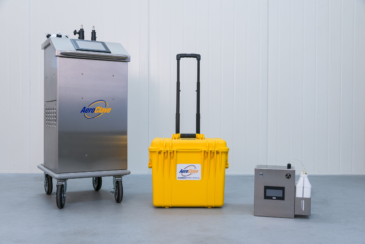
Where AeroClave Fits into an ASC Protection Plan
Modern surgery centers are defined by high-tempo operations and narrow windows for terminal cleaning. Environmental services teams often face a backlog of rooms while surgical schedules continue to advance. The physical demand of maintaining a sterile environment in these high-pressure settings is a known contributor to staff burnout. When staff members are pushed to their limits, the meticulous nature of manual cleaning often suffers. This reality creates a dangerous gap between the written infection control policy and the actual biological state of the facility.
High-acuity patients now represent a larger portion of the ASC patient population. This shift means that pathogens like MRSA, VRE, and C. diff are more likely to enter the surgical suite than in previous decades. Manual cleaning alone requires perfect execution to neutralize these threats, which is difficult to achieve during a five-minute room turnover. If a single surface is missed or a disinfectant does not meet its required contact time, the next patient is at risk for a surgical site infection.
That is where AeroClave fits.
The value proposition of an automated system is the elimination of manual variability. While a human operator might tire or lose focus, an automated system delivers the exact same volume of disinfectant every time. This consistency ensures that the facility meets the 2026 standards for patient safety and regulatory compliance. It transforms asc disinfection from a labor-intensive gamble into a repeatable, documented process (RDS 6110).
How AeroClave works in an ASC environment
AeroClave utilizes a concept known as “Room as a System.” This approach acknowledges that pathogens do not simply sit on flat, easy-to-reach surfaces. They exist in the air, on the undersides of surgical tables, and within the complex crevices of anesthesia machines. The system utilizes hospital-grade disinfectants that are EPA–registered to handle the primary threats in a clinical setting.
Both of our recommended disinfectants Vital Oxide & Dahlgren Decon is effective against the three pillars of hospital-grade disinfection: Pseudomonas aeruginosa, Staphylococcus aureus, and Salmonella choleraesuis. Because it is delivered as a fine mist, it reaches areas that a manual wipe-down would inevitably miss. This includes the internal components of electronics and the hidden joints of surgical equipment. Treating the room as a single biological system ensures that the bioburden is reduced across all surfaces simultaneously.
The use of them also addresses the material compatibility concerns cited in the 2008 CDC guidelines. Many legacy disinfectants, such as glutaraldehyde or high-concentration hydrogen peroxide, can cause cosmetic and functional damage to delicate surgical tools. These are formulated to be gentle on equipment while remaining lethal to pathogens. This allows ASCs to protect their capital investments while maintaining the highest levels of safety.
The Preferred Option for Documentation and Repeatability
Regulatory bodies such as the CMS and the Joint Commission require detailed logs of all disinfection and sterilization activities. The 2008 guidelines emphasize that failure to comply with these record-keeping requirements can lead to enforcement actions. In a manual environment, documentation is often a secondary thought for a busy environmental services team. This lack of data creates a liability risk if an infection cluster is ever investigated.
AeroClave provides a digital solution to this administrative burden. The RDS 6110 system tracks every cycle, ensuring that there is a permanent record of the date, time, and concentration used. This level of repeatability is the gold standard for modern healthcare. It proves to regulators, patients, and staff that the facility is operating at the peak of technical safety.
Why ASC teams use AeroClave during heavy pathogen activity
When a facility identifies a high risk of contagious disease spread, they must escalate their asc decontamination efforts. Automated systems are the primary choice for these scenarios for several technical reasons:
- Standardization: Every room receives the exact same treatment, regardless of which staff member is on duty.
- Total Coverage: The automated mist reaches high-touch and low-touch surfaces with equal efficacy, neutralizing hidden bioburden.
- Operational Speed: The system can be deployed quickly between cases, reducing the labor hours required for deep cleaning.
- Regulatory Compliance: Automated logs provide the “hard data” required for audits and infection control reporting.
- System Integration: AeroClave works as an adjunct to manual cleaning, ensuring that the final stage of room turnover is biologically sound.
What Success Looks Like: The 4-Step Workflow
Achieving a sterile environment requires a disciplined workflow that combines manual effort with automated precision. ASC teams that see the most success follow this specific sequence:
- Clean First: Associates must manually remove visible organic soil, blood, and inorganic salts. As the 2008 guideline notes, these materials can protect microbes from chemical action.
- AeroClave Workflow: The system is positioned to treat the entire room. The automated cycle ensures that the disinfectant reaches the 6-log10 reduction mark required for safety.
- Label Basics: Staff must verify that all disinfectants are used according to their EPA-registered labels. This includes monitoring the minimum effective concentration (MEC).
- Repeat: Use in the next room or after any exposure or suspected exposure occurs.
The high-tempo reality of 2026 requires more than a mop and a bucket. To protect your clinicians and the patients they serve, you must adopt a system that guarantees results. Complete the contact form today to learn how AeroClave can secure your facility against the next generation of biological threats.
Conclusion: ASC Disinfection
In conclusion, asc disinfection is the foundation of a safe surgical environment. The rise of high-acuity patients and the pressure of rapid turnover have made manual cleaning protocols insufficient on their own. By understanding the Spaulding classification and the limitations of legacy disinfectants, facility managers can make informed decisions about their safety infrastructure.
Automation via AeroClave bridges the gap between protocol and reality. It provides the consistency, coverage, and documentation required to meet 2026 regulatory standards. Protecting your mission readiness starts with a commitment to the “Room as a System” philosophy. Secure your facility and your reputation by integrating AeroClave into your infection control plan today.
Sign Up Below To Learn If AeroClave is Right For You
FAQs About ASC Disinfection
How does the Spaulding Classification apply to ASC equipment?
The classification tiers equipment by risk. Critical items that enter sterile tissue require full sterilization. Semicritical items that touch mucous membranes require high-level disinfection. Noncritical items that touch intact skin require low-level disinfection. Understanding these tiers is essential for a compliant asc decontamination strategy.
Why is manual cleaning alone often insufficient for ASCs?
Manual cleaning is prone to human error, especially in high-tempo environments. Staff burnout can lead to missed surfaces and inconsistent contact times. Furthermore, complex surgical equipment often has narrow lumens and joints that manual scrubbing cannot reach, leaving a residual bioburden.
Is the AeroClave system safe for surgical electronics?
Yes, the AeroClave system uses Vital Oxide, which is formulated for high material compatibility. It is surface safe for the delicate electronics found in modern surgical suites, including anesthesia machines and patient monitors. This prevents the functional damage often associated with harsher legacy chemicals like glutaraldehyde.
Can AeroClave help with regulatory audits?
The AeroClave RDS 6110 system automatically logs every disinfection cycle. This provides a digital audit trail that includes the time, date, and parameters of each treatment. This data is critical for proving compliance during inspections by the Joint Commission or state health departments for ASC disinfection audits.
Explore More Articles on Health and Safety
- Managing Facility Safety During a Legionnaires Disease Outbreak 2026
- The New Front Line: Managing the Nipah Virus Outbreak 2026
- How to Prevent HAI in Hospitals
- Stop the Spread of Whooping Cough (Pertussis)
- Comparing The Best Automated Disinfection Systems on the Market
- MDRO: What It Means, How It Spreads, and What You Can Do About It
- Stop a Kennel Cough Outbreak Before It Spreads
- Protect Yourself from Subclade K Flu (The Super Flu)
- Measles Outbreak 2026: What to Do, What to Watch For, and How to Stop the Spread
- Locker Room Fungus: How to Stop Athletes Foot and Ringworm
- Candida Auris and Its Impact on Patient Safety
- How Long Will Norovirus Last and Its Impact
- Hantavirus Signs and Symptoms: How to Spot This Rare but Serious Infection Early
- MRSA VRE: Protecting Yourself from Infections
- Florida legionnaires outbreak: What’s Happening in Orange County and What to Do Next
- How Contagious is Hand foot and mouth disease?
- Norovirus vs Food Poisoning: Treatment and Prevention
- Emerging Threat Prep: Why You Should Already Have a Protocol for Avian Flu
- How to Prevent the Spread of RSV
- The Superbug Showdown: How We Tackle MRSA and NDM-1 Klebsiella
- Beyond the “Stomach Bug”: Killing The Foodborne Pathogen Listeria in Your Facility
© 2026 AeroClave