As law enforcement agencies project operational requirements through 2026 and into 2027, the volume of reported biological exposures continues to rise at an alarming rate. Effective police vehicle disinfection is no longer a luxury but a critical component of officer safety and department liability management. This article examines the unseen pathogens within patrol units, the operational challenges of decontamination, and the advanced strategies required to maintain a safe mobile workspace.
Understanding Police Vehicle Contamination
A patrol car is more than a vehicle: it is a mobile office, a transport unit, and a frontline workstation. For a police officer, this environment is where they spend the majority of a twelve-hour shift. This constant occupancy creates a unique environment for pathogen accumulation. Unlike a standard office, the occupants of a patrol car change frequently, especially during detainee transport. Each shift introduces a new cycle of potential contaminants into a confined, recycled-air environment.
The Mobile Workspace Reality
Modern law enforcement vehicles are packed with critical equipment such as computers, radios, and weapons mounts. This equipment creates complex surfaces and tight crevices that are difficult to reach with standard cleaning tools. The RAND Corporation has noted that these cars face unique challenges due to constant exposure to high-risk situations. When a vehicle serves as a mobile office for an officer and a transport for a disorderly subject, the risk of cross-contamination increases significantly.
Biohazards in the Duty Cycle
The “Blue Canary” effect describes how officers often enter hazardous environments with no advance knowledge of the threats present. Biological threats are rarely visible to the naked eye. Blood from an injured detainee, vomit from an intoxicated subject, or respiratory droplets from a sick individual can all persist on surfaces for days. Without professional-grade decontamination, these materials pose a continuous health risk to every person who enters the vehicle.
Mission Readiness and Personnel Safety
The consequences of failing to address vehicle contamination go far beyond aesthetics. The health and well-being of the force are directly tied to the cleanliness of the fleet. When an officer is exposed to a pathogen, the ripple effect impacts the entire department.
Health Risks to Officers and Families
Exposure to bloodborne pathogens like HIV, Hepatitis B, and Hepatitis C can change an officer’s life in an instant. A single incident, such as being spat upon during a sally port intake, can trigger a grueling medical process. In documented cases, officers have had to undergo thirty days of intense medication to prevent infection after an exposure. This process involves months of follow-up testing and significant psychological stress.
The risk does not stop at the station. Officers who are exposed to pathogens can inadvertently carry these risks home to their spouses and children. For families attempting to have children or undergoing fertility treatments, a potential exposure can halt their plans for six months or longer. This creates a burden on the domestic life of the officer, which can impact their focus and performance on the job.
Liability and Legal Implications
Neglecting proper police vehicle Disinfection is a significant legal liability for any department. If an officer or a detainee becomes ill due to a contaminated vehicle, the department may face negligence claims. Lawsuits can tarnish a department’s reputation and lead to costly settlements that drain public resources. Furthermore, workers’ compensation claims for on-the-job disease exposure increase the financial burden on the municipality.
Regulatory compliance is another critical factor. The Occupational Safety and Health Administration (OSHA) maintains strict standards for handling biohazardous materials. Failing to follow these regulations can lead to heavy fines and increased scrutiny from government oversight agencies. Departments must prove that they are providing a safe working environment for their personnel.
Operational Fleet Readiness
A contaminated vehicle is a sidelined vehicle. When a patrol car is taken out of service for biohazard cleanup, fleet availability drops. In many departments, the fleet is already stretched thin due to budget constraints or maintenance cycles. Extensive downtime for cleaning reduces the number of units available for patrol, which can impact response times and community safety. Professional decontamination ensures that vehicles return to service quickly and safely.
Industry Obstacles to Cleanliness
Several factors make maintaining a sterile patrol car difficult in a high-tempo law enforcement environment. Understanding these obstacles is the first step toward implementing a better solution.
Staffing and Time Constraints
Many departments are currently facing staffing shortages. When fewer officers are on the street, the pressure to turn over vehicles between shifts increases. Officers often do not have the time to perform a thorough cleaning of their units at the end of a shift.
The Pressure of Shift Rotation
In a twenty-four-hour operational cycle, vehicles rarely sit idle. As one officer finishes a shift, another is usually waiting to take over the unit. This rapid turnover leaves only minutes for a cursory wipe-down of high-touch surfaces. This speed-focused approach often misses the “unseen” hazards that linger in the back seat or under the floor mats.
The Lack of Specialized Training
Most police officers are not trained as biohazard remediation specialists. Expecting an officer to effectively decontaminate a vehicle after a major exposure is unrealistic and dangerous. Without the proper training and personal protective equipment (PPE), the person cleaning the car may actually increase their own risk of exposure.
The Narcotic Threat
The rise of powerful synthetic narcotics like fentanyl has introduced a new level of danger to vehicle maintenance. These substances are toxic even in microscopic amounts.
Fentanyl and Methamphetamine Residue
Drug residues are often found in the seat crevices or within the HVAC systems of patrol cars. Inhalation or skin contact with even a few grains of fentanyl can lead to respiratory distress or accidental overdose. Standard cleaning methods like vacuuming can actually kick these particles into the air, making the situation worse.
Hidden Sharps Hazards
Used needles are frequently discovered under floor mats or wedged behind seats. These “sharps” pose a risk of needle-stick injuries, which are a primary route for the transmission of bloodborne pathogens. Professional biohazard services are equipped to safely locate and dispose of these hazards, whereas a DIY approach leaves the officer vulnerable.
Disinfection Strategies for Law Enforcement
Traditional cleaning methods have proven insufficient for the modern law enforcement environment. Departments must move beyond “surface clean” to “systemically safe.”
Disinfection Strategies for Police/Public Safety
A successful disinfection strategy must account for the unique geometry of a patrol car. The interior is a maze of plastics, fabrics, and sensitive electronics.
Manual Surface Protocols
Wiping down door handles, steering wheels, and partitions is a standard practice in many agencies. This method is effective for removing visible dirt and some surface-level bacteria. However, manual cleaning relies heavily on the diligence of the person performing the task. If a single spot is missed, the pathogen remains. Furthermore, manual wipes cannot reach inside the ventilation system or deep into the upholstery where droplets may have settled.
Where AeroClave Fits into a Public Safety Protection Plan
The gap between standard protocol and operational reality is where many departments fail. High-tempo operations require a solution that is consistent, fast, and thorough.
Operational Pressure Opener
Law enforcement leaders face a constant struggle between safety and speed. They cannot afford to have their fleet sitting in a wash bay for hours, yet they cannot risk the health of their officers. The manual method is too variable to be a reliable safety standard in 2026.
That is where AeroClave fits.
Value Proposition: Consistency Over Variability
AeroClave removes the element of human error from the decontamination process. While a person might miss a crevice or fail to let a disinfectant sit for the required “dwell time,” an automated system treats the entire interior simultaneously. This ensures that every cubic inch of the vehicle, including the areas behind the dashboard and under the seats, is reached.
High-Level Disinfection (HLD) Requirements
The standard for police vehicle Disinfection is evolving toward high-level protocols. It is not enough to simply clean for appearance. A vehicle that looks clean can still harbor MRSA, E. coli, or Hepatitis B. These pathogens are hardy and can survive on cold surfaces for extended periods.
High-level disinfection requires a systematic approach to the entire interior. This includes the soft surfaces of the seats and the hard plastics of the dashboard. It also includes the electronic interfaces that officers use every minute of their shift. To meet modern safety standards, a department must use a process that is validated against a wide spectrum of biological threats.
Where AeroClave Fits into a Public Safety Protection Plan
How AeroClave works in a police environment
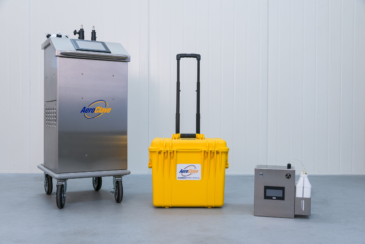
The AeroClave system utilizes an automated fogging process that treats the vehicle as a single, integrated system. This “Room as a System” approach is vital for the complex geometry of a modern patrol unit. When the system is activated, it disperses a fine mist of disinfection throughout the cabin. This mist remains suspended in the air before settling uniformly on every surface.
Because the disinfectant is delivered as a fog, it reaches areas that are physically impossible to access by hand. It flows into the radio mounts, under the seats, and into the seams of the upholstery. It also penetrates the HVAC system. This ensures that airborne pathogens that have been recirculated through the air conditioning are neutralized.
The use of EPA Registered Disinfectants is a key part of this process. These solutions are hospital-grade disinfectants that is effective against a broad range of bacteria and viruses. It is also safe for the sensitive electronics found in police vehicles. This allows a department to achieve a high level of safety without risking damage to expensive mobile data terminals or 800 MHz radio systems.
The Preferred Option for Repeatability
One of the primary reasons AeroClave is the preferred option for law enforcement is its ability to provide consistent results. Manual cleaning is subject to the variability of the person performing the task. An officer who is tired at the end of a shift may not be as thorough as necessary. AeroClave removes this variability by using a pre-programmed cycle that is the same every time.
Why police teams use AeroClave during heavy pathogen activity
When a department faces a spike in infectious disease activity or a series of biohazard exposures, the need for a reliable system becomes even more urgent. Police teams across the country have integrated this technology for five key reasons:
- Standardization: It ensures that every vehicle in the fleet meets the same high safety standard regardless of which shift or station it belongs to.
- Coverage: The fogging technology provides 360-degree coverage of the interior, reaching deep into the crevices where fentanyl residue or bloodborne pathogens hide.
- Speed: A full decontamination cycle can be completed in a fraction of the time it takes to manually scrub a vehicle, which keeps the fleet on the street.
- Compliance: The system helps the department meet OSHA requirements for the handling and cleanup of biohazardous materials.
- Integration: It fits seamlessly into existing fleet maintenance and shift-change protocols without requiring additional specialized staff.
Each of these points addresses a specific operational pain point. For instance, the speed of the system allows a car to be decontaminated and returned to service within minutes of an exposure incident. This prevents the “fleet drain” that occurs when multiple units are sidelined for manual cleaning. It also protects the technician or officer who would otherwise have to perform a dangerous manual cleanup.
What success looks like: The 4-Step Workflow
Implementing a successful police vehicle Disinfection program requires a clear and repeatable workflow. This ensures that every member of the department knows exactly how to handle a contaminated unit. Success is measured by a four-step process:
- Clean First: The technician should remove any visible organic matter or large debris from the vehicle. This allows the disinfectant fog to make direct contact with the primary surfaces.
- AeroClave Workflow: The AeroClave unit is placed in the vehicle or connected via a remote port. The automated cycle is initiated, filling the cabin with a fine mist of Vital Oxide.
- Label Basics: Once the cycle is complete, the vehicle is labeled to indicate the date and time of the disinfection. This provides visual confirmation to the next officer that the unit is safe for occupancy.
- Repeat: Use in the next room or after any exposure or suspected exposure occurs.
This workflow turns a complex biohazard problem into a routine maintenance task. It empowers the department to take control of their environment and protect their most valuable assets: the officers who serve the community.
For more information on how to protect your fleet from unseen biological risks, contact an AeroClave specialist today through our operational reality support form.
Conclusion: police vehicle disinfection
In conclusion, the necessity of police vehicle disinfection has never been more apparent than it is in the 2024 to 2026 timeframe. The risks associated with bloodborne pathogens and synthetic narcotics are too great to ignore. Manual cleaning methods, while useful for basic maintenance, fall short of the high-level disinfection required for officer safety and liability protection.
By adopting automated systems like AeroClave, departments can ensure a consistent, documented, and thorough decontamination of their entire fleet. This technology protects officers and their families while maintaining the operational readiness of the department. Investing in professional-grade disinfection is a commitment to the health and safety of every person who wears the badge.
Sign Up Below To Learn If AeroClave is Right For You
FAQs About police vehicle disinfection
How long does a standard AeroClave cycle take for a patrol car?
A standard cycle typically takes less than 20 minutes to complete. This includes the time for the fog to settle and the “dwell time” required to neutralize pathogens. This speed is designed to fit into the rapid tempo of a law enforcement shift change.
Can AeroClave neutralize fentanyl and other synthetic narcotics?
Yes AeroClave can neutralize fentanyl when paired with Dahlgren Decon. The fogging process is highly effective at covering the surfaces where microscopic drug residues settle (For the moment Dahlgren Decon is only approve with the use of the APA hand applicator).
How does the AeroClave system help with OSHA compliance?
OSHA requires employers to provide a workplace that is free from recognized hazards, including bloodborne pathogens. The AeroClave 6110 provides a validated and documented process for decontaminating vehicles after a potential exposure. This documentation is vital for proving compliance during safety audits or in response to workers’ compensation claims.
Explore More Articles on Health and Safety
- Managing Facility Safety During a Legionnaires Disease Outbreak 2026
- The New Front Line: Managing the Nipah Virus Outbreak 2026
- How to Prevent HAI in Hospitals
- Stop the Spread of Whooping Cough (Pertussis)
- Comparing The Best Automated Disinfection Systems on the Market
- MDRO: What It Means, How It Spreads, and What You Can Do About It
- Stop a Kennel Cough Outbreak Before It Spreads
- Protect Yourself from Subclade K Flu (The Super Flu)
- Measles Outbreak 2026: What to Do, What to Watch For, and How to Stop the Spread
- Locker Room Fungus: How to Stop Athletes Foot and Ringworm
- Candida Auris and Its Impact on Patient Safety
- How Long Will Norovirus Last and Its Impact
- Hantavirus Signs and Symptoms: How to Spot This Rare but Serious Infection Early
- MRSA VRE: Protecting Yourself from Infections
- Florida legionnaires outbreak: What’s Happening in Orange County and What to Do Next
- How Contagious is Hand foot and mouth disease?
- Norovirus vs Food Poisoning: Treatment and Prevention
- Emerging Threat Prep: Why You Should Already Have a Protocol for Avian Flu
- How to Prevent the Spread of RSV
- The Superbug Showdown: How We Tackle MRSA and NDM-1 Klebsiella
- Beyond the “Stomach Bug”: Killing The Foodborne Pathogen Listeria in Your Facility
© 2026 AeroClave