According to healthcare data projections for 2026, the number of hospitals worldwide is expected to reach approximately 215,977 facilities. Within these high-stakes environments, implementing consistent infection control precautions is the primary method for stopping the spread of dangerous pathogens. Understanding why infection control is important is now a central focus for administrators who must manage rising patient complexity and antibiotic resistance. This article examines the current standards of facility safety and how automated systems are closing the gaps left by manual cleaning.
Understanding Infection Control Precautions
Infection control is a set of standard recommendations designed to reduce the risk of spreading infectious agents. These protocols focus on blocking the pathways that germs use to move from one person to another. In a modern facility, this requires a disciplined approach to every interaction, from routine checkups to intensive care.
Defining the Two-Tier System
The Centers for Disease Control and Prevention (CDC) organizes safety protocols into two distinct tiers. This structure ensures that every patient receives a baseline of protection while providing extra safeguards for specific risks. Following this hierarchy is essential for maintaining a safe operational environment.
Standard Precautions for Every Encounter
Standard precautions are the minimum infection control safeguards used for all patient care. They apply to every person in a facility, whether they appear to be infectious or not. These rules protect healthcare providers and prevent germs from moving from one patient to the next.
Common practices include frequent hand hygiene and the use of personal protective equipment like gloves and gowns. These steps are based on a formal risk assessment of the clinical situation. By treating every interaction with the same high standard, facilities create a consistent barrier against invisible threats.
Transmission-Based Precautions for Higher Risk
Transmission-based precautions represent the second tier of basic infection control. They are used in addition to standard precautions for patients who may be infected with specific infectious agents. These extra measures are necessary when standard protocols are not enough to interrupt the spread of a pathogen.
These are further broken down into contact, droplet, and airborne categories. Each category requires different equipment and room specifications to manage the risk. For example, airborne precautions often require specialized rooms with negative air pressure to keep germs from drifting into hallways.
Why the Stakes Are Rising in 2026
The operational landscape for healthcare is becoming more complex as the number of facilities increases globally. Administrators are facing more pressure to maintain sterility in environments that are often overcrowded. Failing to meet these standards carries heavy consequences for both patient outcomes and facility reputation.
The Impact of Healthcare-Associated Infections (HAIs)
Recent reports show that approximately 1 in 31 U.S. hospital patients contracts at least one healthcare-associated infection every day. These infections rank among the top ten causes of death in the United States. Many patients who survive an HAI require long-term medical care, which alters their quality of life significantly.
Beyond the human cost, these infections lead to millions of extra hospital days every year. Some studies indicate that an HAI can increase the risk of hospital readmission within 30 days by as much as 60 percent. This creates a cycle of illness that strains the entire medical system.
Legal and Operational Liability
Maintaining strict protocols is also a matter of mission readiness and liability management. Healthcare-associated infections cost the U.S. system an estimated 28 to 33 billion dollars each year. Facilities that cannot prove they followed the latest safety guidelines may face severe legal challenges.
Liability often hinges on whether a facility met the “standard of care” during a patient encounter. If documentation is missing or protocols are inconsistent, the facility is at high risk during audits. Standardized precautions provide a documented trail of safety that protects the organization.
Industry Challenges in Maintaining Sterility
While the rules for safety are well-defined, the reality of daily operations presents many obstacles. High-tempo environments often force staff to move quickly between tasks. This speed can lead to minor errors that allow pathogens to find a way through the facility.
The Operational Reality of High-Tempo Facilities
Hospitals and clinics are often operating at maximum capacity. This high volume of patients requires fast room turnover to keep wait times manageable. However, speed and safety are often in conflict during the cleaning process.
Staffing Shortages and Burnout
One of the biggest challenges in 2025 and 2026 is the severe shortage of trained nursing and cleaning staff. When teams are understaffed, it is much harder to maintain perfect adherence to hand hygiene and PPE rules. Burnout further reduces the level of attention given to routine disinfection tasks.
Data shows that nurse staffing levels are a direct determinant of infection rates. When staff members are overworked, the likelihood of an accidental needlestick or a protocol breach increases. This puts both the employee and the patient in immediate danger.
Fast Room Turnover and the Hidden Surface Problem
In ambulatory settings, exam rooms are turned around quickly to accommodate hundreds of visits. This limited time often results in “spot cleaning” rather than comprehensive disinfection. Manual wipe-downs frequently miss hidden surfaces like the undersides of tables or the back of equipment.
Germs can survive on dry surfaces like bed rails and countertops for long periods. If these surfaces are not thoroughly treated, they act as persistent reservoirs for infection. A provider might touch a contaminated rail and then move to a patient, completing the transmission pathway.
Pathogen Persistence and Resistance
The types of germs found in facilities are also becoming harder to kill. Pathogens have evolved to survive standard cleaning chemicals and common antibiotics. This creates a “super-germ” environment that requires more aggressive disinfection strategies.
The Threat of Multidrug-Resistant Organisms (MDROs)
Multidrug-resistant organisms are bacteria that have developed resistance to one or more classes of antimicrobial agents. Examples like MRSA and VRE are common in acute care facilities. These pathogens are easily moved by the hands of healthcare workers who touch contaminated equipment.
Controlling MDROs is now a national priority. Because these germs are so resilient, they require enhanced barrier precautions in nursing homes and hospitals. Without specialized intervention, an MDRO can quickly become endemic within a facility ward.
Resilient Spore-Forming Pathogens in Clinical Settings
Certain pathogens represent a significant challenge to facility safety due to their ability to form environmental spores. These biological structures are highly resistant to standard alcohol-based hand rubs and routine surface disinfectants. Spores can persist on dry surfaces for weeks or even months without losing their infectious potential.
Granular Breakdown of Transmission-Based Precautions
Transmission-based precautions are necessary when standard protocols cannot fully stop a pathogen. These measures target the specific way a germ moves through an environment. Using these extra steps prevents large-scale outbreaks in hospitals and clinics.
Contact Precautions and Surface Management
Contact precautions are used for patients with infections spread by direct or indirect touch. This includes pathogens like MRSA, VRE, and vancomycin-resistant organisms. Staff must wear gowns and gloves for every interaction with the patient or their immediate surroundings.
Managing Environmental Reservoirs
Dry surfaces in patient care areas often serve as hidden reservoirs for germs. Bed rails, countertops, and medical equipment can harbor bacteria for days. Staff must treat these surfaces as contaminated even if they look clean.
Physical contact is the primary way these germs move to a susceptible person. A healthcare provider might touch a contaminated table and then touch a patient. This completes the transmission pathway and causes a new infection.
Equipment Dedication Protocols
To reduce risk, facilities should use dedicated or disposable medical equipment. Items like blood pressure cuffs and stethoscopes should stay in the patient’s room. If equipment must be shared, it requires thorough disinfection between uses.
Eliminating these resilient threats requires the use of specialized sporicidal agents. Mechanical hand hygiene with soap and water is mandatory because sanitizers do not neutralize spores. The long-term environmental persistence of these pathogens makes manual cleaning alone insufficient for total site control.
Droplet Precautions and Facial Barriers
Droplets are generated when an infected person coughs, sneezes, or talks. These particles are larger than 5 micrometers and generally travel about 3 to 6 feet. Facial protection is the most important tool for stopping these pathogens.
Respiratory Hygiene and Source Containment
Source control is the first step in managing droplet risks. This involves putting a mask on the coughing patient as soon as they enter the facility. Triage areas should have masks, tissues, and no-touch trash cans ready for use.
Healthcare workers must also wear a mask when entering the patient’s room. Spatial separation of at least 3 feet is required in waiting areas. This distance reduces the chance of droplets reaching the eyes, nose, or mouth of others.
Airborne Precautions and Ventilation Systems
Airborne germs are much smaller than droplets, often measuring 5 micrometers or less. These particles stay suspended in the air for long periods. They can travel over long distances via air currents within a building.
AIIR Engineering Standards
Patients with airborne diseases like measles or tuberculosis require specialized rooms. These are called Airborne Infection Isolation Rooms or AIIRs. These rooms must have a monitored negative air pressure to keep germs contained.
The standard for new construction is at least 12 air changes per hour. For existing facilities, the requirement is 6 air changes per hour. Air must be exhausted directly outside or filtered through a HEPA system before it recirculates.
Respirator Fit-Testing Requirements
Standard masks are not enough to protect staff from airborne germs. Healthcare workers must wear a fit-tested NIOSH-approved N95 or higher respirator. These devices create a tight seal around the face to filter out tiny particles.
Employers must provide a formal respiratory protection program. This includes annual fit-testing to ensure the respirator fits the worker correctly. Staff must also perform a user-seal check every time they put the device on.
Enhanced Barrier Precautions and Oversight
Nursing homes face unique challenges because they are residential settings. Residents live in close proximity and share common areas for meals and activities. Enhanced barrier precautions help manage multidrug-resistant organisms without causing social isolation.
Identifying High-Contact Resident Activities
Enhanced precautions focus on activities where staff have significant physical contact with a resident. These high-contact moments are the most likely times for germs to move to clothing or skin. Activities that require a gown and gloves include:
- Dressing and bathing the resident.
- Transferring the resident between a bed and a chair.
- Changing linens or assisting with toileting.
- Providing hygiene or wound care.
- Caring for indwelling devices like catheters or feeding tubes.
Administrative Oversight and Staffing Ratios
Safety programs require more than just rules; they need an operational foundation. Healthcare administrators must provide the resources to make these protocols possible. Without strong oversight, even the best safety plans will fail over time.
Expert reports suggest a ratio of 0.8 to 1.0 infection control professionals per 100 beds. These experts manage surveillance and train frontline workers on the latest standards. Investing in these specialists reduces the long-term cost of managing outbreaks.
Effective Ways to Disinfect
To combat these challenges, facilities must use a combination of different methods. Understanding the strengths and limitations of each approach is the only way to build a reliable safety plan.
Manual Wipe-downs
Manual wiping is best for removing visible organic matter and soil from surfaces. It is a necessary first step that makes chemical disinfectants more effective.
The main operational limitation is human variability. Staff may miss hard-to-reach areas or fail to keep a surface wet for the required dwell time. This leaves active pathogens behind on the surface.
Electrostatic and Pump Sprayers
Sprayers are used to apply liquid disinfectant over large areas more quickly than wiping. They provide better coverage for complex shapes like wheelchairs or gym equipment.
The main operational limitation is the training burden. If an operator moves too quickly, the chemical does not reach the required thickness to kill germs. There is also a risk of uneven application, leaving some spots dry.
UV-C and Room Technology
UV-C light systems use ultraviolet radiation to kill germs on surfaces and in the air. These machines are often used for terminal cleaning after a patient leaves a room.
The main operational limitation is the “shadow” effect. UV light only kills what it can see in a direct line of sight. Any surface in a shadow remains contaminated, meaning the room is not fully sterile.
Where AeroClave Fits Into a Healthcare Protection Plan
Modern healthcare facilities are under constant pressure to maintain high throughput while ensuring absolute safety. Staff members are often pushed to their limits, managing complex equipment and high-acuity patients simultaneously. In these conditions, relying solely on manual labor to disinfect a room is a major operational risk.
That is where AeroClave fits.
By introducing automation, AeroClave removes the variability that comes with human-led cleaning. While a tired staff member might miss a corner or rush a wipe-down, an automated system provides the same level of coverage every time. This consistency is the only way to ensure that a facility meets its regulatory and safety goals.
How AeroClave Works in a Healthcare Environment
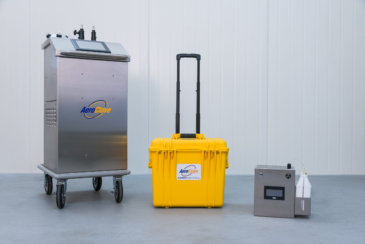
AeroClave systems treat the entire room as a single, integrated system rather than a collection of individual surfaces. The system distributes Vital Oxide in a fine mist that reaches everywhere the air can travel. This means that the undersides of chairs, the backs of monitors, and the crevices of bed rails all receive the required amount of disinfectant.
It is important to understand that this technology is a supplement to physical cleaning, not a total replacement. Staff must still remove visible soil and organic material from surfaces first. AeroClave then provides the high-level, room-wide terminal disinfection that manual efforts cannot achieve.
The Preferred Option for Documentation
AeroClave is the preferred option for facilities that prioritize repeatability and ease of documentation. In the event of a state audit or a liability claim, having a digital record of every disinfection cycle is invaluable. The system allows administrators to prove that a room was treated according to exact specifications, removing the guesswork from the safety process.
Why Healthcare Teams Use AeroClave During Heavy Pathogen Activity
Healthcare teams typically choose AeroClave when they want to:
- Standardize the disinfection process across multiple shifts and departments.
- Ensure total coverage of complex medical equipment that is difficult to wipe by hand.
- Increase the speed of terminal cleaning during peak occupancy periods.
- Maintain compliance with rigorous state and federal infection control standards.
- Integrate modern safety technology into an existing workforce to reduce physical burnout.
What Success Looks Like
Achieving a truly sterile environment requires a disciplined four-step workflow that combines manual skill with automated precision.
- Clean first: Staff members remove all visible debris and organic matter from the room surfaces.
- AeroClave workflow: The system is activated to provide a hands-free, room-wide misting cycle.
- Label basics: Equipment is checked to ensure all “use-by” and “cleaned-on” labels are current.
- Repeat: Use in the next room or after any exposure or suspected exposure occurs.
Standardized protocols and automated tools are the future of facility safety. To learn how to integrate these systems into your current safety plan, please fill out the contact form below.
Disinfection Strategies for High-Tempo Facilities
In the demanding landscape of 2026, where facility managers and first responders face constant biological threats, relying on a single, flawed method of decontamination is no longer an option. The operational reality of a fire station or a busy surgical center requires a strategy that balances speed with clinical-grade efficacy.
Manual Surface Protocols: Strengths vs. Human Error
Manual cleaning is the necessary first step in any infection control plan. Its primary strength lies in the removal of gross bioburden, such as dirt, blood, or grime, which can physically shield pathogens from secondary disinfection methods like UV-C light disinfection. However, the reality of the high-stakes environment is that manual wiping is inherently limited by human variability.
Staff members under pressure may overlook high-touch surfaces like the undersides of equipment rails or the intricate buttons on a ventilator. Furthermore, reliance on chemical wipes often fails because the surface dries before the disinfectant neutralizes the pathogen, preventing the necessary contact time.
Where AeroClave Fits into a Facility Protection Plan
Managing a modern healthcare or emergency facility involves constant pressure to reduce “wall time” and turn over rooms or vehicles at a moment’s notice. When a crew is moving from one high-risk call to the next, they do not have the luxury of waiting for an hour-long, line-of-sight dependent UV cycle that might still leave “shadowed” pathogens active in the cabin.
That is where AeroClave fits.
AeroClave designed its system specifically to solve the consistency problem of manual cleaning and the coverage limitations of UV-C light disinfection. By utilizing a hands-free, automated process, AeroClave removes the variable of human error and ensures the treatment of every square inch of a space, regardless of its geometry.
How AeroClave Works in a High-Stakes Environment
AeroClave treats the entire room as a single, integrated system. Unlike light-based systems that only hit what they can “see,” AeroClave utilizes an atomized fog of Vital Oxide. This EPA-registered hospital disinfectant is dispersed in a fine mist that permeates the entire volume of a room, reaching into crevices, under cabinets, and behind monitors where light simply cannot travel.
The use of Vital Oxide is a critical distinction. While ultraviolet radiation can damage sensitive electronics and upholstery over time, Vital Oxide is a shelf-stable, surface safe solution that is safe for use on the complex equipment found in modern ambulances and ICUs. It provides a level of coverage that is physically impossible for a stationary UV lamp to achieve.
The Preferred Option for Professional Teams
AeroClave has become the preferred option for professional organizations because it prioritizes repeatability and documentation. In the context of 2026 safety standards, simply “doing the work” is not enough; you must be able to prove it. AeroClave provides a consistent, validated process.
Why Facility Teams Use AeroClave During Heavy Pathogen Activity
When pathogen activity increases during peak flu seasons or unexpected outbreaks, teams need a system they can trust without hesitation:
- Standardization: Every cycle is identical, ensuring that the level of disinfection does not change based on who is on shift.
- Total Coverage: The fog reaches shadowed areas and complex surface topographies that UV light misses.
- Operational Speed: Facilities can be treated and re-occupied quickly without the lingering risks of ozone or air pollutants.
- Equipment Safety: The process is gentle on expensive monitors, radios, and medical equipment, preventing the cracking and fading associated with UV.
- Regulatory Compliance: The system meets the rigorous standards required for hospital-grade disinfection and is backed by EPA-registered chemistry.
What Success Looks Like: The 4-Step Workflow
AeroClave simplifies the decontamination process into a clear, manageable workflow that ensures maximum safety with minimum downtime:
- Clean First: Perform a standard manual wipe-down to remove visible dirt and gross bioburden from surfaces.
- AeroClave Workflow: Position the AeroClave unit and initiate the automated cycle, allowing the atomized Vital Oxide to fill the space.
- Label Basics: Ensure the area is properly identified as undergoing disinfection, maintaining safety for nearby personnel.
- Repeat: Use in the next room or after any exposure or suspected exposure occurs.
To learn more about how to integrate this level of safety into your operational reality, visit our contact page to speak with an expert.
Conclusion: Infection Control Precautions
In conclusion, maintaining a sterile environment requires a multi-layered approach to safety. Implementing standard infection control precautions provides a baseline for all patient care. Using specialized transmission-based steps is the only way to manage high-risk pathogens effectively. Why infection control is important becomes clear when you look at the human and financial cost of HAIs. By combining trained staff with automated technology, facilities can close the safety gap and protect their mission. Please reach out to our team to find the right decontamination solution for your facility.
Sign Up Below To Learn If AeroClave is Right For You
FAQs About Infection Control Precautions
How does AeroClave help with resilient environmental spores?
AeroClave systems are designed to distribute Vital Oxide effectively throughout a room. This chemical is highly effective against a wide range of pathogens, including resilient, spore-forming bacteria. Automation ensures the disinfectant reaches every surface where these persistent organisms might hide
Can AeroClave be used in occupied rooms?
No, the room must be vacant during the misting cycle. This ensures that the disinfectant reaches all areas without interruption and keeps staff safe from the mist. Once the cycle is finished and the room is cleared, it is safe for immediate reentry.
What are the main sources of germs in a hospital?
The main reservoirs include people, such as patients and staff, and dry surfaces like bed rails. Moist environments like sinks and faucets are also high-risk areas. Even dust from construction zones can carry dangerous germs through a facility.
How often do AIIR rooms need to be checked?
Air pressure in Airborne Infection Isolation Rooms must be monitored daily. Staff use visual indicators like smoke tubes or digital manometers to ensure the room stays under negative pressure. This prevents contaminated air from leaking into common areas.
Does hand sanitizer work against all germs?
Alcohol-based hand rubs are the preferred method for most clinical situations. However, they are not effective against certain pathogens like Norovirus or various spore-forming bacteria. In those cases, mechanical washing with soap and water is the only way to physically remove the germs from the skin. That’s why infection control is important.
Explore More Articles on Health and Safety
- Managing Facility Safety During a Legionnaires Disease Outbreak 2026
- The New Front Line: Managing the Nipah Virus Outbreak 2026
- How to Prevent HAI in Hospitals
- Stop the Spread of Whooping Cough (Pertussis)
- Comparing The Best Automated Disinfection Systems on the Market
- MDRO: What It Means, How It Spreads, and What You Can Do About It
- Stop a Kennel Cough Outbreak Before It Spreads
- Protect Yourself from Subclade K Flu (The Super Flu)
- Measles Outbreak 2026: What to Do, What to Watch For, and How to Stop the Spread
- Locker Room Fungus: How to Stop Athletes Foot and Ringworm
- Candida Auris and Its Impact on Patient Safety
- How Long Will Norovirus Last and Its Impact
- Hantavirus Signs and Symptoms: How to Spot This Rare but Serious Infection Early
- MRSA VRE: Protecting Yourself from Infections
- Florida legionnaires outbreak: What’s Happening in Orange County and What to Do Next
- How Contagious is Hand foot and mouth disease?
- Norovirus vs Food Poisoning: Treatment and Prevention
- Emerging Threat Prep: Why You Should Already Have a Protocol for Avian Flu
- How to Prevent the Spread of RSV
- The Superbug Showdown: How We Tackle MRSA and NDM-1 Klebsiella
- Beyond the “Stomach Bug”: Killing The Foodborne Pathogen Listeria in Your Facility
© 2026 AeroClave