Data suggests that the push for automated safety protocols has reached an all-time high as facilities struggle with persistent pathogens like SARS-CoV-2 and influenza. Many administrators have turned to UV-C light disinfection as a primary solution for maintaining sterile environments in hospitals, fire stations, and public buildings. While the technology offers a non-chemical approach to sterilization, recent research highlights significant operational and safety gaps that decision-makers must consider. This article provides a comprehensive analysis of the the problem with UV-C light disinfection and introduces a more consistent alternative for facility safety.
Understanding UV-C Light Disinfection
UV-C light disinfection refers to the use of ultraviolet radiation within the 100 to 280 nanometer (nm) range to inactivate microorganisms. This segment of the electromagnetic spectrum is invisible to the human eye but possesses enough energy to penetrate the cellular walls of bacteria, viruses, and fungi. When applied correctly, it serves as a germicidal tool that has been utilized in water treatment and air purification for over a century.
The Germicidal Mechanics of Ultraviolet Radiation
The primary function of ultraviolet light is the disruption of genetic material. When pathogens are exposed to specific wavelengths, typically around 254 nm or 260 nm, the light energy is absorbed by the DNA or RNA of the organism.
DNA and RNA Disruption
The absorption of UV photons triggers a photochemical reaction that forms pyrimidine dimers. In bacteria, this reaction bonds neighboring thymine or cytosine bases, which prevents the cell from reading or replicating DNA correctly. A similar process occurs in viruses, where the reaction disrupts uracil bases in RNA. This damage to the genetic code renders the microorganism “inactive” because it can no longer reproduce or cause infection. The process effectively “takes out the batteries” of the pathogen.
Wavelength Specificity and the 260 nm Peak
While 254 nm is the most common wavelength produced by mercury-vapor lamps, research indicates that peak absorbance for most bacterial DNA actually occurs between 260 nm and 265 nm. This means that devices emitting a single wavelength may not be as effective as those that provide a broader spectrum of light. The closer the light source is to the 260 nm peak, the more efficiently it can damage the genetic structure of the target pathogen.
The Stakes of Infection Control
The implementation of any disinfection system is ultimately about mission readiness and the mitigation of liability. In healthcare and emergency services, the failure to maintain a sterile environment can lead to healthcare-associated infections (HAIs) that compromise patient outcomes and increase operational costs.
Personnel Safety and Operational Readiness
For Fire and EMS teams, a single contaminated vehicle can sideline an entire crew. If a pathogen like C. diff or a resistant strain of influenza remains active on high-touch surfaces, the risk of cross-contamination increases exponentially. Maintaining mission readiness requires a system that ensures the safety of the personnel who operate in these high-tempo environments every day.
Regulatory Compliance and Liability Risks
Regulatory bodies like the FDA and EPA provide strict guidelines for what constitutes low-level versus high-level disinfection. Utilizing unproven or improperly applied ultraviolet technology can leave an organization vulnerable to litigation and regulatory fines. If a device fails to reach every corner of a room due to shadowing, the resulting “clean” status is a false sense of security that increases legal exposure.
Operational Challenges and Industry Obstacles
The problem with UV-C light disinfection often stems from the gap between laboratory success and real-world application. In a controlled lab, light is shined directly on a flat surface, but in a functional hospital room or ambulance, the environment is far more complex.
The Problem of Shadowing and Line-of-Sight
The most significant limitation of light-based disinfection is its reliance on a direct line-of-sight. Ultraviolet rays travel in straight lines and cannot bend around corners or penetrate through solid objects.
Surface Topography and Complex Geometry
In environments with complex equipment, such as an ICU or an ambulance cabin, shadowing is an ever-present hurdle. If a light source cannot “see” a surface because it is blocked by a monitor, a chair, or a cabinet, that surface remains contaminated. Surface irregularities and high roughness further complicate this, as even microscopic pits in a material can provide a “shadow” for bacteria to hide in.
The Inverse Square Law and Distance Factors
The intensity of UV-C radiation decreases significantly as the distance from the source increases. According to the inverse square law, doubling the distance from the lamp reduces the intensity to one-fourth of its original strength. This means that surfaces at the far end of a room may receive a sub-lethal dose of radiation, allowing pathogens to survive and potentially develop resistance through genomic repair.
Human Health Risks and Safety Hazards
One cannot ignore the problem with UV-C light disinfection and what it can cause in humans. The same energy that destroys the DNA of a virus can also damage human cells, which contain the same genetic building blocks.
Ocular and Cutaneous Damage
Direct exposure to UV-C light can cause severe skin burns (erythema) and painful eye injuries known as photokeratitis. Patients and professionals have described the feeling of photokeratitis as having sand rubbed into their eyes. Because of these risks, rooms must be entirely vacated during a standard UV cycle, which slows down turnover times in busy facilities.
The Problem with UV-C Light Disinfection Wands
The FDA has issued specific warnings against the use of certain handheld UV wands sold to consumers and small businesses. Some of these devices have been found to emit 3,000 times the recommended limit of radiation without adequate safety shielding. These wands often lack safety instructions and can cause permanent injury to the user or bystanders in just a few seconds of operation.
Environmental and Material Impacts
Beyond human safety, the persistent use of ultraviolet light can have a detrimental effect on the facility itself. The high-energy photons can degrade the very materials they are meant to sanitize.
Material Degradation and Surface Cracking
Prolonged exposure to UV-C light often leads to the fading, cracking, and weakening of non-metallic surfaces. Plastics, fabrics, and even wood can become brittle over time when subjected to repeated UV cycles. This is particularly problematic in healthcare settings where expensive medical equipment and specialized upholstery must remain intact for years of service.
Ozone Generation and Indoor Air Pollution
A growing concern in 2024 and 2025 research is the production of secondary pollutants. Wavelengths below 240 nm, such as those used in far UV-C (222 nm) lamps, react with oxygen in the air to create ozone. Ozone is a respiratory irritant that can react with indoor fragrances (terpenes) to produce harmful byproducts like formaldehyde and secondary organic aerosols. These “unintended chemical reactions” can turn a sanitized room into an air quality hazard.
Disinfection Strategies for High-Tempo Facilities
In the demanding landscape of 2026, where facility managers and first responders face constant biological threats, relying on a single, flawed method of decontamination is no longer an option. The operational reality of a fire station or a busy surgical center requires a strategy that balances speed with clinical-grade efficacy.
Manual Surface Protocols: Strengths vs. Human Error
Manual cleaning is the necessary first step in any infection control plan. Its primary strength lies in the removal of gross bioburden, such as dirt, blood, or grime, which can physically shield pathogens from secondary disinfection methods like UV-C light disinfection. However, the reality of the high-stakes environment is that manual wiping is inherently limited by human variability.
Staff members under pressure may overlook high-touch surfaces like the undersides of equipment rails or the intricate buttons on a ventilator. Furthermore, reliance on chemical wipes often fails because the surface dries before the disinfectant neutralizes the pathogen, preventing the necessary contact time.
Where AeroClave Fits into a Facility Protection Plan
Managing a modern healthcare or emergency facility involves constant pressure to reduce “wall time” and turn over rooms or vehicles at a moment’s notice. When a crew is moving from one high-risk call to the next, they do not have the luxury of waiting for an hour-long, line-of-sight dependent UV cycle that might still leave “shadowed” pathogens active in the cabin.
That is where AeroClave fits.
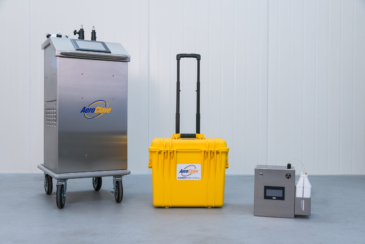
AeroClave designed its system specifically to solve the consistency problem of manual cleaning and the coverage limitations of UV-C light disinfection. By utilizing a hands-free, automated process, AeroClave removes the variable of human error and ensures the treatment of every square inch of a space, regardless of its geometry.
How AeroClave Works in a High-Stakes Environment
AeroClave treats the entire room as a single, integrated system. Unlike light-based systems that only hit what they can “see,” AeroClave utilizes an atomized fog of Vital Oxide. This EPA-registered hospital disinfectant is dispersed in a fine mist that permeates the entire volume of a room, reaching into crevices, under cabinets, and behind monitors where light simply cannot travel.
The use of Vital Oxide is a critical distinction. While ultraviolet radiation can damage sensitive electronics and upholstery over time, Vital Oxide is a shelf-stable, surface safe solution that is safe for use on the complex equipment found in modern ambulances and ICUs. It provides a level of coverage that is physically impossible for a stationary UV lamp to achieve.
The Preferred Option for Professional Teams
AeroClave has become the preferred option for professional organizations because it prioritizes repeatability and documentation. In the context of 2026 safety standards, simply “doing the work” is not enough; you must be able to prove it. AeroClave provides a consistent, validated process.
Why Facility Teams Use AeroClave During Heavy Pathogen Activity
When pathogen activity increases during peak flu seasons or unexpected outbreaks, teams need a system they can trust without hesitation:
- Standardization: Every cycle is identical, ensuring that the level of disinfection does not change based on who is on shift.
- Total Coverage: The fog reaches shadowed areas and complex surface topographies that UV light misses.
- Operational Speed: Facilities can be treated and re-occupied quickly without the lingering risks of ozone or air pollutants.
- Equipment Safety: The process is gentle on expensive monitors, radios, and medical equipment, preventing the cracking and fading associated with UV.
- Regulatory Compliance: The system meets the rigorous standards required for hospital-grade disinfection and is backed by EPA-registered chemistry.
What Success Looks Like: The 4-Step Workflow
AeroClave simplifies the decontamination process into a clear, manageable workflow that ensures maximum safety with minimum downtime:
- Clean First: Perform a standard manual wipe-down to remove visible dirt and gross bioburden from surfaces.
- AeroClave Workflow: Position the AeroClave unit and initiate the automated cycle, allowing the atomized Vital Oxide to fill the space.
- Label Basics: Ensure the area is properly identified as undergoing disinfection, maintaining safety for nearby personnel.
- Repeat: Use in the next room or after any exposure or suspected exposure occurs.
To learn more about how to integrate this level of safety into your operational reality, visit our contact page to speak with an expert.
Conclusion: UV-C Light Disinfection
In conclusion, UV-C light disinfection has a long history in specific applications. However, it has inherent limitations in coverage and human safety. It also impacts materials significantly. These factors make it a challenging choice for high-tempo environments in 2026. Shadowing and genomic repair remain serious risks. Furthermore, UV-C can produce indoor air pollutants like formaldehyde. These risks are critical when personnel safety and mission readiness are at stake. By pivoting to an automated, system like AeroClave, facilities can achieve a more consistent, and comprehensive level of protection. Choosing a system that treats the room as a system ensures that no pathogen is left in the shadows.
Sign Up Below To Learn If AeroClave is Right For You
FAQs About UV-C Light Disinfection
Does UV-C light disinfection work on every surface? No. It is a line-of-sight technology, meaning it only disinfects surfaces directly exposed to the light. It cannot reach into crevices, behind equipment, or under furniture where shadows are present this is one of tghe many problem with UV-C light disinfection.
Is it safe to be in the room during a UV-C cycle? Standard UV-C (254 nm) is not safe for human exposure. It can cause severe skin burns and photokeratitis, a painful eye injury. Even newer “far UV-C” (222 nm) systems must be carefully monitored due to the risk of generating ozone and other indoor air pollutants.
How does AeroClave compare to UV-C in terms of equipment safety? AeroClave uses Vital Oxide, which is non-corrosive and safe for sensitive medical electronics. In contrast, repeated exposure to high-intensity UV light can cause plastics to crack, fabrics to fade, and materials to become brittle.
What is the return on investment (ROI) for an AeroClave system? AeroClave provides ROI by reducing the time staff spends on manual labor, minimizing the downtime of vehicles and rooms, and protecting expensive equipment from the degradation caused by UV or harsh chemicals. It also mitigates the high costs associated with healthcare-associated infections and liability.
Explore More Articles on Health and Safety
- Managing Facility Safety During a Legionnaires Disease Outbreak 2026
- The New Front Line: Managing the Nipah Virus Outbreak 2026
- How to Prevent HAI in Hospitals
- Stop the Spread of Whooping Cough (Pertussis)
- Comparing The Best Automated Disinfection Systems on the Market
- MDRO: What It Means, How It Spreads, and What You Can Do About It
- Stop a Kennel Cough Outbreak Before It Spreads
- Protect Yourself from Subclade K Flu (The Super Flu)
- Measles Outbreak 2026: What to Do, What to Watch For, and How to Stop the Spread
- Locker Room Fungus: How to Stop Athletes Foot and Ringworm
- Candida Auris and Its Impact on Patient Safety
- How Long Will Norovirus Last and Its Impact
- Hantavirus Signs and Symptoms: How to Spot This Rare but Serious Infection Early
- MRSA VRE: Protecting Yourself from Infections
- Florida legionnaires outbreak: What’s Happening in Orange County and What to Do Next
- How Contagious is Hand foot and mouth disease?
- Norovirus vs Food Poisoning: Treatment and Prevention
- Emerging Threat Prep: Why You Should Already Have a Protocol for Avian Flu
- How to Prevent the Spread of RSV
- The Superbug Showdown: How We Tackle MRSA and NDM-1 Klebsiella
- Beyond the “Stomach Bug”: Killing The Foodborne Pathogen Listeria in Your Facility
© 2026 AeroClave